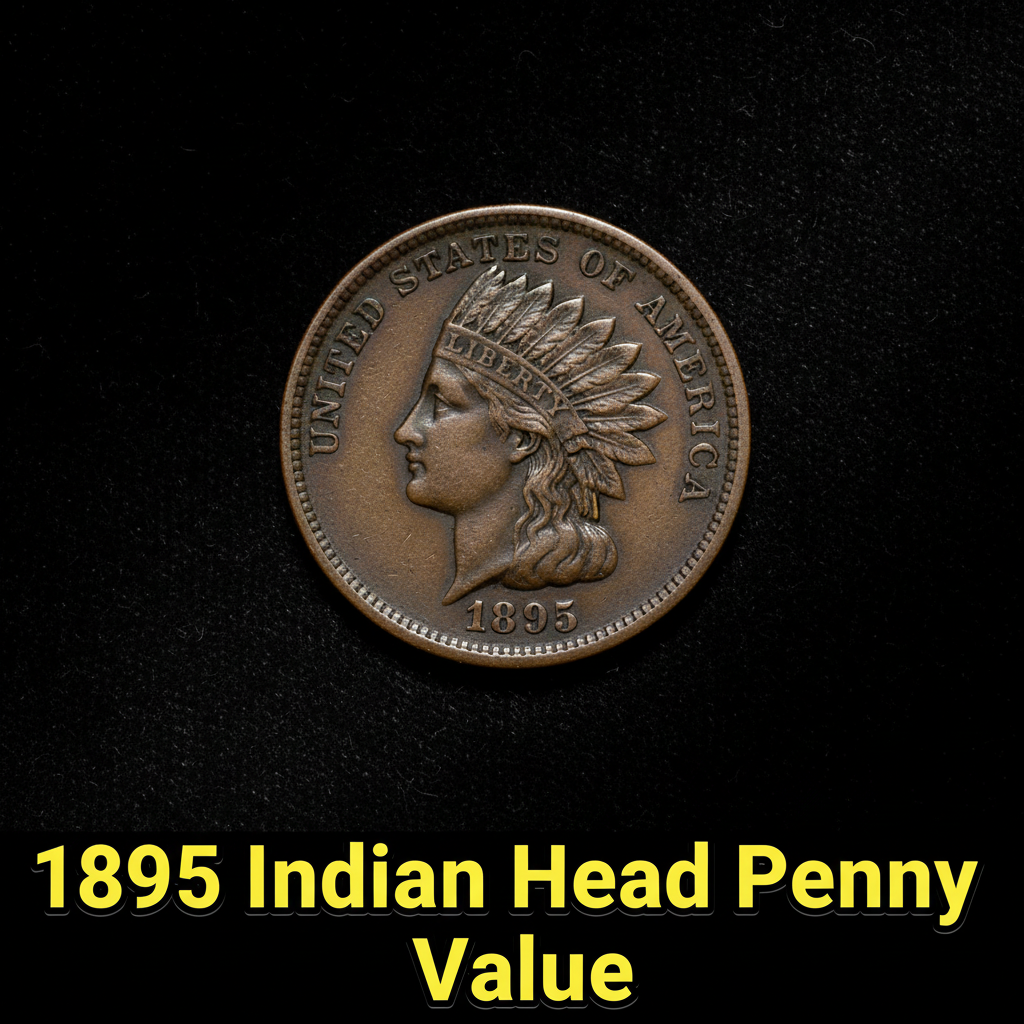
1895 Indian Head Penny Value What It’s Worth and Why Collectors Love It
The 1895 Indian Head Penny is worth anywhere from $2 in heavily worn condition to over $100 in mint state, with some high-grade examples fetching even more at auction. If you’ve got one of these old cents sitting in a jar or inherited from a relative, you might be pleasantly surprised by what it’s worth today.
What Makes the 1895 Indian Head Penny Special
Before diving into exact numbers, it helps to know a little history. The Indian Head Penny was designed by James B. Longacre and struck at the Philadelphia Mint from 1859 to 1909. The 1895 issue had a mintage of around 38.3 million coins — not rare by any means, but not common in high grades either. These coins were made of 95% copper and 5% tin and zinc, giving them that warm reddish-brown color you often see today.
If you’ve recently come across one and aren’t sure what you’re holding, a free coin identifier app can help you confirm the coin’s date, mint mark, and condition right from your smartphone. Tools like CoinKnow are especially useful for beginners who want a quick identification and ballpark value estimate without needing to visit a coin shop.
The 1895 Indian Head Penny is a solid mid-series date that appeals to both casual collectors and serious numismatists. Its value depends almost entirely on condition, which we’ll break down next.
1895 Indian Head Penny Value by Grade
Coin grading runs on the Sheldon scale from 1 (Poor) to 70 (Perfect Mint State). For the 1895 penny, condition is everything. A coin pulled from circulation and worn smooth might be worth a couple of dollars, while one that was never used could be worth a hundred times that.
Here’s a general value table to give you a clear picture:
| Grade | Description | Estimated Value |
|---|---|---|
| Good (G-4) | Heavy wear, outline visible | $2 – $4 |
| Very Good (VG-8) | Moderate wear, some detail | $4 – $7 |
| Fine (F-12) | Light to moderate wear | $7 – $12 |
| Very Fine (VF-20) | Light wear on high points | $12 – $20 |
| Extremely Fine (EF-40) | Slight wear, sharp details | $25 – $40 |
| About Uncirculated (AU-50) | Minimal wear, mostly luster | $45 – $65 |
| Mint State (MS-63) | No wear, minor marks | $75 – $120 |
| Mint State (MS-65+) | Gem quality, full luster | $200+ |
For the most up-to-date pricing on higher-grade examples, you can check current market prices for the 1895 Indian Head Penny in MS Red grades, which tend to command the strongest premiums among collectors.
How Color Affects the 1895 Indian Head Penny’s Worth
Something many new collectors don’t realize is that copper coins like the Indian Head Penny are also graded by color, not just wear. The three color designations are:
– Red (RD) – Original bright copper color, highest value
– Red-Brown (RB) – Mix of original and toned surfaces
– Brown (BN) – Fully toned, lowest value among mint state coins
An 1895 Indian Head Penny graded MS-64 Brown might sell for around $80–$100, while the same grade in Red could bring $150–$250 or more. This is why two coins with the same numerical grade can have very different price tags. When shopping or selling, always pay attention to the color designation on certified coins from PCGS or NGC.
How to Check if Your 1895 Penny Is Worth More
Not all 1895 Indian Head Pennies are created equal. Beyond grade and color, there are a few things that can push value higher:
Strike quality — Well-struck coins with sharp feather details on the headdress are more desirable. Look at the diamonds in the ribbon and the “LIBERTY” on the headband. If those letters are crisp and clear, your coin has better eye appeal.
No cleaning or damage — Cleaned coins lose significant value. If a coin looks unusually shiny or has fine hairline scratches, it was likely polished at some point, which drops its grade dramatically.
Professional certification — A coin in a PCGS or NGC holder is worth more than a raw coin in the same grade because buyers trust the third-party assessment.
You can use CoinKnow to photograph your coin and get an instant grade estimate before deciding whether professional certification is worth the cost. It’s a smart first step before spending money on submissions.
If you’re also curious about nearby dates, it’s worth comparing values across the series. For instance, the 1898 Indian Head Penny carries similar value trends and offers helpful context for understanding this era of cent coinage.
FAQ
Q: Is the 1895 Indian Head Penny rare?
A: Not especially. With a mintage of over 38 million, the 1895 issue is considered a common date. However, finding one in high mint state grades with original red color is genuinely difficult, and those examples can be quite valuable.
Q: Where is the mint mark on a 1895 Indian Head Penny?
A: The 1895 Indian Head Penny was struck only at the Philadelphia Mint, which did not use a mint mark during this period. So if you have a 1895 Indian Head Penny, there will be no mint mark on it — that’s completely normal.
Q: How can I find out what my 1895 Indian Head Penny is worth without visiting a coin dealer?
A: Start by using CoinKnow on your phone to identify the coin and check estimated values based on condition. You can also compare recent auction results online for similar grades. For a quick reference, the value table in this article gives you a solid starting range for most grades you’re likely to encounter.