1936 DDO Type 2 Wheat Penny Value What It’s Worth and Why Collectors Love It
The 1936 DDO Type 2 Wheat Penny is worth anywhere from $5 in well-worn condition to over $150 or more in higher mint state grades — and certain specimens with strong doubling have sold for hundreds at auction. If you just found one in an old coin jar or inherited a collection, you may be sitting on something special.
What Is the 1936 DDO Type 2 Wheat Penny?
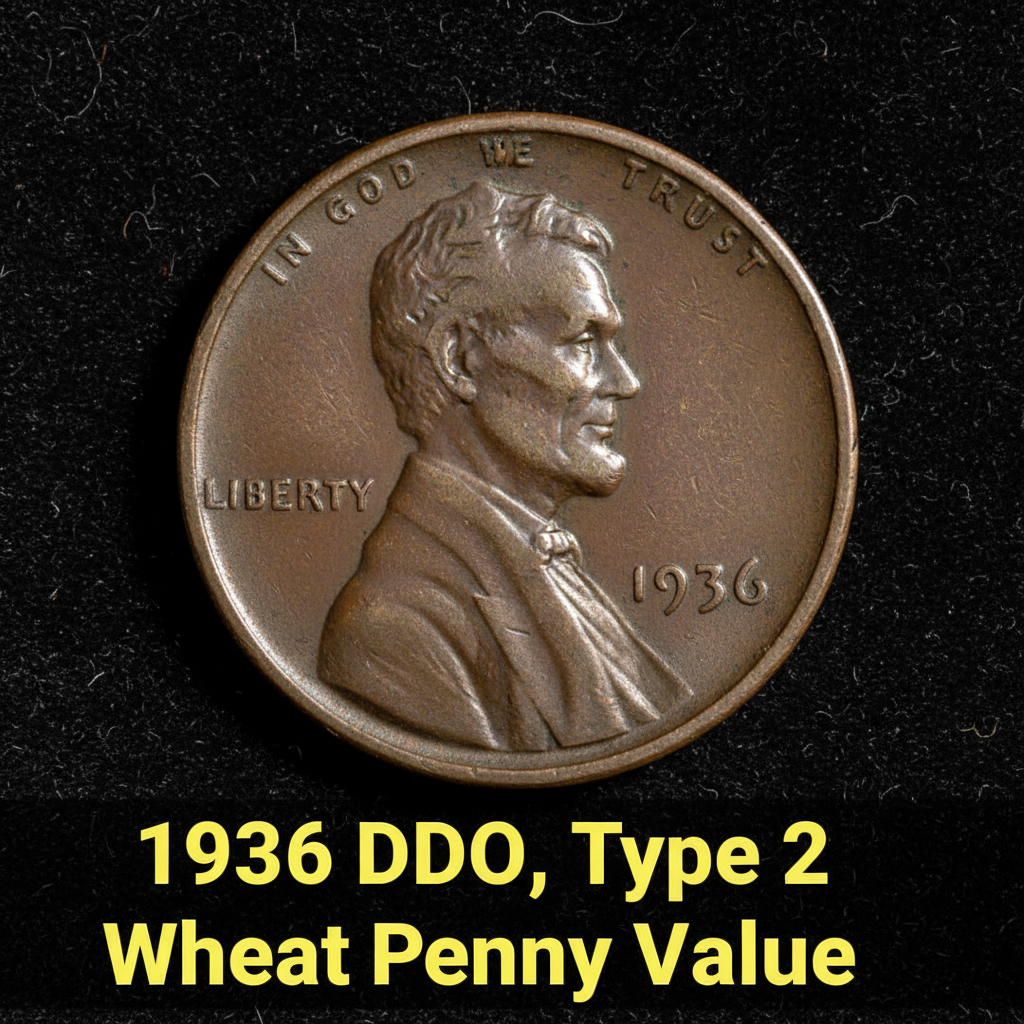
Before you can understand the value, it helps to know what you’re looking at. The 1936 Lincoln Wheat Penny was produced at three mints: Philadelphia (no mint mark), Denver (D), and San Francisco (S). The DDO stands for “Doubled Die Obverse,” meaning the die used to stamp the coin’s front side showed a doubling effect during its creation. This doubling typically appears on Lincoln’s portrait, the date, and the lettering like “LIBERTY” and “IN GOD WE TRUST.”
The Type 2 variety refers to a specific classification of the doubling pattern — one that collectors and numismatists have documented and cataloged separately from other doubled die varieties found on 1936 cents. It’s subtle on some coins and quite dramatic on others, which is why grades vary so widely.
If you’re not sure whether your coin has this doubling, consider using a free coin identifier app to help you compare it to known examples. A loupe or magnifying glass is also your best friend here. Look closely at the date and lettering for any signs of a second, offset impression.
How Much Is the 1936 DDO Type 2 Wheat Penny Worth by Grade?
Coin value is largely determined by grade, which measures how much wear and damage a coin has suffered over time. A heavily circulated coin with scratches and flat details is worth far less than one that spent decades in a drawer untouched. Here’s a general breakdown of 1936 DDO Type 2 Wheat Penny values across different grades:
| Grade | Description | Estimated Value |
|---|---|---|
| Good (G-4) | Heavy wear, flat details | $5 – $10 |
| Fine (F-12) | Moderate wear, some detail visible | $10 – $20 |
| Very Fine (VF-20) | Light wear on high points | $20 – $40 |
| Extremely Fine (EF-40) | Slight wear, sharp lettering | $40 – $75 |
| Mint State (MS-63) | Uncirculated, some minor marks | $80 – $150+ |
| Mint State Red (MS-65 RD) | Full original red color, nearly perfect | $150 – $400+ |
For the most up-to-date pricing data, you can check current 1936 Wheat Penny MS-RD auction prices and market values to see what collectors are actually paying today.
Factors That Affect the Value of Your 1936 DDO Type 2 Penny
Beyond grade, a few other things can significantly impact what your coin is worth. First, the strength of the doubling matters a lot. If the DDO effect is bold and clearly visible without magnification, collectors will pay a premium. Weak or subtle doubling may only add a small bump in value over a regular 1936 cent.
Second, color plays a major role in uncirculated coins. Lincoln cents are graded not just by wear but by the amount of original copper color they retain. Coins graded “Red” (RD) retain 95% or more of their original color and are the most desirable. “Red-Brown” (RB) coins have some color remaining, while “Brown” (BN) coins have fully toned. An MS-65 RD coin can be worth several times more than an MS-65 BN coin of the same variety.
Third, certification from a reputable grading service like PCGS or NGC adds trust and makes the coin easier to sell. A raw (ungraded) coin will usually sell for less than a certified one, even if they appear identical.
CoinKnow is a great tool to help you understand these grading factors and look up how similar coins have performed at recent sales — all from your phone.
Where to Sell or Get Your 1936 DDO Type 2 Wheat Penny Appraised
If you think you have a genuine 1936 DDO Type 2, the smartest first step is to verify it before trying to sell. Take it to a local coin shop or coin show where a dealer can examine it in person. You can also submit it to PCGS or NGC for official grading and authentication — this is especially worthwhile if your coin shows strong doubling and appears to be in uncirculated condition.
Online platforms like eBay, Heritage Auctions, and Great Collections are popular places to sell certified coins. Search completed listings for “1936 DDO Wheat Penny” to see what buyers have recently paid.
For a more detailed breakdown of the 1936 penny’s overall value across all varieties, this comprehensive 1936 penny value guide covers pricing across grades and mint marks and is a helpful companion reference.
CoinKnow also lets you scan and identify coins quickly, making it a convenient first stop before you head to a dealer or auction house.
Is Your 1936 DDO Type 2 Wheat Penny Rare?
In the broad scope of coin collecting, the 1936 Wheat Penny is a common date — hundreds of millions were struck. However, confirmed DDO varieties like the Type 2 are far scarcer. Most people who owned one simply didn’t know what they had, meaning many were spent or melted. Today, finding a well-preserved example with strong doubling is genuinely exciting for collectors. Rarity combined with demand is what drives prices up, and the Type 2 DDO has a solid following in the Lincoln cent community.
Whether your coin turns out to be worth $10 or $400, taking a few minutes to identify and understand it properly is always worth the effort. And if you’re building a collection, CoinKnow can help you track what you have, research values, and stay current with the market.
—
Frequently Asked Questions
Q: How do I know if my 1936 penny is the DDO Type 2 variety?
A: Look at the obverse (front) of the coin under magnification — specifically the date, “LIBERTY,” and “IN GOD WE TRUST.” If you see slight doubling or a shadow-like second impression on those elements, it may be the DDO variety. Comparing your coin to verified images on PCGS or NGC’s variety databases is the most reliable method.
Q: Does the mint mark affect the value of the 1936 DDO Type 2?
A: Yes, it can. The Philadelphia mint (no mint mark) had the highest production numbers in 1936, while the San Francisco (S) and Denver (D) issues were struck in smaller quantities. DDO varieties from the S or D mint can carry additional premiums, though Philadelphia examples are the most commonly documented for this specific variety.
Q: Should I clean my 1936 DDO Type 2 Wheat Penny before selling it?
A: Absolutely not. Cleaning a coin — even gently — almost always lowers its value significantly. Collectors and graders can easily detect cleaning, and a cleaned coin will receive a lower or “details” grade. Leave it exactly as you found it and let a professional assess its natural condition.