1946 Wheat Penny Value No Mint Mark What It’s Worth Today
The 1946 Wheat Penny with no mint mark is worth anywhere from $0.10 in heavily worn condition to over $10 in well-preserved uncirculated grades — and certain high-grade examples can fetch $50 or more at auction. If you found one in a coin jar or inherited a collection, you’re in the right place to learn exactly what you’ve got.
Before we dive in, if you’re not sure whether the coin you’re holding is actually a 1946 Wheat Penny, you can use a free coin identifier app to confirm the date, mint mark, and coin type right from your phone. Tools like CoinKnow make this process fast and beginner-friendly, even if you’ve never collected coins before.
What Is the 1946 No Mint Mark Wheat Penny?
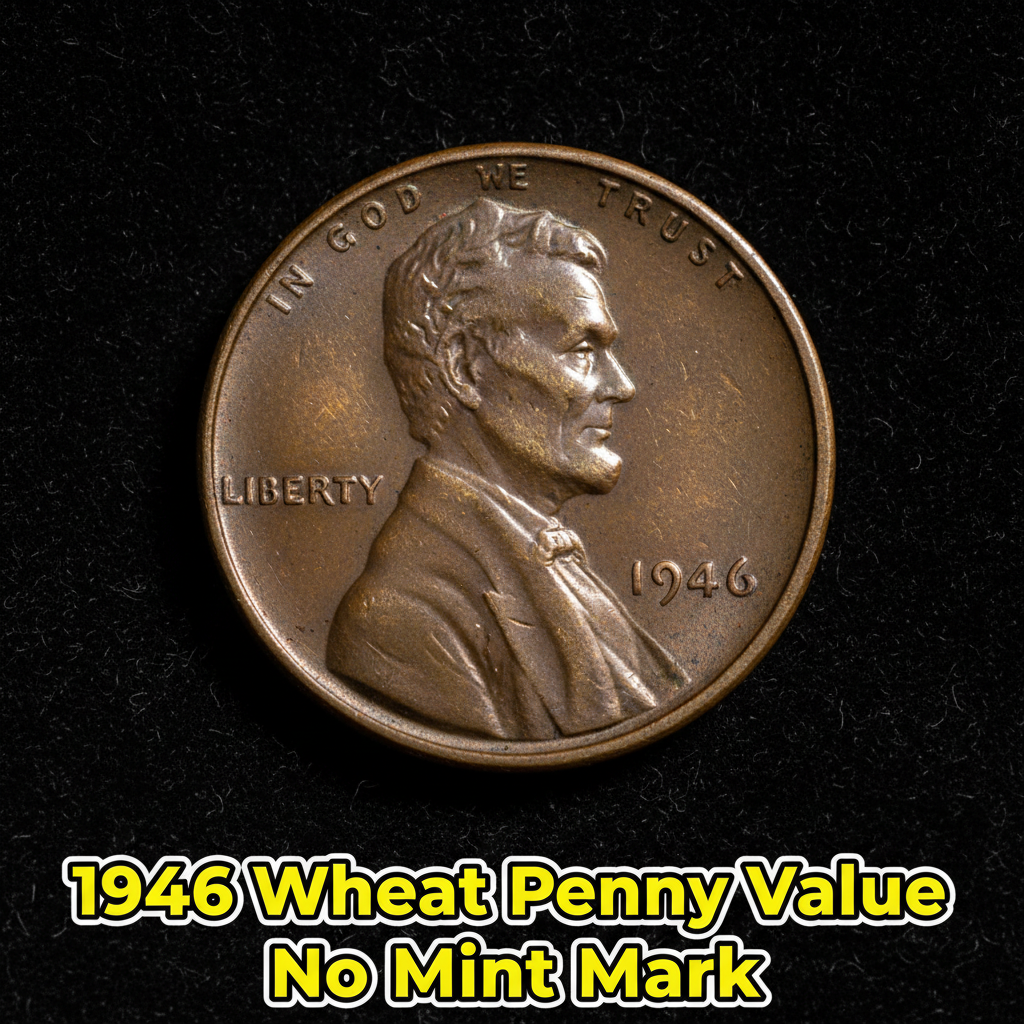
The 1946 Lincoln Wheat Penny without a mint mark was struck at the Philadelphia Mint. Philadelphia was — and still is — the main U.S. Mint facility, and in 1946 it produced a massive 991,655,000 cents. That’s nearly a billion coins, which is why this particular coin is considered common in circulated grades. The “Wheat Penny” nickname comes from the two wheat stalks framing the reverse of the coin, a design used from 1909 to 1958. Lincoln’s portrait on the front was designed by Victor D. Brenner and remains one of the most iconic American coin designs ever made. Even though the 1946 Philadelphia cent isn’t rare, condition plays a huge role in its value — and collectors still seek out well-preserved examples eagerly.
1946 Wheat Penny Value by Grade
Coin grading runs from Poor (P-1) all the way up to Mint State 70 (MS-70), and the difference in value between a worn coin and a gem uncirculated coin can be dramatic. For the 1946 no mint mark penny, most coins pulled from circulation are worth only a few cents to about 10–25 cents. Once you get into lightly worn or About Uncirculated territory, values start to climb more noticeably. For detailed, up-to-date auction and retail pricing, check out this comprehensive 1946 Wheat Penny price guide covering MS-RD grades and recent sale data — it breaks down values coin by coin.
| Grade | Description | Estimated Value |
|---|---|---|
| Good (G-4) | Heavy wear, design visible | $0.10 – $0.25 |
| Fine (F-12) | Moderate wear, details clear | $0.25 – $0.50 |
| Extremely Fine (EF-40) | Light wear on high points | $0.75 – $1.50 |
| About Uncirculated (AU-55) | Slight wear, mostly lustrous | $2.00 – $4.00 |
| MS-63 Red Brown | Uncirculated, mixed color | $5.00 – $8.00 |
| MS-65 Red (Gem) | Full red, no visible marks | $15.00 – $35.00 |
| MS-67 Red (Superb Gem) | Near-perfect, premium grade | $50.00 – $150+ |
What Makes a 1946 Penny Worth More
Even though the 1946 no mint mark cent is common, certain characteristics can push its value well above average. The most important factor is color. Copper cents are graded as Red (RD), Red-Brown (RB), or Brown (BN) based on how much original mint luster remains. A fully Red gem coin is far more valuable than a Brown example of the same numeric grade. Errors and die varieties also matter. Some 1946 cents show doubled die features, repunched dates, or off-center strikes — these can be worth multiples of a normal coin’s value. Eye appeal matters to collectors too: sharp strikes, clean surfaces, and no spots or cleaning significantly boost a coin’s desirability. If you want a full breakdown of how much a 1946 penny is worth across all grades and mint marks, that resource covers everything in plain language for beginners and experienced collectors alike.
How to Check Your 1946 Wheat Penny at Home
You don’t need to be an expert to get a rough idea of your coin’s value. Start by looking at the date and the area just to the right of Lincoln’s portrait — that’s where a mint mark would appear if it was struck in Denver (D) or San Francisco (S). No letter means Philadelphia. Next, examine the coin under good lighting and look at how much detail remains in Lincoln’s hair, cheek, and the wheat stalks on the back. A coin with sharp, clear details is worth significantly more than a flat, worn example. Avoid cleaning your coin — even gentle polishing can destroy collector value instantly. Apps like CoinKnow let you photograph your coin and quickly compare it against grading examples, helping you estimate grade before you decide whether to sell or hold.
Should You Get It Graded?
For most circulated 1946 no mint mark pennies, professional grading by PCGS or NGC is probably not cost-effective — grading fees typically start around $20–$30 per coin, which would exceed the coin’s value. However, if your coin is fully Red, virtually untouched, and appears to be MS-65 or higher, professional grading can make a big difference. A PCGS or NGC certified MS-67 Red 1946 cent has sold for well over $100. CoinKnow can help you compare your coin’s appearance to certified examples and decide whether submitting for grading makes financial sense before spending money on the process.
FAQ
Q: How do I know if my 1946 penny has no mint mark?
A: Look at the obverse (front) of the coin just below and to the right of the date. If you see no letter there, it was made in Philadelphia and carries no mint mark — that’s the standard for this facility during that era.
Q: Is the 1946 no mint mark wheat penny rare?
A: No, it is not rare. With nearly one billion minted in Philadelphia alone, it is one of the most common Wheat Pennies in existence. Value comes primarily from condition, color, and the presence of any errors or varieties.
Q: Where is the best place to sell a 1946 Wheat Penny?
A: For common circulated examples, eBay or a local coin shop are practical options. For high-grade or error coins, major auction houses like Heritage Auctions or Stack’s Bowers will reach serious collectors and often yield better prices.