1889 Liberty Nickel Value What It’s Worth and Why Collectors Care
The 1889 Liberty Nickel is worth anywhere from $2 in heavily worn condition to over $150 or more in well-preserved mint state examples. If you’ve just found one of these old nickels tucked away in a drawer or inherited coin collection, you’re in the right place — let’s break down exactly what you’ve got.
If you’re not sure whether your coin is a Liberty Nickel or something else entirely, a free coin identifier app can help you confirm the design, date, and variety before you dig into values. Getting the ID right is always the first step.
What Is the 1889 Liberty Nickel?
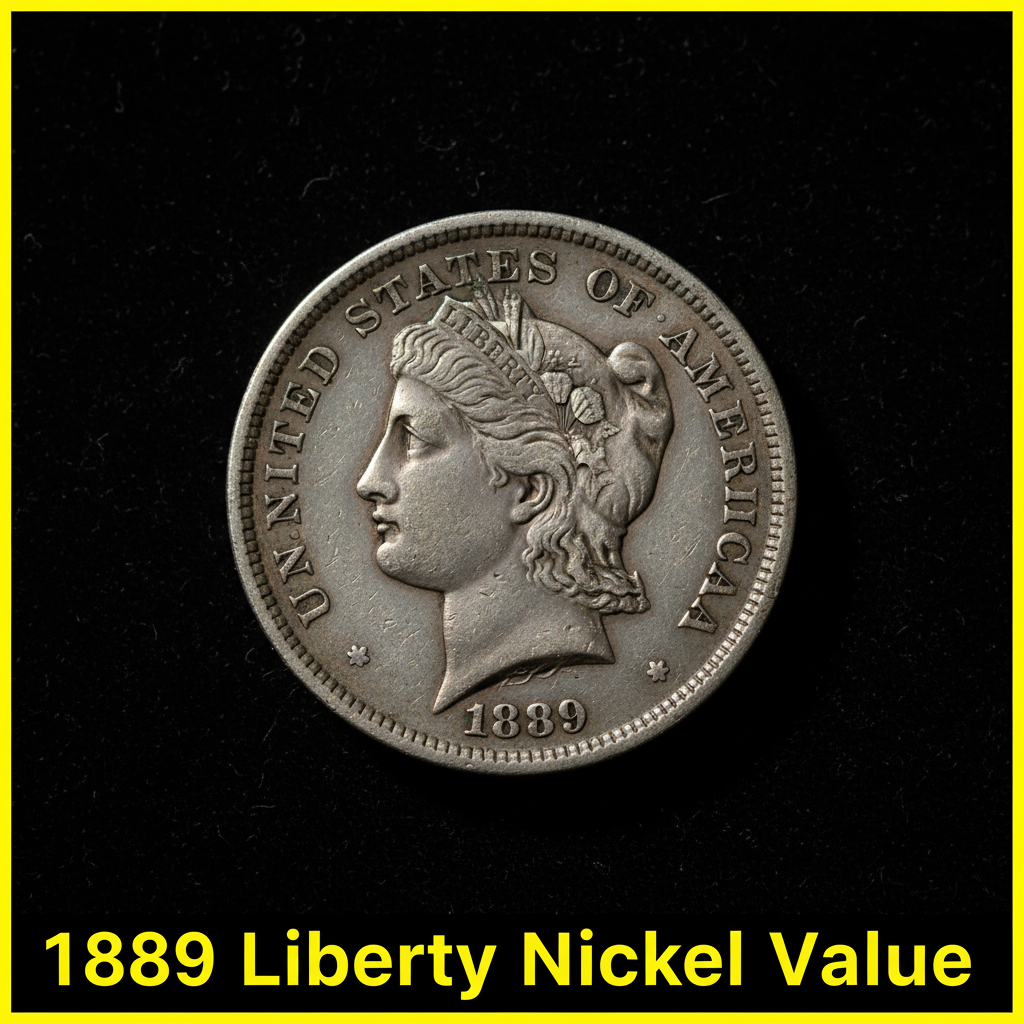
The 1889 Liberty Nickel is part of the Liberty Head series, also known as the “V Nickel” because of the large Roman numeral V on the reverse. Designed by Charles E. Barber and first issued in 1883, these coins were minted for over two decades. The 1889 issue came from the Philadelphia Mint with no mintmark, meaning every authentic 1889 Liberty Nickel you find was struck at Philadelphia. That year, the mint produced approximately 15.8 million pieces — a reasonably large mintage, which is one reason surviving examples are not particularly scarce in lower grades. But in high mint state grades, finding a sharply struck, lustrous example is a real challenge, and that’s where the value climbs.
The coin features Lady Liberty wearing a coronet inscribed with the word “LIBERTY” on the obverse, surrounded by 13 stars. The reverse displays a large V within a wreath. The composition is 75% copper and 25% nickel — no silver content, despite what some people assume.
1889 Liberty Nickel Value by Grade
Coin value depends heavily on condition, or “grade.” A coin that looks almost new is worth far more than one that’s been circulating for decades. Here’s a general value guide for the 1889 Liberty Nickel across different grades:
| Grade | Description | Estimated Value |
|---|---|---|
| Good (G-4) | Heavy wear, outline clear | $2 – $4 |
| Fine (F-12) | Moderate wear, some detail | $6 – $12 |
| Extremely Fine (EF-40) | Light wear on high points | $25 – $45 |
| About Uncirculated (AU-50) | Slight wear, most luster remains | $55 – $80 |
| Mint State (MS-63) | Uncirculated, minor blemishes | $100 – $160 |
| Mint State (MS-65) | Gem uncirculated, sharp strike | $300+ |
For a more detailed breakdown of 1889 Liberty Nickel mint state prices by specific grade point, certified auction records and grading service population reports are your best reference.
What Affects the 1889 Liberty Nickel Price?
Beyond grade, a few other factors move the needle on value. Strike quality matters — some 1889 Liberty Nickels came off the dies with weak strikes, particularly in the hair detail above Liberty’s ear and in the wreath on the reverse. A fully struck coin commands a premium even at the same technical grade. Eye appeal is another big factor. Original skin, meaning the coin has never been cleaned or artificially treated, makes a coin significantly more attractive to serious buyers. A cleaned coin can lose 30–50% of its potential value even if the underlying detail is excellent.
Certification from a major grading service like PCGS or NGC also adds confidence for buyers and typically results in higher realized prices at auction. Raw, ungraded coins are harder to sell at top dollar, especially in mint state. If you’re holding what looks like a high-grade 1889 Liberty Nickel, having it professionally evaluated could be well worth the submission fee.
Want a quick estimate on the go? CoinKnow is a popular app among coin collectors that lets you scan your coin and get an instant value estimate — handy before you bring it to a dealer.
How to Tell If Your 1889 Nickel Is Valuable
Start by looking at the coin under good lighting, ideally with a magnifying glass or loupe. Check whether the word LIBERTY is fully visible in the coronet on Liberty’s head — this is one of the first spots to wear on this design. If all seven letters are sharp and clear, your coin is likely in Fine grade or better. Then look at the overall surfaces. Are there scratches or harsh cleaning marks? Those reduce value significantly. Is there original mint luster — a subtle cartwheel shimmer when you tilt the coin? That’s a great sign.
For everyday collectors and newcomers, CoinKnow makes this process much easier. Just take a clear photo and let the app walk you through condition indicators and value ranges based on current market data.
You might also be curious about other valuable coins from the same era. If you’ve got silver dollars from the late 1800s, check out what 1889 silver dollar values look like compared to other coins of the period — it’s a useful benchmark when evaluating an old collection.
Should You Sell or Hold Your 1889 Liberty Nickel?
If your coin grades below Fine, you’re probably looking at a modest value — a few dollars at most. These are still collectible, but the market for heavily worn examples is casual. If you’ve got an About Uncirculated or better coin, that’s a different story. Prices for high-grade 1889 Liberty Nickels have been steady, and gem examples are genuinely hard to find. In that case, getting a professional opinion before selling makes a lot of sense. Local coin shows, reputable online auction platforms, and certified coin dealers are all good options. Avoid selling to pawn shops unless you’ve already done your homework — they rarely offer fair numismatic value.
If you’re just starting to explore your collection, download CoinKnow and start scanning. It’s one of the easiest ways to get oriented quickly, whether you have one old nickel or a whole shoebox of coins.
—
FAQ
Q: Is the 1889 Liberty Nickel made of silver?
A: No. Despite being called a “nickel,” the 1889 Liberty Nickel is made of 75% copper and 25% nickel. It contains no silver. Some people confuse it with silver because of its color, but it has no precious metal content.
Q: How can I tell what grade my 1889 Liberty Nickel is in?
A: The easiest starting point is to check the word LIBERTY on Lady Liberty’s coronet. If it’s barely visible, the coin is in Good grade. Fully visible letters suggest Fine or better. For an official grade, submit your coin to PCGS or NGC, or use an app like CoinKnow to get a quick estimate.
Q: Are any 1889 Liberty Nickels especially rare or valuable?
A: The standard 1889 Philadelphia issue is not rare, but high-grade examples grading MS-65 or above are genuinely scarce and can sell for several hundred dollars or more. There are no major known varieties or errors for 1889 that carry a dramatic premium, making condition the primary driver of value for this date.