1913 Buffalo Nickel Value Guide How Much Type 1 and Type 2 Are Worth Today
The 1913 Buffalo Nickel is worth anywhere from $15 in heavily worn condition to well over $1,000 in mint state — and if you happen to own a high-grade example, the number can climb even higher. Whether you just found one in grandma’s coin jar or inherited a small collection, this guide will help you figure out what you’ve got.
What Makes the 1913 Buffalo Nickel So Special?
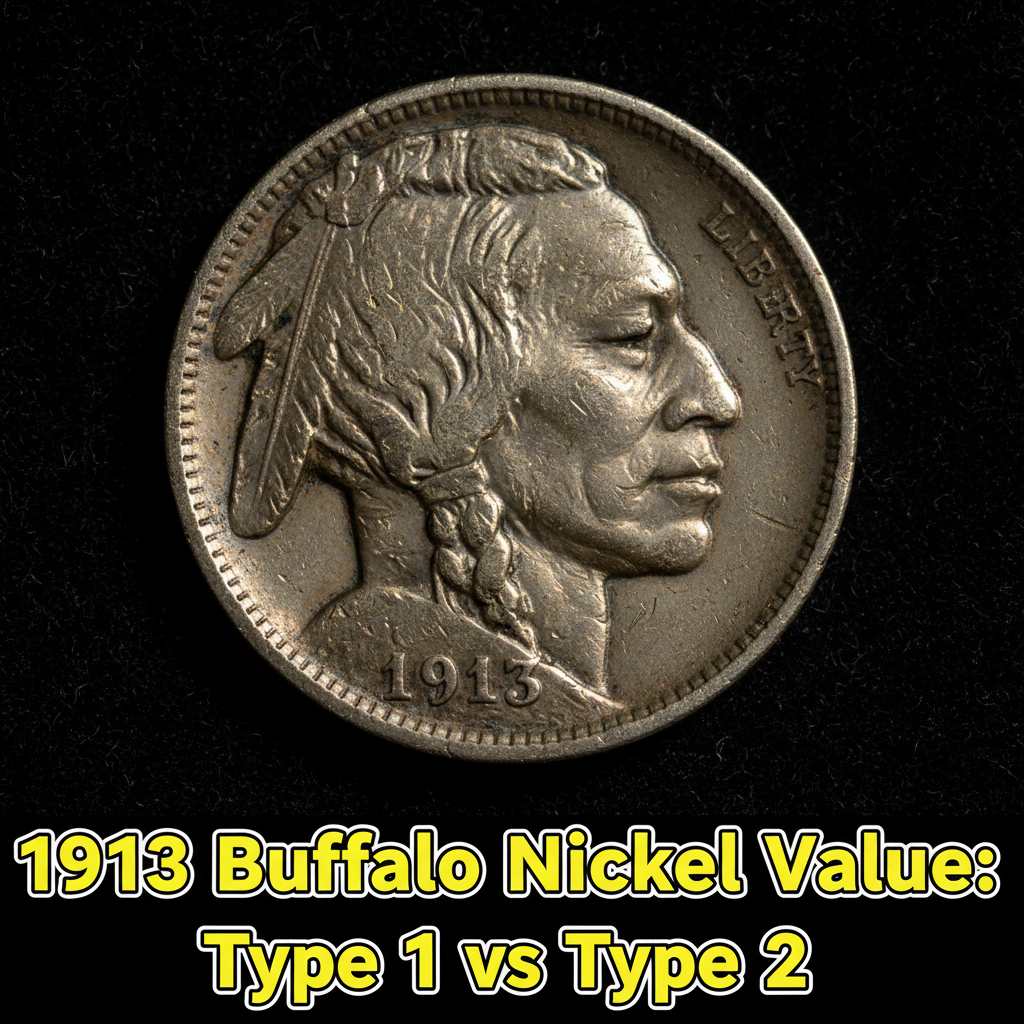
The 1913 Buffalo Nickel holds a unique place in American coin history. It was the very first year this beloved design was minted — featuring James Earle Fraser’s iconic portrait of a Native American on the obverse and an American bison on the reverse. What makes 1913 especially interesting is that it was struck in two distinct varieties: Type 1 and Type 2. These two types look nearly identical at first glance, but they have one key difference that affects both their history and their value.
If you’re not sure what coin you’re holding, a free coin identifier app can help you confirm the design and date before you start researching its worth. Once you know you’ve got a 1913 Buffalo Nickel in hand, the next step is figuring out which type it is — because that detail matters more than you might think.
Type 1 vs Type 2: What’s the Difference?
The difference between Type 1 and Type 2 comes down to where the denomination “FIVE CENTS” appears on the reverse side of the coin.
Type 1 (Mound Type): On this version, the words “FIVE CENTS” are inscribed on a raised mound or raised ground beneath the buffalo. This design was used only in the early part of 1913.
Type 2 (Line Type): On this version, “FIVE CENTS” appears on a flat, recessed area below the buffalo. The mint made this change because the raised lettering on Type 1 wore down extremely fast in circulation, making the denomination difficult to read. Type 2 was introduced later in 1913 and continued throughout the Buffalo Nickel series.
To tell them apart, flip your coin over and look below the buffalo. If you see raised ground under the denomination, it’s Type 1. If the ground is flat and the text sits in a recessed area, it’s Type 2. It really is that simple.
1913 Buffalo Nickel Value by Mint Mark and Type
Three mints produced Buffalo Nickels in 1913: Philadelphia (no mint mark), Denver (D), and San Francisco (S). Combined with the two types, that gives collectors six different coins to chase from this year alone.
Here’s a general value breakdown based on condition:
| Coin | Good (G-4) | Fine (F-12) | MS-63 | MS-65 |
|---|---|---|---|---|
| 1913 Type 1 (P) | $15 | $35 | $200 | $700+ |
| 1913-D Type 1 | $20 | $45 | $280 | $900+ |
| 1913-S Type 1 | $25 | $55 | $350 | $1,200+ |
| 1913 Type 2 (P) | $15 | $30 | $175 | $600+ |
| 1913-D Type 2 | $18 | $40 | $250 | $800+ |
| 1913-S Type 2 | $30 | $70 | $500 | $2,000+ |
For the most up-to-date pricing, you can check out current 1913 Type 1 Buffalo Nickel prices across mint state grades to see how the market is moving right now.
How Condition Affects What Your Coin Is Worth
Condition is everything in coin collecting. A 1913 Buffalo Nickel that has been rattling around in a pocket for decades might only fetch $15 to $30. That same coin in uncirculated condition — with no wear on the high points like the cheekbone or the buffalo’s hip — can be worth hundreds or even thousands of dollars.
The key areas to check for wear are the Native American’s cheek and hair braid, and the buffalo’s front shoulder and hindquarters. If those areas are flat and smooth, the coin has seen significant circulation. If you can still see the original luster and sharp details, you may have a genuinely valuable coin on your hands.
CoinKnow is a great tool for everyday collectors who want a quick estimate of a coin’s condition and value without needing years of numismatic experience. Just scan your coin and get an instant grade range.
You can also explore detailed 1913 Buffalo Nickel value information by date, mint mark, and grade to better understand where your coin falls on the value spectrum.
Tips for Selling or Holding Your 1913 Buffalo Nickel
If you think your coin is in better-than-average condition, it’s worth having it professionally graded by PCGS or NGC before selling. A slabbed coin in MS-63 or higher will almost always sell for more than a raw, ungraded coin — buyers pay a premium for certainty.
For circulated coins in Good to Fine condition, online platforms like eBay or local coin shows are perfectly fine options. Just make sure to photograph both sides clearly and mention the type (Type 1 or Type 2) in your listing. Collectors care about that distinction.
Not sure where to start? CoinKnow makes it easy to identify your coin’s type, estimate its grade, and even find comparable recent sales — all from your phone. It’s one of the most useful free tools available for casual collectors and first-time sellers alike.
—
FAQ
Q: How do I know if my 1913 Buffalo Nickel is Type 1 or Type 2?
A: Look at the reverse of the coin, directly below the buffalo. If “FIVE CENTS” sits on a raised mound of ground, it’s Type 1. If it sits on a flat, recessed line, it’s Type 2. This is the only visual difference between the two.
Q: Is the 1913-S Type 2 really the most valuable 1913 Buffalo Nickel?
A: Generally, yes — among circulated and mid-grade examples, the 1913-S Type 2 tends to command the highest prices because it had the lowest mintage of the six 1913 varieties. In top mint state grades, all six can be quite valuable.
Q: Should I clean my 1913 Buffalo Nickel before selling it?
A: Absolutely not. Cleaning a coin — even with a soft cloth — removes original surface texture and luster, which dramatically reduces its value to collectors. A cleaned coin will always sell for less than an unclean one in the same grade. Leave it exactly as you found it.