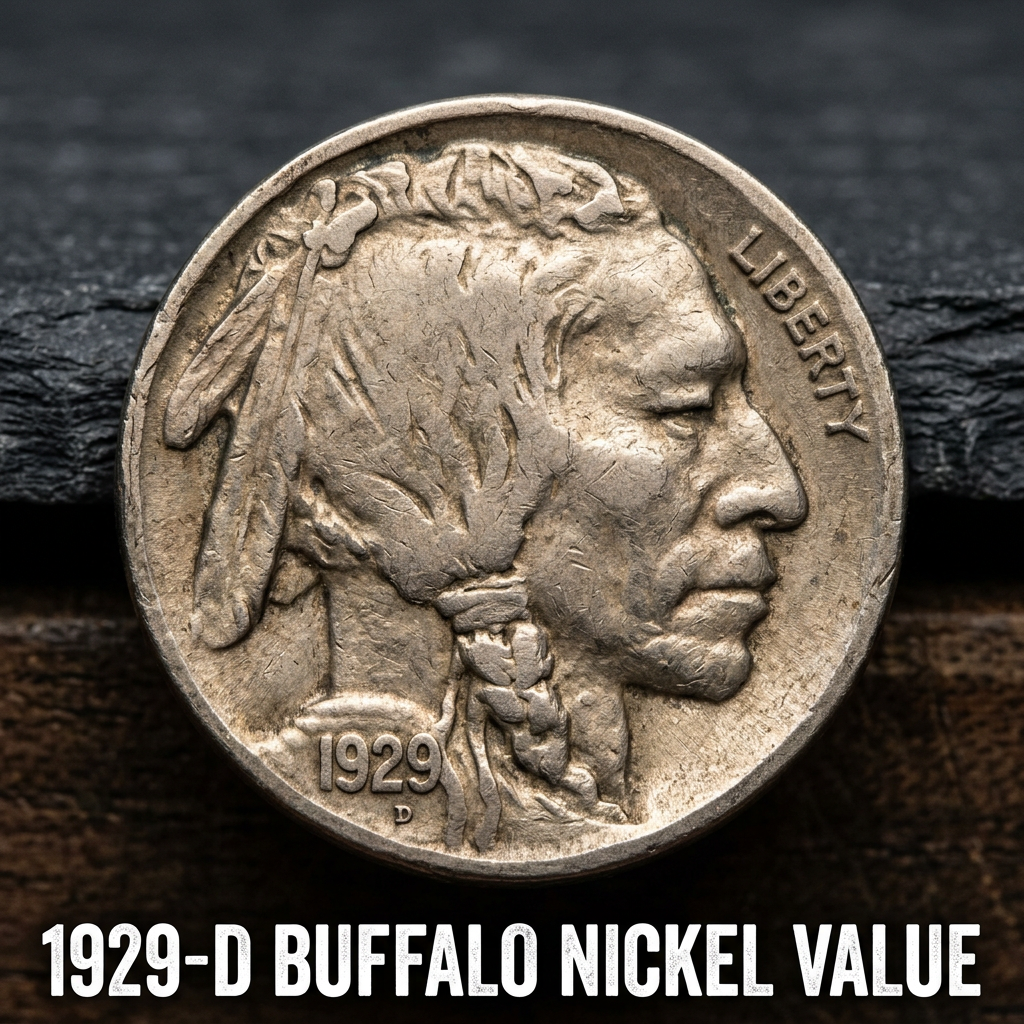
1929-D Buffalo Nickel Value What This Denver Mint Coin Is Really Worth
The 1929-D Buffalo Nickel is worth anywhere from $10 in heavily worn condition to over $500 or more in higher mint state grades. If you’ve found one of these old nickels with a “D” mintmark, you’re holding a coin that collectors genuinely want — and it might be worth more than you think.
What Makes the 1929-D Buffalo Nickel Special
The 1929-D Buffalo Nickel was struck at the Denver Mint during a fascinating era in American coinage. The “D” mintmark, located on the reverse just below the words “FIVE CENTS,” tells you exactly where this coin was made. Denver produced over 8.3 million of these nickels in 1929, which sounds like a lot — but nearly a century of circulation, loss, and wear has made nice examples surprisingly scarce today.
The Buffalo Nickel series, also known as the Indian Head Nickel, was designed by sculptor James Earle Fraser and ran from 1913 to 1938. Fraser’s design features a bold Native American portrait on the obverse and an American bison on the reverse. It’s widely considered one of the most beautiful coins ever made in the United States, which is a big reason collectors still chase these coins today.
If you just found one and aren’t sure what you have, a free coin identifier app can help you confirm the date, mintmark, and basic grade before you do any further research. Getting that first ID right saves you a lot of guesswork.
How Much Is the 1929-D Buffalo Nickel Worth by Grade
Coin value is almost entirely tied to condition, and the 1929-D is no exception. A coin that’s been in a pocket or purse for decades will look very different from one that was saved early and never circulated. Here’s a general breakdown of 1929-D Buffalo Nickel values across common grades:
| Grade | Description | Estimated Value |
|---|---|---|
| Good (G-4) | Heavy wear, date and mintmark visible | $10 – $14 |
| Very Good (VG-8) | Moderate wear, some detail remaining | $15 – $20 |
| Fine (F-12) | Even wear, design mostly clear | $22 – $30 |
| Very Fine (VF-20/30) | Light wear on high points | $35 – $65 |
| Extremely Fine (EF-40) | Slight wear, most details sharp | $75 – $120 |
| About Uncirculated (AU-50) | Trace wear, nearly full luster | $130 – $200 |
| Mint State (MS-60 to MS-63) | No wear, some bag marks | $220 – $400 |
| Choice/Gem Mint State (MS-64/65) | Sharp strike, strong luster, few marks | $450 – $800+ |
For a more detailed breakdown with recent auction results, you can explore 1929-D Buffalo Nickel mint state price data to see exactly how high-grade examples have been selling.
What to Look For When Checking Your Coin
Not every 1929-D is worth the same amount, even within the same grade. Strike quality varied at the Denver Mint, and coins with a sharp, full horn on the bison are worth considerably more than weakly struck examples. The horn is one of the first things experienced collectors check — if it’s completely flat and worn away, that hurts value even in otherwise decent condition.
Also check the date carefully. Buffalo Nickels are notorious for having their dates wear away first because of the design’s raised placement. A coin with a full, clear date is always worth more than one where you can barely read it. Some partially legible-date coins can be chemically restored, but those are worth far less and experts can spot them immediately.
CoinKnow is a great tool for walking you through grading basics if you’re not sure where to start. The app gives you visual comparisons so you can match your coin to a reference grade with confidence, even if you’ve never graded a coin before.
Where to Sell or Get Your 1929-D Buffalo Nickel Appraised
Once you know roughly what you have, you’ll want to decide whether to keep it, sell it, or get a professional opinion. For coins in circulated grades, online marketplaces like eBay give you a real-time look at what buyers are actually paying — always check “sold” listings, not just active ones. For higher-grade coins worth over $100, consider getting it certified by PCGS or NGC. Slabbed coins sell faster and often at better prices because buyers trust the third-party grade.
Local coin shops are another solid option, especially if you want a quick in-person appraisal. Bring the coin in a soft holder — never clean it, since even light cleaning can reduce the value significantly. If you want a second opinion on value before visiting a dealer, the 1929 Buffalo Nickel value guide at CoinValueApp offers a helpful reference point based on current market conditions.
CoinKnow also helps you track your collection’s estimated value over time, which is useful if you plan to hold onto your coins and sell when the market is right.
—
Frequently Asked Questions
Q: How do I know if my Buffalo Nickel is a 1929-D?
A: Look at the reverse side of the coin just below “FIVE CENTS.” If you see a small “D,” it was made in Denver. The date appears on the obverse, or front, of the coin below the portrait. A magnifying glass or loupe makes this much easier to read, especially on worn coins.
Q: Is a 1929-D Buffalo Nickel rare?
A: It’s not considered rare in circulated grades since over 8 million were minted, but finding one in nice condition is harder than you’d expect after nearly 100 years. In mint state grades above MS-64, the 1929-D becomes genuinely scarce and commands strong collector premiums.
Q: Should I clean my 1929-D Buffalo Nickel before selling it?
A: Absolutely not. Cleaning removes the natural patina that collectors value and can reduce a coin’s worth by 50% or more. Even a coin that looks “dirty” should be left exactly as-is. Let a professional evaluate it in its original state — what looks like grime to you might actually be desirable natural toning to a collector. CoinKnow can help you understand what original surfaces look like so you don’t make a costly mistake.