1864 Bronze Indian Head Penny Value and What Collectors Are Paying Today
The 1864 Bronze Indian Head Penny is worth anywhere from $5 in heavily worn condition to well over $400 in mint state, making it one of the more exciting Lincoln-era finds you can stumble across in an old coin jar or estate sale. This was a landmark year for the Indian Head cent — the U.S. Mint switched from a copper-nickel composition to a thinner bronze alloy, and that change makes the 1864 cent historically significant to collectors. Whether you’ve just found one or you’ve been sitting on it for years, this guide will walk you through everything you need to know about its value.
What Makes the 1864 Indian Head Penny Special
The year 1864 marks a turning point in American coinage history. Before this year, Indian Head cents were struck in a copper-nickel alloy that gave them a pale, almost silvery look. Starting in 1864, the Mint shifted to 95% copper and 5% tin and zinc — what we now call bronze. This new composition gave the coins their familiar reddish-brown color that penny collectors know today.
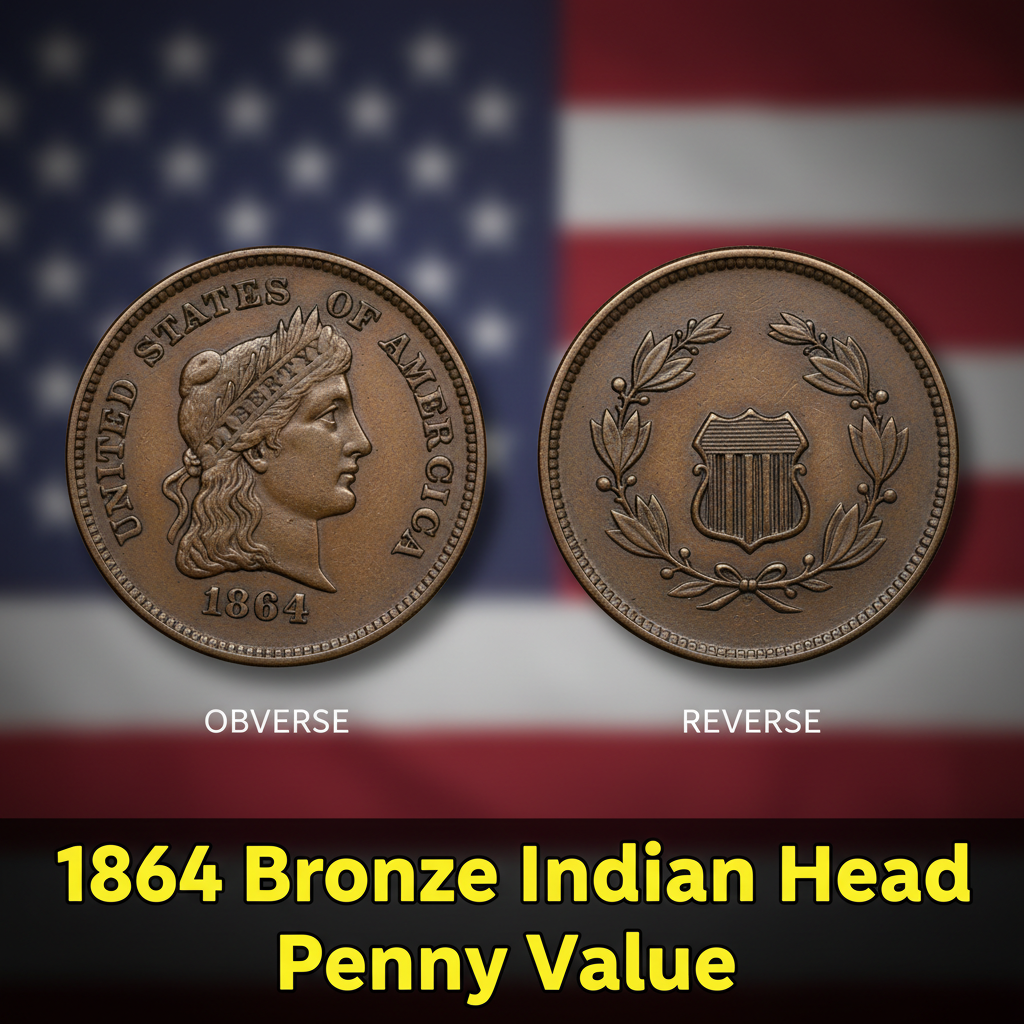
But here’s where it gets really interesting: there are actually two distinct varieties of the 1864 Indian Head cent. The first is the copper-nickel version, struck only at the very beginning of the year. The second — and far more common — is the bronze version. Some bronze examples also carry a small “L” initial on the ribbon in Liberty’s hair, left there by designer James Barton Longacre. That tiny letter can dramatically affect value, sometimes doubling it. If you’re not sure which variety you have, using a free coin identifier app or tools like CoinKnow can help you pinpoint the exact version in seconds.
—
1864 Bronze Indian Head Penny Value by Grade
Coin values change significantly depending on condition. A coin that’s been sitting at the bottom of a pocket for 160 years is going to look a lot different from one that’s been carefully preserved. Here’s a general breakdown of what the 1864 Bronze Indian Head Penny is worth across common grades:
| Grade | Description | Estimated Value |
|---|---|---|
| Good (G-4) | Heavy wear, outline visible | $5 – $10 |
| Very Good (VG-8) | Major features clear | $10 – $20 |
| Fine (F-12) | Moderate even wear | $20 – $40 |
| Extremely Fine (EF-40) | Light wear on high points | $75 – $120 |
| Mint State (MS-63) | Uncirculated, minor marks | $200 – $400+ |
Note that the “With L” variety commands a premium at every grade level. In MS-63, an 1864 “With L” bronze cent can fetch $500 or more at major auction houses.
—
How to Tell the 1864 Bronze From the Copper-Nickel Version
If you’re not sure which 1864 Indian Head Penny you’re holding, there’s a simple way to tell. The copper-nickel coins are noticeably lighter in color — almost yellowish or grayish — while the bronze cents are a warm reddish-brown. You can also check the coin’s weight if you have a precise scale. The bronze cents weigh about 3.11 grams, while the copper-nickel version tips in at around 4.67 grams.
The copper-nickel 1864 cents are actually rarer and can be worth significantly more — sometimes several hundred dollars even in circulated grades. If your coin looks pale or silvery, it’s worth getting a second opinion from a professional grader or running it through CoinKnow, which can help identify composition and variety details quickly and accurately.
—
What Affects the Value Beyond the Grade
Grade is the biggest driver of value, but it’s not the only one. Here are a few other factors that can push the price of your 1864 Bronze Indian Head Penny up or down:
Color designation: Uncirculated coins are graded as Red (RD), Red-Brown (RB), or Brown (BN). Red coins retain their original luster and are the most desirable — and most valuable. A brown MS-63 might be worth $150, while a red MS-63 of the same date could bring $400 or more.
The “L” on the ribbon: As mentioned, the presence of Longacre’s initial boosts value at every grade level. Look closely at the ribbon tied in Liberty’s hair. Under magnification, a tiny “L” may be visible at the ribbon’s lower edge.
Eye appeal and surfaces: Coins with no damage, cleaning, or corrosion always sell for more. Cleaned coins are a big red flag for collectors and can cut value in half.
Provenance and certification: Coins graded and slabbed by PCGS or NGC tend to sell for more because buyers trust the grade. If your coin is raw (ungraded), consider getting it certified if it appears to be in high grade.
—
FAQ
Q: Is my 1864 Indian Head Penny worth getting professionally graded?
A: If your coin looks like it’s in Extremely Fine or better condition, absolutely. Professional grading by PCGS or NGC can increase its market value and make it easier to sell. For circulated coins in lower grades, the grading fee may not be worth it — use CoinKnow to get a quick estimate first before spending money on certification.
Q: How can I tell if my 1864 cent has the “L” variety?
A: Look at the lower edge of the ribbon tied in Liberty’s hair on the obverse. With a loupe or strong magnifying glass, you should see a tiny letter “L” if you have the With L variety. The letter was added mid-year, so not all bronze 1864 cents have it. Coins without the initial are more common but still valuable in high grades.
Q: Where is the best place to sell a 1864 Bronze Indian Head Penny?
A: For high-grade or rare examples, major auction houses like Heritage Auctions or Stack’s Bowers are your best bet. For circulated coins, eBay, local coin shows, and coin dealers are solid options. Always research recent sold prices before listing — and check current market trends using a tool like CoinKnow to make sure you’re asking a fair price.