1929-D Wheat Penny Value and What It Could Be Worth Today
The 1929-D Wheat Penny is worth anywhere from $0.50 in heavily worn condition to over $100 or more in near-mint grades. If you just found one of these old Lincoln cents in a jar, a drawer, or an inherited collection, you might be sitting on more than pocket change.
What Makes the 1929-D Wheat Penny Special
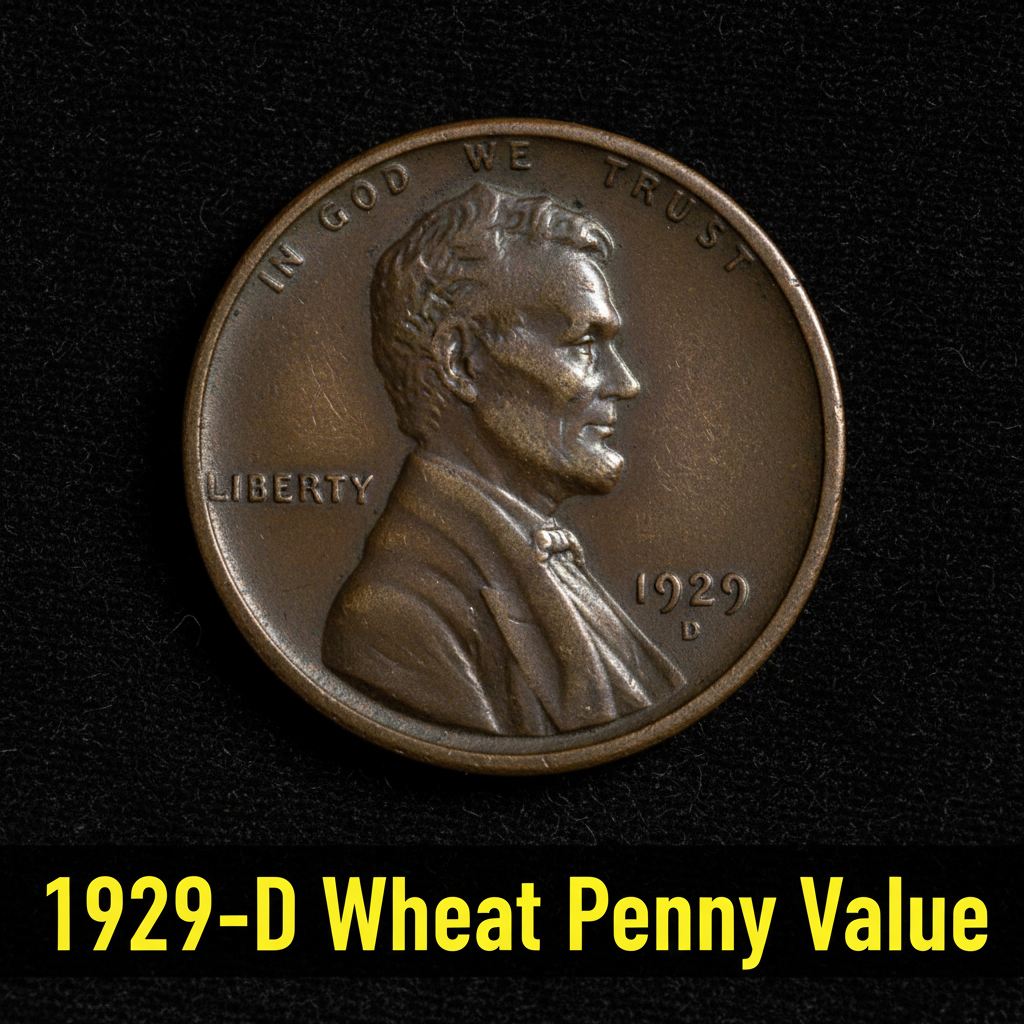
The 1929-D Wheat Penny was struck at the Denver Mint in 1929, indicated by the small “D” mintmark you’ll find on the obverse (front) of the coin, just below the date. That year, the Denver Mint produced around 41,730,000 of these cents — a fairly large number, but that doesn’t mean they’re all common in good condition today. Most circulated examples from nearly a century ago show significant wear, which actually makes well-preserved specimens more desirable to collectors.
Lincoln Wheat cents were minted from 1909 to 1958, and the 1929-D sits right in the middle of that beloved series. Coins from this era are popular with everyday collectors, not just serious numismatists. If you’re not sure what you have, using a free coin identifier app can be a great first step to confirm the date, mintmark, and basic grade before you try to sell or research further.
1929-D Wheat Penny Value by Grade
Coin value is almost entirely determined by condition — also called “grade” in the numismatic world. A coin that looks shiny and sharp is worth far more than one that’s scratched and flat from decades of handling. Here’s a general breakdown of what the 1929-D Wheat Penny is worth at different grade levels:
| Grade / Condition | Estimated Value |
|---|---|
| Good (G-4) | $0.50 – $1.00 |
| Very Good (VG-8) | $1.00 – $2.00 |
| Fine (F-12) | $2.00 – $4.00 |
| Very Fine (VF-20) | $5.00 – $10.00 |
| Extremely Fine (EF-40) | $12.00 – $20.00 |
| About Uncirculated (AU-55) | $25.00 – $40.00 |
| Mint State (MS-63 Red) | $75.00 – $125.00+ |
For more detailed pricing data, you can check out the latest 1929-D Wheat Penny prices across mint state grades to see how top-tier examples have been selling at auction.
How to Tell What Grade Your Coin Is
Grading a coin at home is not an exact science, but you can get a rough idea with a magnifying glass and some patience. Look at the high points of Lincoln’s portrait — his cheekbones, jaw, and the details in his hair. If those areas are smooth and worn flat, your coin is probably in “Good” or “Very Good” condition. If you can still see clear hair detail and Lincoln’s features look sharp, you might have a Fine or better example.
The color also matters a lot for uncirculated coins. Mint State Wheat Pennies are graded as Red (RD), Red-Brown (RB), or Brown (BN). Red coins — those that still show original copper luster — are the most valuable. A brown, dull surface will reduce the price considerably, even if the coin is technically uncirculated.
CoinKnow is a handy app that can help you quickly estimate grades and values based on photos you take of your coin. It’s especially useful if you’re new to coin collecting and don’t have a reference book on hand.
Errors and Varieties That Can Increase Value
Like many coins from the 1920s, the 1929-D Wheat Penny occasionally shows up with minor die errors or doubling. These aren’t dramatic like the famous 1955 Doubled Die, but even subtle anomalies can attract collector interest. Known varieties to look for include slight repunched mintmarks (RPM), where the “D” appears to have been struck more than once at slightly different positions.
Errors like off-center strikes or die cracks can also add value, sometimes doubling or tripling what a normal example would bring. Always inspect your 1929-D penny carefully under magnification. And if something looks unusual, run it through CoinKnow or take it to a local coin dealer for a second opinion.
For a broader look at complete 1929 penny values including all mint marks and key varieties, cross-referencing multiple sources is always a smart move before buying or selling.
Where to Sell a 1929-D Wheat Penny
If you’ve decided your 1929-D Wheat Penny is worth selling, you have several good options. Online platforms like eBay are popular for common circulated examples. Coin shows and local dealers are better for nicer coins where you want a fair in-person appraisal. For truly exceptional specimens graded MS-65 or above, professional grading through PCGS or NGC is worth considering, as a certified coin typically commands higher prices.
CoinKnow also features a marketplace feature that helps users connect with buyers — making it a convenient option if you prefer to skip the auction hassle.
—
FAQ
Q: Is a 1929-D Wheat Penny rare?
A: It’s not considered rare in circulated grades — the Denver Mint made over 41 million of them. However, well-preserved examples in mint state condition are genuinely scarce and highly sought after by collectors.
Q: What does the “D” mean on a 1929 penny?
A: The “D” mintmark stands for Denver. It tells you the coin was produced at the Denver Mint, as opposed to Philadelphia (no mintmark) or San Francisco (“S” mintmark).
Q: Should I clean my 1929-D Wheat Penny before selling it?
A: No — never clean an old coin. Cleaning removes the natural patina and surface detail, which significantly reduces its value to collectors. Even a slightly corroded coin in original condition is worth more than a polished one.