1929-S Wheat Penny Value and What Your Coin Could Be Worth Today
The 1929-S Wheat Penny is worth anywhere from $1 in heavily worn condition to well over $100 in higher mint state grades — and rare examples graded MS65 Red can command $500 or more at auction. If you just found one of these coins in a drawer, a jar, or an old collection, you’re in the right place to find out exactly what it’s worth.
—
What Is the 1929-S Wheat Penny?
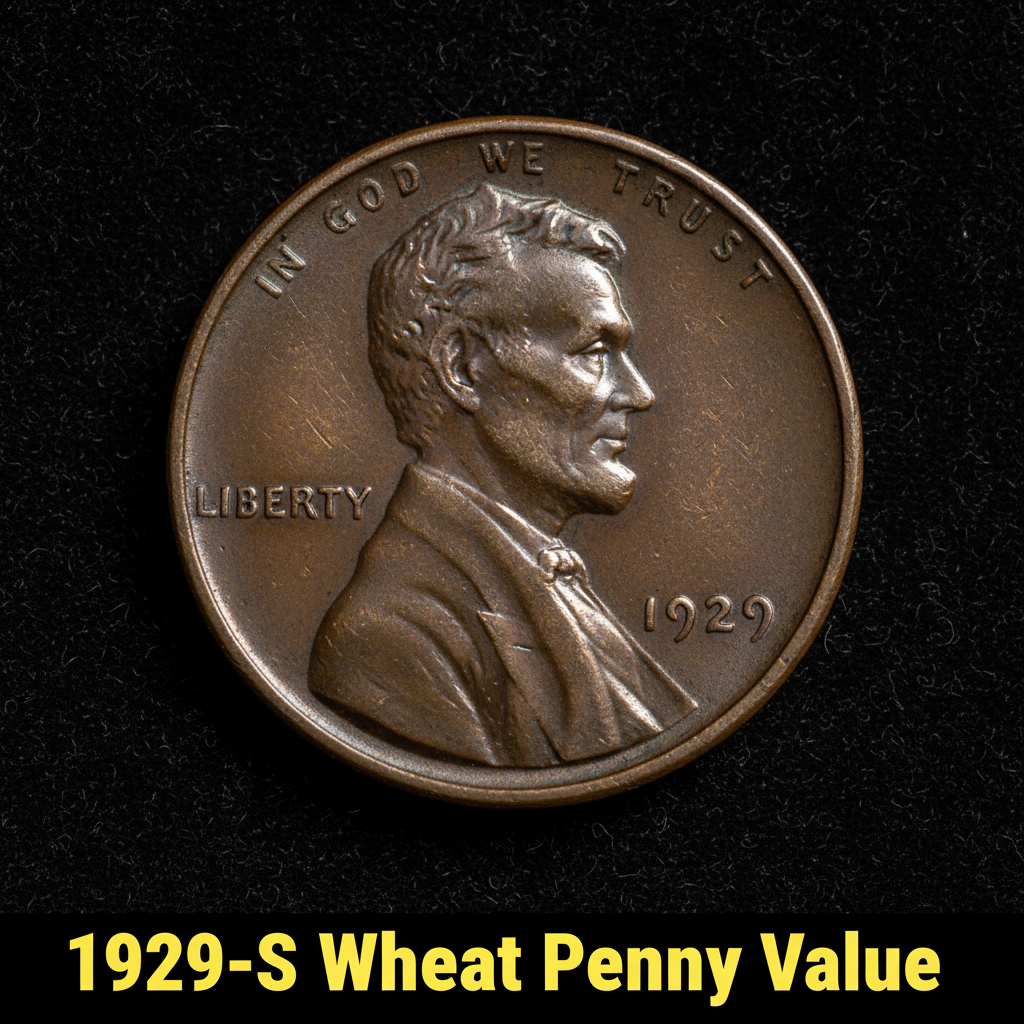
The 1929-S Lincoln Wheat Penny was struck at the San Francisco Mint in 1929, one of three mints producing cents that year alongside Philadelphia and Denver. The small “S” mintmark sits just below the date on the obverse side of the coin. That year, San Francisco produced about 50,148,000 of these cents — a fairly large mintage, which is part of why circulated examples are relatively affordable for most collectors.
Still, condition is everything in coin collecting. A 1929-S cent that spent decades in someone’s pocket looks dramatically different from one that was set aside and never touched. Before you do anything else, take a good look at Lincoln’s cheek, the wheat stalks on the back, and the lettering. If details are still sharp, you may have something worth a closer look. Using a free coin identifier app is a great starting point to confirm the coin details and get a ballpark value before diving deeper.
—
1929-S Wheat Penny Value by Grade
Coin values depend heavily on grade — a system that rates condition on a scale from Poor (P-1) all the way up to Mint State (MS-70). Here’s how the 1929-S Wheat Penny typically values out across common grades:
| Grade | Description | Estimated Value |
|---|---|---|
| Good (G-4) | Heavy wear, outline visible | $1 – $2 |
| Fine (F-12) | Moderate wear, some detail | $3 – $5 |
| Extremely Fine (EF-40) | Light wear on high points | $10 – $20 |
| About Uncirculated (AU-55) | Slight wear, mostly sharp | $25 – $45 |
| Mint State Brown (MS-63 BN) | Uncirculated, brown toning | $30 – $60 |
| Mint State Red (MS-65 RD) | Full original red luster | $300 – $600+ |
For a deeper look at how the 1929-S Wheat Penny grades out in mint state condition, check out this detailed 1929-S Wheat Penny MS Red price data that breaks down auction results and certified coin values across top grades.
—
What Makes a 1929-S Penny More Valuable?
Several factors push a 1929-S Wheat Penny value higher than average. First, color designation matters a lot for uncirculated coins. Grading services like PCGS and NGC designate copper cents as Red (RD), Red-Brown (RB), or Brown (BN). Red coins — those that retain 95% or more of their original copper luster — are the most desirable and the most valuable by far.
Strike quality is another factor. A sharply struck 1929-S cent with full detail in Lincoln’s hair and the wheat ears will always outperform a weakly struck example in the same technical grade. Look closely at the “S” mintmark too — a clean, well-defined mintmark suggests better die quality and adds subtle appeal to serious collectors.
Eye appeal, which experienced collectors simply call “the look,” plays a role as well. A coin with natural, even toning and no spots, cleaning marks, or damage will sell faster and for more money than a technically similar coin with problems.
CoinKnow is a fantastic tool for checking all of these details. The app lets you scan your coin and get an instant condition estimate, which takes a lot of the guesswork out of figuring out where your 1929-S cent falls on the value scale.
—
How to Tell If Your 1929-S Penny Has Been Cleaned
Cleaning is one of the most common issues that reduces a coin’s value — sometimes dramatically. A cleaned penny may look shiny at first glance, but under light you’ll notice fine hairline scratches across the surface called “hairlines.” These come from polishing or rubbing the coin with cloth or chemical solutions.
Cleaned coins are often worth significantly less than their uncleaned counterparts, and professional grading services will label a cleaned coin as “details grade” rather than assigning a full numerical grade. That distinction can mean the difference between a $50 coin and a $10 coin.
If you’re not sure whether your 1929-S Lincoln cent has been cleaned, CoinKnow can help you compare your coin’s surface against reference images of problem-free examples. The app is free and easy to use, even if you’ve never collected coins before.
You can also find a thorough breakdown of 1929 Wheat Penny values across all three mints, including the 1929-S, which is worth bookmarking if you’re trying to understand the full picture of what your coin might be worth.
—
FAQ
Q: How do I know if my penny is the 1929-S and not the 1929-D or plain 1929?
A: Look just below the date on the front of the coin. A small letter indicates the mint: “S” for San Francisco, “D” for Denver, and no letter at all means Philadelphia. A magnifying glass makes this much easier to see clearly.
Q: Is a 1929-S Wheat Penny worth getting professionally graded?
A: It depends on the condition. If your coin appears uncirculated with original red luster, professional grading from PCGS or NGC can significantly increase its resale value and buyer confidence. For heavily circulated examples worth a few dollars, the cost of grading usually isn’t worth it.
Q: Where is the best place to sell a 1929-S Wheat Penny?
A: eBay is the most popular platform for selling individual coins to collectors, and Heritage Auctions or Stack’s Bowers are better options for high-grade certified examples. Local coin dealers are a convenient option if you want a quick sale, though you may get slightly less than retail value.