1981-D Lincoln Penny Value Guide What Yours Is Really Worth
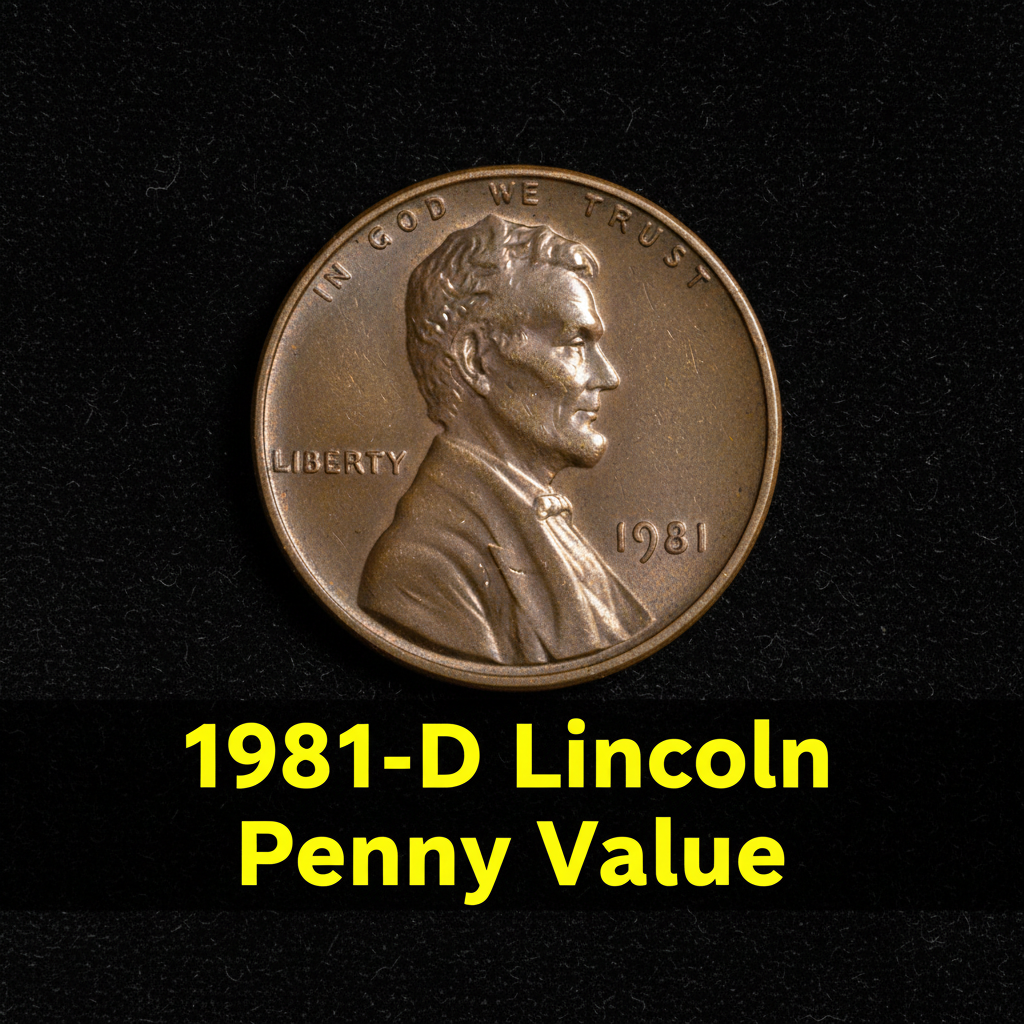
The 1981-D Lincoln Penny is worth anywhere from 1 cent in heavily circulated condition to around $8 or more in pristine mint state grades. Most of these coins you’ll find in a jar or old collection fall somewhere in between — but a few hidden gems can surprise you.
What Makes the 1981-D Penny Special
The “D” in 1981-D tells you this penny was struck at the Denver Mint. In 1981, the Denver Mint produced over 5.3 billion Lincoln cents — yes, billion with a B. That’s a huge mintage, which means most 1981-D pennies are not rare. However, coin collecting isn’t always about rarity alone. Condition matters enormously. A 1981-D penny pulled straight from a mint bag and never touched by human hands can be worth significantly more than a well-worn example that’s been rattling around in someone’s pocket for decades.
If you recently found one of these coins and aren’t sure what you’re looking at, a free coin identifier app can help you quickly confirm the date, mint mark, and grade range before you do anything else. Tools like CoinKnow are especially helpful for everyday folks who don’t have a numismatist in the family — it uses your phone’s camera to scan coins and give you instant identification and basic value data.
1981-D Penny Value by Grade
Coin value is almost always tied to condition, and Lincoln cents are no exception. Professionals use a scale called the Sheldon scale, running from 1 (barely identifiable) to 70 (absolutely perfect). Here’s how the 1981-D penny typically breaks down across common grade ranges:
| Grade | Description | Estimated Value |
|---|---|---|
| Good (G-4) | Heavily worn, outlines visible | $0.01 – $0.05 |
| Fine (F-12) | Moderate wear, clear lettering | $0.05 – $0.15 |
| Extremely Fine (EF-40) | Light wear on high points | $0.25 – $0.75 |
| Mint State (MS-63) | Uncirculated, some bag marks | $1.00 – $3.00 |
| Mint State (MS-65 RD) | Gem uncirculated, full red | $4.00 – $8.00+ |
For a deeper look at certified auction results and professional price data, you can check out the 1981-D Lincoln Penny MS Red price trends tracked across major grading services. These numbers update with real market activity, which is the most reliable way to understand what collectors are actually paying.
The “Red” Designation and Why It Adds Value
You might notice coin dealers and grading services tossing around terms like “RD,” “RB,” and “BN” when talking about Lincoln cents. These stand for Red, Red-Brown, and Brown — and they describe the color of the copper surface. A 1981-D penny with full original red luster (RD) is worth more than one that has turned brown over time, even at the same numerical grade.
Copper naturally reacts with air and oils from handling. A coin stored in a dark, dry environment since 1981 with its original bright copper color intact is genuinely more desirable to collectors. This is one reason why storage matters — a penny that was never cleaned, never touched, and kept in a proper coin flip or tube can fetch a noticeable premium.
Are Any 1981-D Pennies Worth Big Money
Most aren’t, but errors are a different story. Error coins — those with die doubling, off-center strikes, or other minting mistakes — can be worth anywhere from a few dollars to well over $100 depending on how dramatic and visible the error is. Doubled die errors on Lincoln cents are some of the most collected in all of American numismatics.
If you think your 1981-D penny looks a little “off,” look closely at the inscriptions under magnification. If letters appear doubled or show a ghosting effect, you might have something worth getting professionally evaluated. CoinKnow can give you a preliminary read on whether what you’re seeing is a genuine error or just normal die wear — and it can save you a trip to a dealer before you know if it’s worth the effort.
For a broader overview of all 1981 penny varieties and how to assess their value at home, the complete 1981 penny value breakdown including both Philadelphia and Denver issues is a great resource that covers grading tips, error varieties, and current market ranges in plain language.
How to Get the Best Price for Your 1981-D Penny
If you believe your coin is in excellent condition, professional grading through PCGS or NGC is worth considering for anything you think might grade MS-65 or higher. Certified coins sell for more because buyers trust the grade. For raw (ungraded) coins, selling through eBay, local coin shows, or dealer networks is perfectly reasonable — just make sure you understand the condition of what you’re selling.
Using CoinKnow before you sell is smart. It helps you walk into any negotiation with a realistic idea of what your coin is worth, so you’re not leaving money on the table or holding out for a price that isn’t realistic.
Frequently Asked Questions
Q: Is a 1981-D penny worth keeping?
A: If it’s circulated and shows normal wear, it’s essentially face value. But if you have an uncirculated example with bright red color, or spot a possible error variety, it’s definitely worth holding onto or having evaluated.
Q: What does the “D” mint mark mean on a 1981 penny?
A: The “D” stands for Denver, meaning the coin was produced at the U.S. Mint’s Denver facility. Pennies from 1981 without a mint mark were made in Philadelphia. Both are common, but some collectors pursue matched sets from both mints.
Q: How do I know if my 1981-D penny has an error?
A: Look for doubling in the lettering, off-center designs, or unusual surface anomalies under a magnifier. Apps like CoinKnow can help with initial identification, but for confirmation on potentially valuable errors, professional grading is the gold standard.