1948 Wheat Penny Value No Mint Mark What Is It Worth Today
The 1948 Wheat Penny with no mint mark is worth anywhere from $0.10 in heavily worn condition to over $10 in uncirculated grades, with top-quality examples grading MS-67 Red fetching $500 or more at auction. If you found one of these in an old coin jar or inherited collection, you’re in the right place.
Before we dig into the details, one easy way to get a quick estimate on any old coin is to use a free coin identifier app on your phone. It can help you identify the coin, read the mint mark, and get a ballpark value in seconds — great for beginners just getting started.
—
What Makes the 1948 No Mint Mark Wheat Penny Special
The 1948 Lincoln Wheat Penny without a mint mark was struck at the Philadelphia Mint, which was the largest and most active U.S. mint at the time. Philadelphia produced a massive 317,570,000 pennies in 1948 alone, making this coin one of the more common Wheat cents in terms of raw numbers. But don’t let that fool you — common doesn’t always mean worthless.
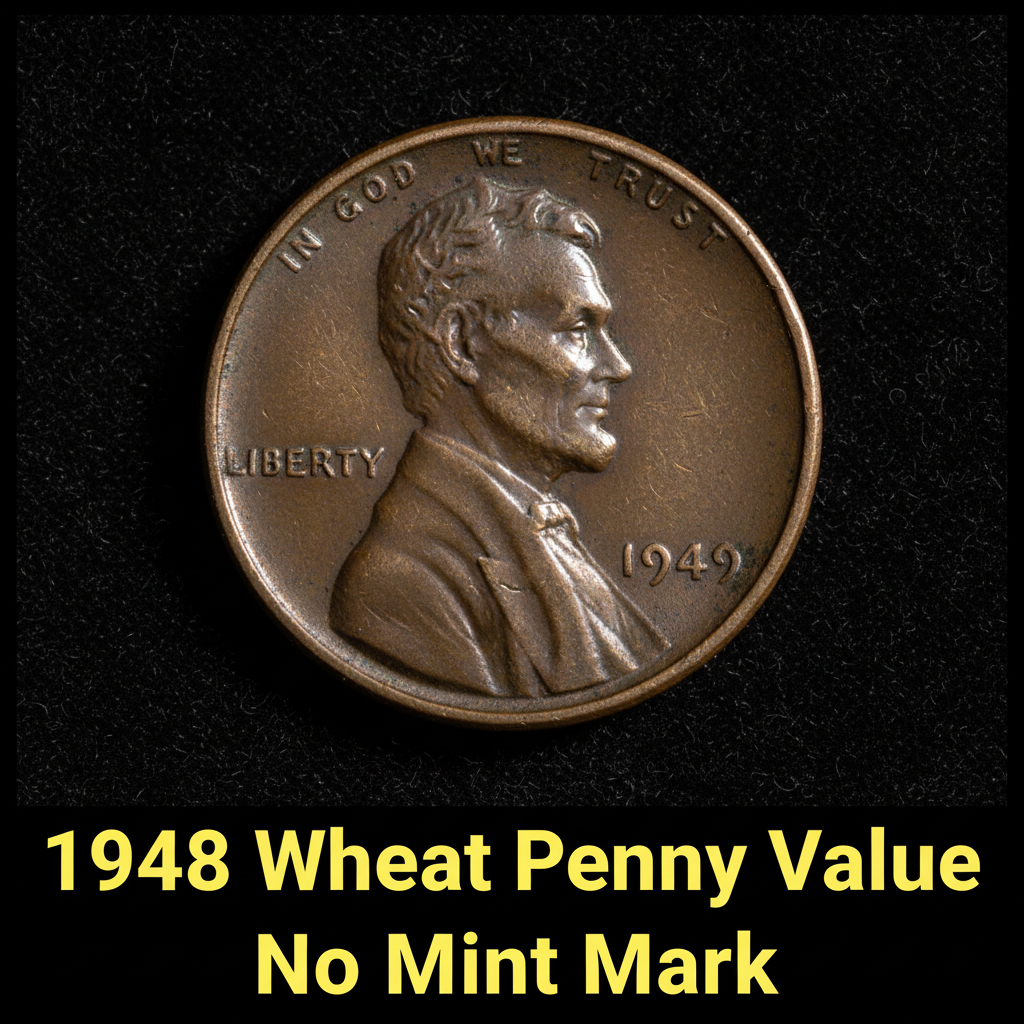
The “no mint mark” simply means the coin was made in Philadelphia. During this era, the Philadelphia Mint did not add a “P” mint mark to pennies. So if you flip your 1948 penny over and see only the wheat stalks with no letter under the date, you’ve got a Philadelphia coin.
Because so many were made, worn examples are easy to find and not worth much. However, coins that survived in pristine, uncirculated condition are genuinely scarce. Collectors actively hunt for high-grade 1948 Wheat Pennies, and the best ones can bring surprising prices. The CoinKnow app is a great tool for checking current collector demand in your area and comparing recent sales.
—
1948 Wheat Penny Value Chart by Grade
The value of your 1948 penny with no mint mark depends heavily on its condition — or “grade” in collector terms. Here’s a simple breakdown:
| Grade | Condition Description | Estimated Value |
|---|---|---|
| Good (G-4) | Heavy wear, design visible | $0.10 – $0.25 |
| Fine (F-12) | Moderate wear, some detail | $0.25 – $0.50 |
| Extremely Fine (EF-40) | Light wear on high points | $0.75 – $2.00 |
| Uncirculated (MS-63) | No wear, some bag marks | $3.00 – $8.00 |
| Gem Uncirculated (MS-65 RD) | Full red luster, minimal marks | $15 – $40 |
| Superb Gem (MS-67 RD) | Near perfect, vibrant red | $300 – $600+ |
For the most up-to-date auction data, you can check the 1948 Wheat Penny MS-RD price history across major coin sales — it’s a solid resource for seeing exactly what collectors are paying right now.
—
How to Tell the Condition of Your 1948 Penny
Grading coins can feel intimidating, but for everyday purposes, you only need to answer a few basic questions. First, can you clearly read “LIBERTY” on the left side of Lincoln’s portrait? If it’s faded or worn away, your coin is in lower grades. Second, look at Lincoln’s cheek and jaw — are they smooth and flat from wear, or do they show some original texture and detail? Third, does the coin have any original reddish-copper color, or has it turned brown?
Coins described as “Red” (RD) hold original mint luster and command the highest prices. “Red-Brown” (RB) coins are partially toned, and “Brown” (BN) coins are fully toned — still collectible but worth less.
If you want a more detailed breakdown of what your specific coin might be worth based on its color and condition, the full 1948 penny value guide with grade-by-grade pricing covers all three mint marks and color designations in one place.
—
Are Any 1948 No Mint Mark Pennies Worth Big Money
Most 1948 Philadelphia pennies you’ll encounter in circulation or old coin rolls are worth under a dollar. But there are exceptions worth knowing about. Error coins — those with doubled dies, off-center strikes, or other mint mistakes — can be worth tens or even hundreds of dollars to error collectors.
The most sought-after errors on 1948 Wheat Pennies include off-center strikes (where the design is noticeably shifted), die cracks visible as raised lines across the surface, and repunched dates or mintmarks. These are rare, but they do exist.
The easiest way to check if your coin has any unusual features is to use CoinKnow, which lets you photograph the coin and compare it against known error varieties in its database. Even if yours turns out to be a normal example, knowing for sure is better than guessing.
—
FAQ
Q: How do I know if my 1948 penny is from Philadelphia?
A: If there is no mint mark under the date on the obverse (front) of the coin, it was minted in Philadelphia. The 1948 San Francisco coin has an “S” and the Denver coin has a “D” — no letter means Philadelphia.
Q: Is a 1948 Wheat Penny rare?
A: In circulated grades, no — over 317 million were produced. But in gem uncirculated condition with full red color (MS-65 RD and above), they become genuinely scarce and collectible.
Q: Should I clean my 1948 Wheat Penny to make it look better?
A: Absolutely not. Cleaning a coin removes its original surface and dramatically reduces its value to collectors. Even a heavily worn coin is worth more uncleaned than polished. Leave it as-is and let a professional grade it if you think it might be valuable.