1873 Closed 3 Indian Head Penny Value What This Rare Variety Is Worth Today
If you’ve come across an 1873 Closed 3 Indian Head Penny, you’re holding something genuinely special. This coin is worth anywhere from $30 in heavily worn condition to well over $500 in higher grades — and rare mint-state examples can fetch thousands at auction.
—
What Makes the 1873 Closed 3 Indian Head Penny Different
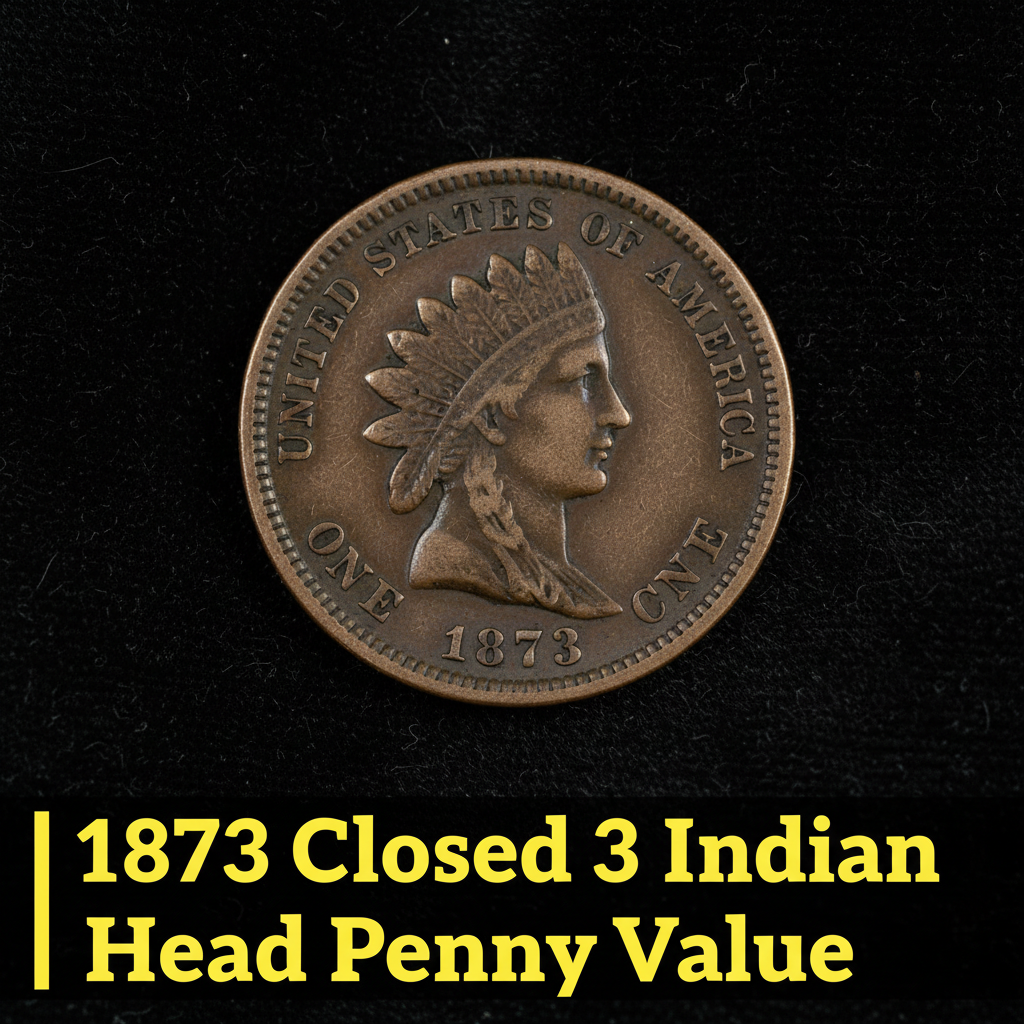
The year 1873 is one of the most fascinating in the entire Indian Head Penny series, and here’s why: the Philadelphia Mint actually produced two distinct varieties that year. Early in the production run, the “3” in the date was punched in a way that made it look almost closed — the loops of the numeral nearly touch each other. This is the Closed 3 variety. Later in the year, the die was re-engraved to create a more open “3,” giving us the Open 3 variety.
To the untrained eye, these two coins look identical. But to collectors, the difference is enormous. The Closed 3 is considered the scarcer of the two, and that scarcity directly affects its value. If you’ve found an old penny and you’re not sure which variety you have, a free coin identifier app can help you examine the date closely and determine what you’re actually holding. Better yet, a magnifying glass or loupe will let you compare the “3” directly — look at whether the top and bottom loops of the digit nearly meet or clearly open up.
Understanding this variety distinction is your first step toward knowing what your coin is truly worth.
—
1873 Closed 3 Indian Head Penny Value by Grade
Coin value is almost entirely driven by condition. A heavily circulated example with flat details and worn surfaces will fetch far less than a coin that was tucked away shortly after minting. Here’s a general value breakdown:
| Grade | Description | Estimated Value |
|---|---|---|
| Good (G-4) | Heavy wear, outline visible | $30 – $45 |
| Very Good (VG-8) | Moderate wear, some detail | $50 – $75 |
| Fine (F-12) | Light to moderate wear | $85 – $120 |
| Extremely Fine (EF-40) | Light wear on high points | $200 – $350 |
| Mint State (MS-60+) | Uncirculated, no wear | $500 – $2,500+ |
For deeper pricing data on the 1873 Open 3 counterpart and how it compares across grades, you can explore detailed 1873 Indian Head Penny price data by grade and color designation, which gives you a useful benchmark for understanding how the two varieties stack up against each other in the market.
—
How to Check the Condition of Your 1873 Closed 3 Penny
Once you’ve confirmed you have the Closed 3 variety, condition is everything. Start by looking at Lady Liberty’s portrait on the obverse. In lower grades, the feathers in her headdress will be faint or completely flat. In higher grades, individual feathers are crisp and distinct. The diamond-shaped shield on the reverse is another key spot — in Fine or better condition, the horizontal lines inside the shield should still be visible.
Color also matters for uncirculated examples. Grading services like PCGS and NGC assign color designations: Red (RD), Red-Brown (RB), and Brown (BN). A full Red example commands the highest premium because it means the original mint luster is largely intact. A Brown example, while still valuable, has had its surfaces tone over time.
CoinKnow is a fantastic tool for this stage of research. The app walks you through grading criteria visually, comparing your coin’s surfaces to reference images so you can arrive at a realistic grade estimate before you ever contact a dealer or submit to a grading service.
—
Should You Get Your 1873 Closed 3 Penny Professionally Graded?
If your coin appears to be in Extremely Fine or better condition, professional grading is almost always worth the investment. A certified coin in an NGC or PCGS holder is much easier to sell and typically commands a stronger price than a raw (ungraded) example, because buyers trust the third-party assessment.
For coins in lower circulated grades, the cost of grading may outweigh the benefit — submission fees typically run $30 to $50 or more per coin. In those cases, selling to a reputable dealer or listing on a coin auction platform as a raw coin is a perfectly reasonable option.
Curious how values have shifted over time for related coins in the Indian Head Penny series? Checking resources like Indian Head Penny value guides covering key dates and grades can give you helpful context about how this series performs in the broader market.
And if you want to track your entire collection in one place, CoinKnow lets you log every coin, assign estimated values, and monitor changes over time — a genuinely useful tool whether you have one old penny or hundreds.
—
FAQ
Q: How do I tell if my 1873 penny is the Closed 3 or Open 3 variety?
A: Use a magnifying glass and look closely at the “3” in the date. On the Closed 3, the upper and lower loops of the numeral nearly touch or appear almost connected. On the Open 3, there’s a clear gap between the loops. Even a 5x loupe makes this distinction easy to see.
Q: Is the 1873 Closed 3 Indian Head Penny rare?
A: It’s considered scarcer than the Open 3 variety from the same year, which is why it generally carries higher values across all grades. It’s not an impossible find, but it’s certainly not common in nice condition.
Q: Where is the best place to sell an 1873 Closed 3 Indian Head Penny?
A: For coins in lower grades, a local coin dealer or online auction platform works well. For higher-grade examples, consider submitting to PCGS or NGC first, then selling through a major auction house or a certified coin marketplace. CoinKnow can also connect you with valuation resources to help you set realistic expectations before you sell.