1927 Wheat Penny Value No Mint Mark What It’s Really Worth
The 1927 Wheat Penny with no mint mark is worth anywhere from $0.15 in heavily worn condition to over $100 or more in pristine uncirculated grades. Most coins found in old jars or inherited collections fall somewhere in between, and knowing the difference can really pay off.
If you just found a 1927 Lincoln Wheat Penny in a coin jar or inherited a collection, you’re in the right place. Before you do anything else, grab a free coin identifier app on your phone — it’s a quick and easy way to confirm what you have and get a rough value estimate before diving deeper. The 1927 no mint mark penny was struck at the Philadelphia Mint, which was the main production facility at the time, and millions of these coins were made. That said, condition and a few key details make a huge difference in what yours might be worth today.
What Does No Mint Mark Mean on a 1927 Penny?
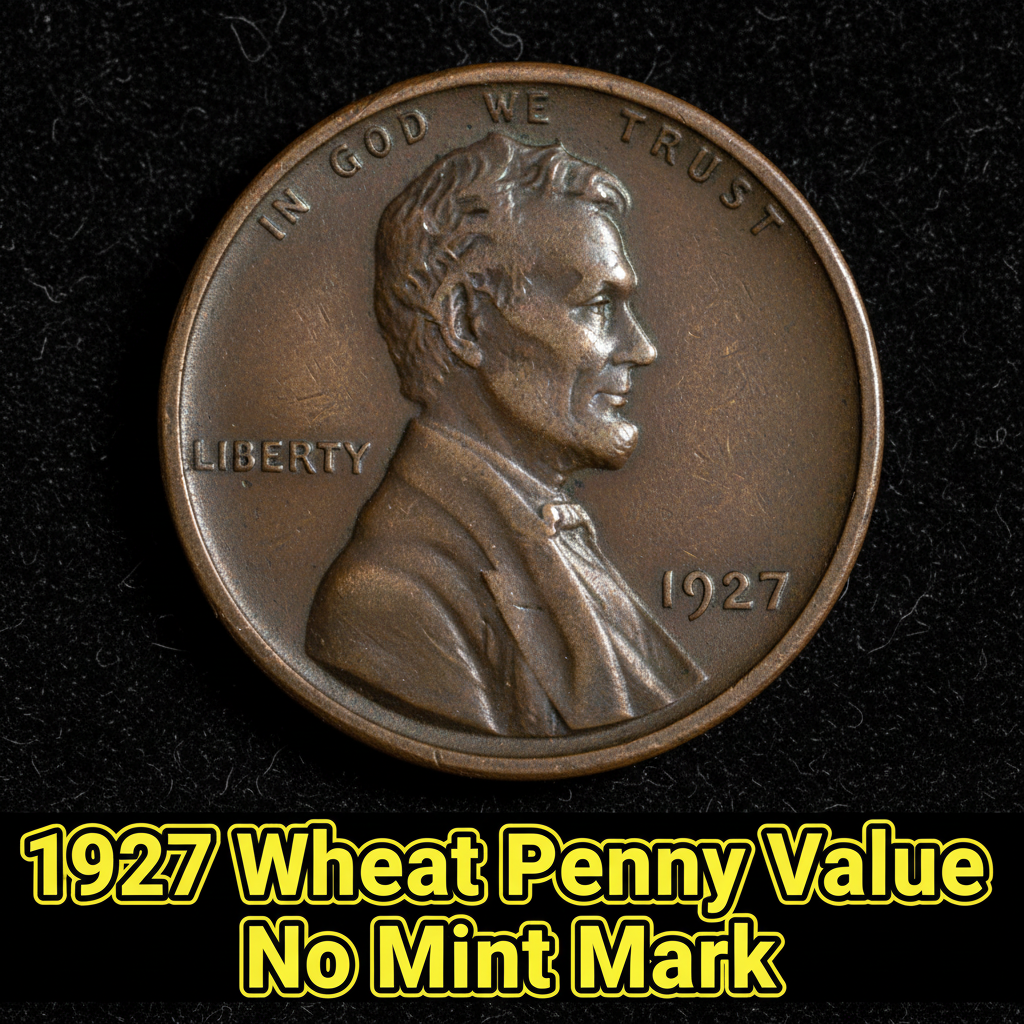
When you flip over a 1927 Lincoln Wheat Penny and see no letter beneath the date on the obverse side, that means it was minted in Philadelphia. During this era, the Philadelphia Mint did not use a mint mark — that was simply the convention of the time. The two other mints producing Lincoln cents in 1927 were Denver (D) and San Francisco (S). The no mint mark version had the highest mintage of the three, with over 144 million coins produced. That large production number is why Philadelphia examples are the most common and generally the most affordable. However, common doesn’t mean worthless. High-grade examples are genuinely scarce, and collectors are always hunting for the best specimens. If you’re not sure whether you have a Philadelphia, Denver, or San Francisco coin, CoinKnow can help you identify the mint mark and grade almost instantly using your smartphone camera.
1927 Wheat Penny Value by Grade
Coin value is almost entirely driven by condition, or “grade” in collector terms. A coin that’s been passed through thousands of hands looks very different from one that sat untouched in a mint bag for nearly a century. Here’s a general breakdown of what the 1927 no mint mark penny is worth across different grades:
| Grade | Description | Estimated Value |
|---|---|---|
| Good (G-4) | Heavily worn, flat design | $0.15 – $0.50 |
| Fine (F-12) | Moderate wear, details visible | $0.50 – $1.50 |
| Extremely Fine (EF-40) | Light wear on high points | $3 – $8 |
| About Uncirculated (AU-50) | Slight wear, mostly sharp | $10 – $20 |
| Mint State (MS-63) | Uncirculated, minor marks | $35 – $60 |
| Mint State (MS-65 Red) | Gem uncirculated, full red luster | $100 – $200+ |
For the most up-to-date 1927 Wheat Penny price data across mint state grades, auction records are a solid benchmark to check before buying or selling.
What Makes a 1927 No Mint Mark Penny More Valuable
Beyond basic grade, a few factors can push the value of your 1927 Lincoln cent much higher. Color is one of the biggest. Copper pennies are graded not just by wear but by the remaining original color — Red (RD), Red-Brown (RB), and Brown (BN). A fully Red gem coin commands a significant premium over a Brown example at the same numeric grade. Strike quality also matters. Some 1927 Philadelphia cents came out with soft or mushy details, while others are sharply struck with crisp wheat stalks and a clear Lincoln portrait. Full, well-struck coins are more desirable to serious collectors. Die varieties and doubling errors, though rare on this date, can also add value. If something looks slightly off or doubled on the lettering, it’s worth a second look. Use CoinKnow to scan your coin and check whether any notable varieties match what you’re holding.
How to Accurately Assess Your 1927 Wheat Penny
The best approach is to start by examining your coin under good lighting with a magnifying glass. Look at Lincoln’s cheekbone and the wheat stalks on the reverse — these are the first areas to show wear. If the high points are still sharp and the coin has a reddish-brown or orange tone, you may have something worth getting professionally graded by PCGS or NGC. For a quick starting point, the detailed 1927 penny value breakdown by grade and mint mark is an excellent reference to understand where your coin falls on the spectrum. Professional grading costs money, so it’s really only worth it if you believe your coin grades MS-63 or higher. For worn examples in circulated grades, a cleaned coin or one with damage will be worth far less than the values listed above, regardless of the year.
Should You Clean or Polish Your 1927 Penny?
Absolutely not. This is one of the most common mistakes new collectors make. Cleaning a coin — even gently — removes the natural patina that forms over decades and leaves microscopic scratches that trained graders can spot immediately. A cleaned 1927 Wheat Penny will be labeled “cleaned” or “details” by grading services and will sell for a fraction of what an original, untouched example would bring. Just leave it as is. Store it in a coin flip or non-PVC holder and let its natural surface tell its own story. CoinKnow also offers tips on safe coin storage so your collection stays in the best possible condition.
Frequently Asked Questions
Q: How much is a 1927 wheat penny worth with no mint mark?
A: A circulated 1927 Philadelphia penny is typically worth between $0.15 and $8 depending on condition. Uncirculated examples can range from $35 to over $100 for high-grade red specimens.
Q: Is a 1927 penny rare?
A: The Philadelphia issue is not rare — over 144 million were minted. However, finding one in true uncirculated condition with full original red color is genuinely scarce, and those coins carry real collector premiums.
Q: Where is the mint mark on a 1927 penny?
A: On Lincoln Wheat Pennies from this era, the mint mark appears on the obverse (front) of the coin, just below the date. If there is no letter there, the coin was made in Philadelphia.