1910 Liberty Nickel Value What It’s Worth and Why Collectors Care
The 1910 Liberty Nickel is worth anywhere from $2 in heavily worn condition to over $100 or more in well-preserved mint state examples. If you found one tucked away in a drawer or old coin jar, you may be sitting on more than pocket change — and this guide will help you figure out exactly what you’ve got.
Getting Started: How to Identify a 1910 Liberty Nickel
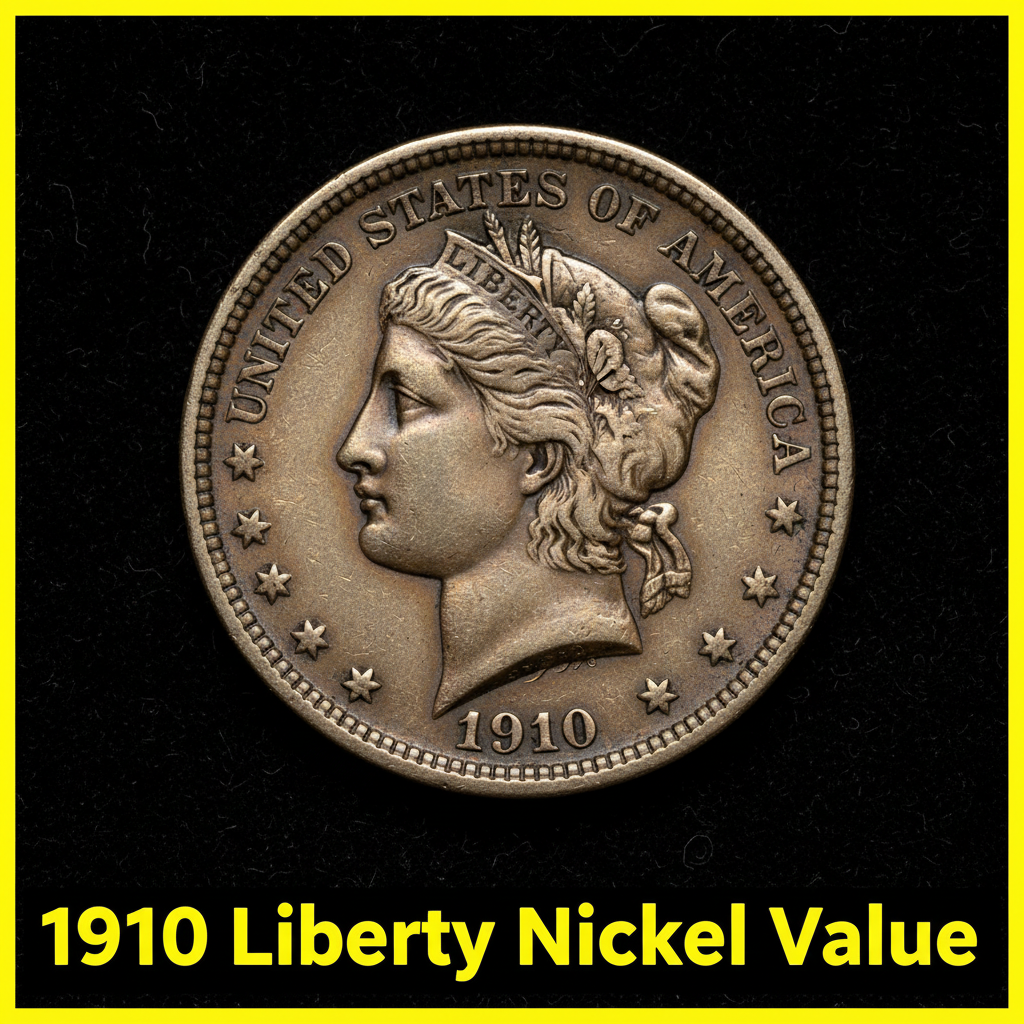
Before you can determine value, you need to confirm what coin you’re holding. The 1910 Liberty Nickel features a left-facing portrait of Liberty wearing a coronet inscribed with the word “LIBERTY.” The reverse displays a Roman numeral “V” surrounded by a wreath, with “E PLURIBUS UNUM” arching over the top. The date “1910” appears at the bottom of the obverse.
This design is part of the Liberty Head (or “V Nickel”) series, minted from 1883 to 1912. If you’re not completely sure about the design or date on your coin, a free coin identifier app can help you match it quickly using your phone’s camera. Apps like CoinKnow are especially beginner-friendly and give you instant coin recognition plus estimated values without needing to visit a dealer first.
One key detail to check: the 1910 Liberty Nickel was struck only at the Philadelphia Mint, meaning there is no mint mark to look for. If your coin has a mint mark, you may have a different issue entirely.
1910 Liberty Nickel Value by Grade
Coin value is almost entirely determined by condition, also known as “grade.” A coin that has been heavily circulated — rubbed smooth, with little to no visible detail — is worth far less than one that was saved right away and shows crisp, original features.
Here’s a general breakdown of 1910 Liberty Nickel values across different grades:
| Grade | Description | Estimated Value |
|---|---|---|
| Good (G-4) | Heavy wear, outline visible | $2 – $4 |
| Very Good (VG-8) | Moderate wear, some detail | $4 – $8 |
| Fine (F-12) | Even wear, clear lettering | $8 – $15 |
| Extremely Fine (EF-40) | Light wear on high points | $25 – $45 |
| About Uncirculated (AU-55) | Slight wear, much luster | $50 – $75 |
| Mint State (MS-63+) | No wear, original shine | $100 – $300+ |
Keep in mind that top-tier examples graded MS-65 or higher have sold at auction for well over $500. Eye appeal, luster, and strike quality all factor into how a professional grader assigns the final number.
What Makes a 1910 Liberty Nickel More Valuable
Beyond basic grade, a few additional factors can push your 1910 Liberty Nickel value higher than the averages above. Coins with strong strikes — where Liberty’s hair strands and the wreath details on the reverse are fully defined — command premiums. Original, undisturbed surfaces also matter. A coin that has been cleaned with a cloth or polished will almost always be worth less than a naturally toned example in the same grade.
Color and toning can be a double-edged sword. Attractive, original gray or golden toning is considered desirable by most collectors. Harsh, unnatural toning or cleaning marks reduce value significantly. If you’re unsure whether your coin has been cleaned, hold it at an angle under a single light source and look for fine hairline scratches across the surface — a telltale sign.
It’s also worth comparing your coin’s value to other nickels from this era. For example, detailed coin value information for other 1910-era U.S. coins can give you helpful context when building or pricing a collection. Understanding the range of values across denominations helps you make smarter decisions whether you’re buying or selling.
Should You Get Your 1910 Liberty Nickel Graded?
Professional grading through PCGS or NGC is worth considering if your coin appears to be in Extremely Fine condition or better. Certification adds buyer confidence and can significantly increase what a collector is willing to pay. Grading fees typically start around $20–$30 per coin, so it only makes financial sense for higher-grade pieces.
For most everyday finds in Good to Fine condition, professional grading isn’t necessary. Instead, use CoinKnow to get a fast, reliable estimate right from your phone. The app allows you to photograph your coin and receive instant feedback on its likely grade range and current market value — perfect for someone who’s new to coin collecting and just wants a straight answer.
Where to Sell a 1910 Liberty Nickel
If you’ve decided to sell, you have several solid options. Local coin dealers offer the fastest transaction but typically pay 50–70% of retail value. eBay is ideal for circulated coins because the open bidding format often pushes final prices close to market value. For higher-grade pieces, Heritage Auctions and Stack’s Bowers are the most respected platforms and attract serious buyers willing to pay top dollar.
Before listing or selling, do your research. Check recent “sold” listings on eBay for comparable coins. Use CoinKnow to double-check estimated values and make sure you’re not leaving money on the table by pricing too low or turning off buyers by pricing too high.
FAQ
Q: How do I know if my 1910 Liberty Nickel is valuable?
A: Start by examining the condition. If the coin still shows clear detail in Liberty’s hair and the reverse wreath, it’s likely in Fine or better condition and worth at least $8–$15. Coins with full original luster and no wear can be worth $100 or more. Use a magnifying glass and good lighting for a closer look.
Q: Is there a rare version of the 1910 Liberty Nickel?
A: The 1910 issue is a relatively common date in the Liberty Head Nickel series. There are no major varieties or proof issues that dramatically separate one 1910 nickel from another. However, high-grade mint state examples are genuinely scarce and desirable among collectors.
Q: Can I clean my 1910 Liberty Nickel to make it look better?
A: No — please don’t clean it. Cleaning almost always reduces a coin’s value in the eyes of collectors and dealers. Even gentle polishing removes original surface texture and luster that cannot be restored. If the coin is dirty, leave it as-is and let a professional evaluate it before doing anything.