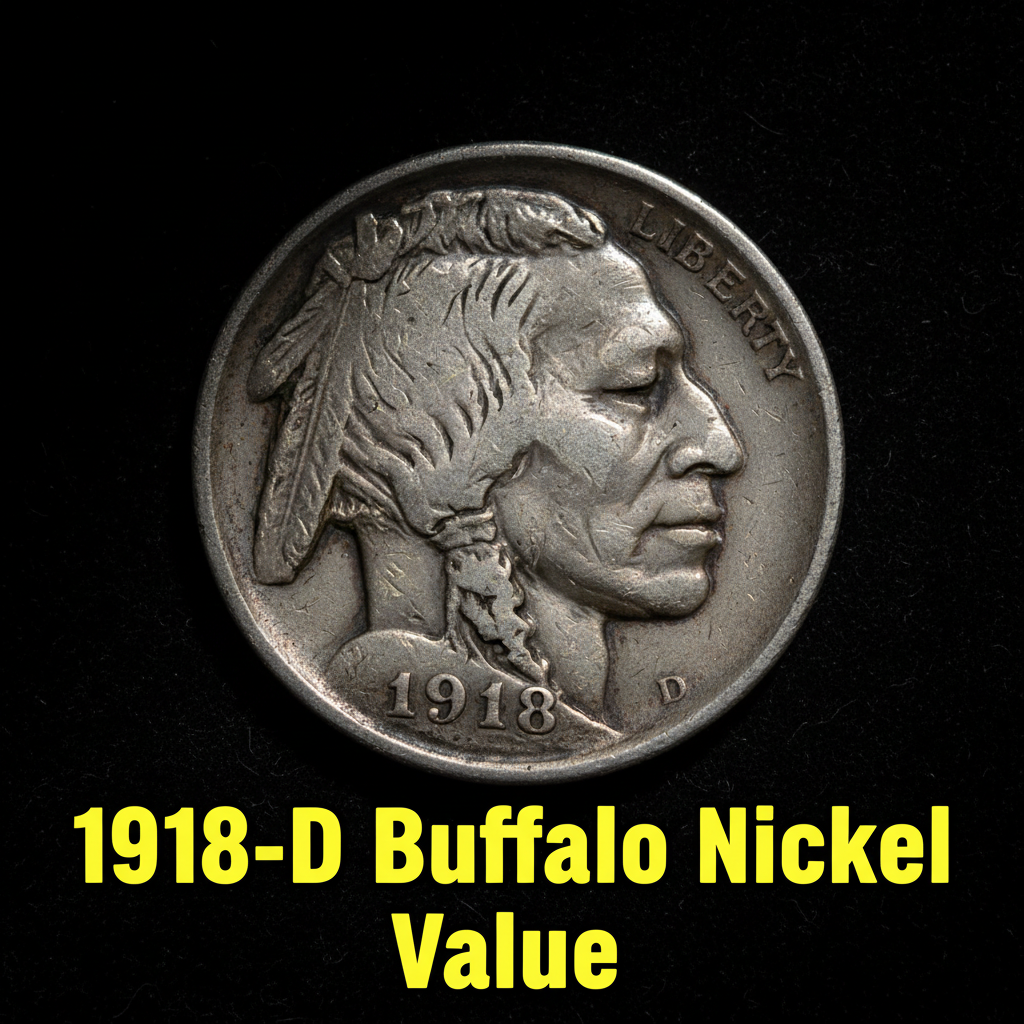
1918-D Buffalo Nickel Value What It’s Really Worth and How to Find Out
The 1918-D Buffalo Nickel is worth anywhere from $10 in heavily worn condition to well over $2,000 in high mint state grades — and truly exceptional specimens have sold for much more at major auctions. If you found one of these old nickels and want to know its value, you’re in the right place.
What Makes the 1918-D Buffalo Nickel Special
The “D” mintmark on this coin means it was struck at the Denver Mint in 1918. That single letter makes a big difference in value compared to the Philadelphia issue. The Denver Mint produced 8,362,000 Buffalo Nickels that year — a relatively modest mintage that helps explain why well-preserved examples are so sought after today.
Buffalo Nickels, also known as Indian Head Nickels, were designed by sculptor James Earle Fraser and featured a Native American profile on the obverse and an American bison on the reverse. The design is iconic, but it’s also notoriously difficult to strike with full details, which means finding a sharp, well-struck 1918-D is genuinely exciting.
If you’ve stumbled across one and want a quick identification, using a free coin identifier app is a great first step before diving deeper into grading and valuation. These apps can confirm the date, mintmark, and give you a ballpark on what you’re holding.
Understanding the 1918-D Buffalo Nickel Value by Grade
Coin value is almost entirely tied to condition, or “grade.” A coin that looks barely worn is worth dramatically more than one that’s been circulated for decades. Here’s a straightforward breakdown of what the 1918-D Buffalo Nickel is worth across common grades:
| Grade | Description | Estimated Value |
|---|---|---|
| G-4 (Good) | Heavy wear, date visible | $10 – $15 |
| VG-8 (Very Good) | Moderate wear, design clear | $18 – $28 |
| F-12 (Fine) | Some detail visible on high points | $35 – $55 |
| VF-20 (Very Fine) | Light wear, most detail intact | $65 – $95 |
| EF-40 (Extremely Fine) | Slight wear on highest points only | $130 – $180 |
| AU-55 (About Uncirculated) | Trace wear, nearly mint | $250 – $375 |
| MS-63 (Mint State) | No wear, some marks | $600 – $950 |
| MS-65 (Gem Mint State) | No wear, minimal marks, sharp strike | $2,000+ |
For more detailed 1918-D Buffalo Nickel price data across all mint state grades, certified auction records and population reports can help you understand exactly where your coin fits in the market.
How to Check the Mintmark and Spot a Real 1918-D
Locating the mintmark is the first thing you should do. On Buffalo Nickels, the mintmark sits on the reverse side, just below the words “FIVE CENTS” and beneath the bison’s belly. A small “D” in that spot confirms you have a Denver Mint coin.
Be careful about dates. Buffalo Nickels are notorious for having the date wear off first, since it was placed on a high-relief area of the design. A coin with a faded or missing date is worth very little. If the “1918” and “D” are clear and readable, that’s a great sign.
Also pay attention to the bison’s horn and the Native American’s cheekbone — these are the first areas to show wear. The more detail you can see in those spots, the higher the grade and the higher the value. CoinKnow is a handy tool that walks you through exactly what to look for when grading Buffalo Nickels at home — even if you’re a complete beginner.
What Affects the Value Beyond the Grade
Grading isn’t the only factor. Strike quality matters a great deal for Buffalo Nickels, and Denver Mint coins from this era were sometimes weakly struck. A sharp, well-defined strike on a 1918-D is a premium feature collectors genuinely pay more for.
Eye appeal also matters. A coin with attractive original color, no cleaning marks, and no damage to the surfaces will command more than a technically higher-graded coin that looks dull or has been polished.
Certification from a professional grading service like PCGS or NGC adds buyer confidence and can significantly increase resale value. If you think you have a higher-grade example, professional grading is often worth the cost. For a quick personal check before spending money on certification, the CoinKnow app lets you photograph your coin and get an instant grade estimate, which is a smart way to decide whether it’s worth sending in.
You can also explore a full breakdown of the 1918 Buffalo Nickel’s value across all mint varieties, including Philadelphia and San Francisco issues, to compare how the Denver coin stacks up.
Should You Sell, Hold, or Get It Graded?
If your 1918-D Buffalo Nickel is worn down to Good or Very Good grade, it’s a cool piece of history worth $10–$30 — definitely keep it or sell to a local coin shop. But if your coin shows real detail and the surfaces look clean and original, it may be worth significantly more.
For coins in Fine or better condition, getting a second opinion is smart. Coin dealers, coin shows, and online communities can help, and apps like CoinKnow give you a solid starting point from your own phone. The Buffalo Nickel series has a passionate collector base, and even common-date coins in pristine condition attract serious attention.
—
Frequently Asked Questions
Q: How do I know if my 1918 nickel is from Denver?
A: Flip your coin to the reverse and look just below “FIVE CENTS” under the bison. A small “D” there confirms it’s a Denver Mint coin. No mintmark means Philadelphia; an “S” means San Francisco.
Q: Is a worn 1918-D Buffalo Nickel still worth anything?
A: Yes, absolutely. Even a heavily worn 1918-D in Good grade is typically worth $10–$15, and any circulated example with a readable date and mintmark has collector value. The better the condition, the more it’s worth.
Q: Can I clean my Buffalo Nickel to make it look better?
A: Please don’t. Cleaning a coin almost always reduces its value, sometimes dramatically. Collectors and dealers can immediately spot a cleaned coin, and it can drop a coin’s value by 50% or more. Leave it as-is and let a professional evaluate the natural surfaces.