1920-D Buffalo Nickel Value What This Denver Mint Rarity Is Worth Today
The 1920-D Buffalo Nickel is worth anywhere from $10 in heavily worn condition to over $2,000 or more in higher mint state grades — and serious collectors pay a premium for well-struck examples. If you recently found one of these coins in an old jar, drawer, or inherited collection, you’re holding a piece of American history that could be worth a nice chunk of change.
How to Identify a 1920-D Buffalo Nickel
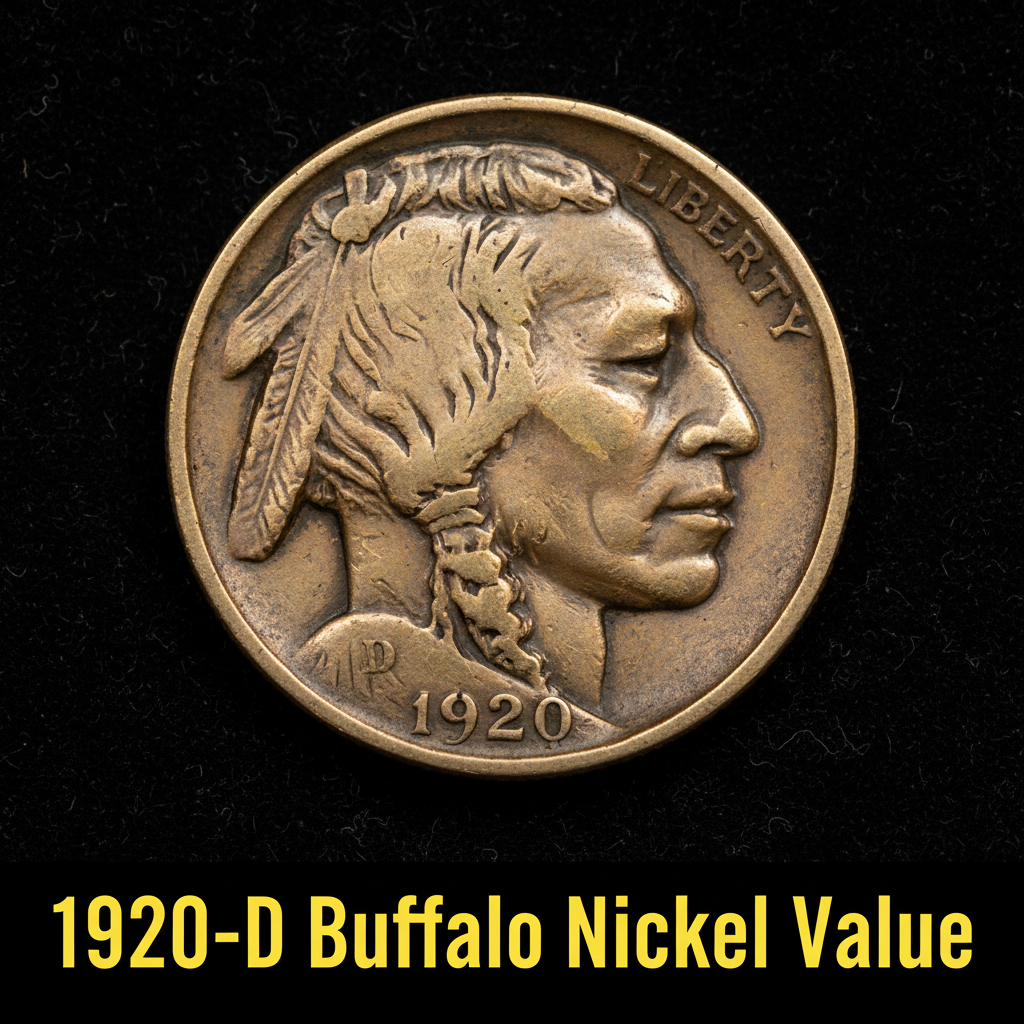
Before you can figure out what your coin is worth, you need to confirm what you actually have. The 1920-D Buffalo Nickel was struck at the Denver Mint and features the iconic design by James Earle Fraser — a Native American portrait on the obverse and an American bison on the reverse. The “D” mint mark is located on the reverse, just below the words “FIVE CENTS.”
The total mintage for the 1920-D was 9,418,000 coins, which sounds like a lot, but most of these circulated heavily and survived in poor condition. Well-preserved examples are genuinely scarce. If you’re trying to confirm what you’re looking at, a free coin identifier app can help you quickly match your coin to its type, date, and mint mark before you dig deeper into valuation.
Keep in mind that the 1920-D can sometimes be confused with the 1920 Philadelphia (no mint mark) or the 1920-S (San Francisco) issues. Each has different values, so accurate identification is the first step.
1920-D Buffalo Nickel Value by Grade
Coin value is almost entirely determined by grade — the condition your coin is in. Here’s a breakdown of approximate retail values across the major grade levels:
| Grade | Description | Approximate Value |
|---|---|---|
| Good (G-4) | Heavily worn, outline visible | $10 – $15 |
| Very Good (VG-8) | Major details clear | $18 – $25 |
| Fine (F-12) | Moderate wear, some detail | $30 – $45 |
| Very Fine (VF-20) | Light to moderate wear | $55 – $80 |
| Extremely Fine (EF-40) | Slight wear on high points | $100 – $175 |
| About Uncirculated (AU-55) | Trace wear, nearly full luster | $250 – $400 |
| Mint State (MS-63) | Uncirculated, minor marks | $600 – $900 |
| Mint State (MS-65) | Gem uncirculated | $2,000+ |
For more detailed and up-to-date figures, you can check out real-time 1920-D Buffalo Nickel auction prices and MS grade data that reflect recent market trends.
What Makes the 1920-D Worth More or Less
Several factors push the 1920-D Buffalo Nickel value up or down beyond just basic grade. Strike quality is a big one — Buffalo Nickels were notoriously poorly struck at all three mints, and a sharply struck 1920-D is a rarity within a rarity. A coin with full horn detail on the bison and crisp facial features on the Native American portrait commands a significant premium over a technically same-grade example with mushy details.
Eye appeal also matters. A coin with original skin (no cleaning, no harsh polishing) and natural toning will always outsell a coin that’s been cleaned, even if they share the same grade. Collectors and dealers can spot a cleaned coin instantly, and it will knock a substantial percentage off the value.
Surface preservation — the absence of deep scratches, contact marks, or rim nicks — rounds out the picture. A coin with great surfaces but average strike is better than a coin with great strike but damaged surfaces. CoinKnow can help you understand and evaluate all of these factors with its built-in grading guide, which is especially useful if you’re new to coin collecting.
How to Get an Accurate Value for Your 1920-D Buffalo Nickel
The most reliable way to get a real-world value is to compare your coin against recent auction results and certified coin prices. Third-party grading services like PCGS and NGC assign official grades and encapsulate coins in tamper-evident holders — a certified 1920-D Buffalo Nickel typically sells for more than a raw (ungraded) example because buyers trust the grade.
You can also get a good starting point by checking a detailed 1920 Buffalo Nickel value guide with grade-by-grade pricing to see exactly where your coin fits. For everyday collectors, CoinKnow offers a fast and easy way to look up values on your phone, making it a handy tool whether you’re at a coin show or just sorting through old change at home.
If your coin grades at EF-40 or better, it may genuinely be worth submitting for professional grading — the cost of certification is usually worth it at that level.
Frequently Asked Questions
Q: Is a 1920-D Buffalo Nickel rare?
A: It’s not the rarest date in the Buffalo Nickel series, but it’s scarcer than many people assume — especially in circulated grades above Very Fine or in any uncirculated condition. Most survivors are well-worn, so higher-grade examples are legitimately hard to find.
Q: How do I know if my Buffalo Nickel has been cleaned?
A: Look for an unnatural bright or shiny appearance, small hairline scratches visible under magnification, or a “washed out” look to the surfaces. Original coins have a more muted, natural color. CoinKnow includes tips and photo references that can help you tell the difference.
Q: Where’s the best place to sell a 1920-D Buffalo Nickel?
A: For higher-value coins (EF and above), online auction platforms like eBay or heritage auction houses tend to get the best prices. For lower-grade circulated examples, local coin dealers offer a quick and easy option. Getting at least two or three offers before selling is always smart.