1877 Indian Head Penny Value What Is It Worth and Why Collectors Love It
The 1877 Indian Head Penny is worth anywhere from $300 in heavily worn condition to over $3,000 or more in mint state — making it one of the most valuable pennies ever struck. Whether you found one in an old jar or inherited it from a relative, this little coin could be a serious treasure.
Why the 1877 Indian Head Penny Is So Special
If you’ve stumbled across an 1877 Indian Head Penny, you’re holding a piece of American history that coin collectors have chased for over a century. To identify what you have, it helps to use a free coin identifier app before heading to a dealer — it can give you a quick starting point on what you’re working with.
The reason this coin commands such high prices is straightforward: it’s rare. The U.S. Mint in Philadelphia produced only 852,500 of these pennies in 1877, which is an extremely low mintage compared to other years in the Indian Head series. For context, the Mint struck over 45 million Indian Head Pennies in 1907. That dramatic difference in supply is what drives collectors wild. Low mintage plus high demand equals high value — and the 1877 is the crown jewel of the entire Indian Head Penny series. Even in poor, heavily circulated condition, this coin rarely sells for under a few hundred dollars, which is extraordinary for a one-cent piece.
How Much Is the 1877 Indian Head Penny Worth by Grade?
Coin grading plays a massive role in determining value. A coin in “Good” condition (heavily worn, but the date and design are visible) looks very different from one graded “Mint State” (essentially uncirculated, with original luster). The difference in price can be thousands of dollars.
Here’s a general value guide based on condition:
| Grade | Condition | Estimated Value |
|---|---|---|
| G-4 (Good) | Heavy wear, date visible | $300 – $400 |
| VG-8 (Very Good) | Moderate wear, major details clear | $450 – $600 |
| F-12 (Fine) | Light to moderate wear | $700 – $900 |
| EF-40 (Extremely Fine) | Light wear on high points | $1,200 – $1,800 |
| MS-63 (Mint State) | Uncirculated, minor marks | $3,000 – $5,000+ |
| MS-65 (Gem Mint State) | Near perfect, full luster | $10,000+ |
For a deeper look at certified auction results and professional grade-by-grade pricing, you can review detailed 1877 Indian Head Penny price data across mint state grades to see where recent sales have landed.
What to Look for on Your 1877 Indian Head Penny
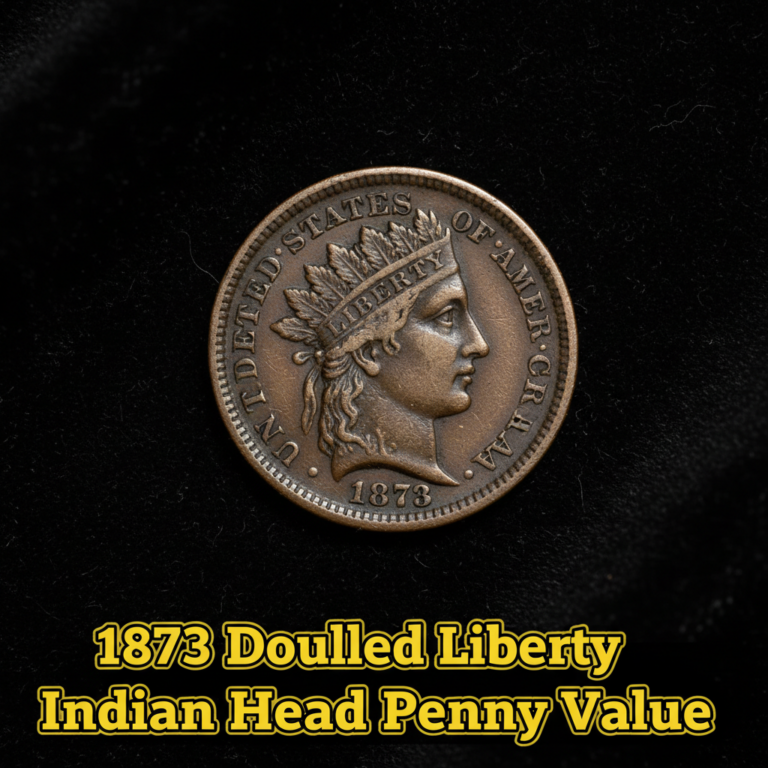
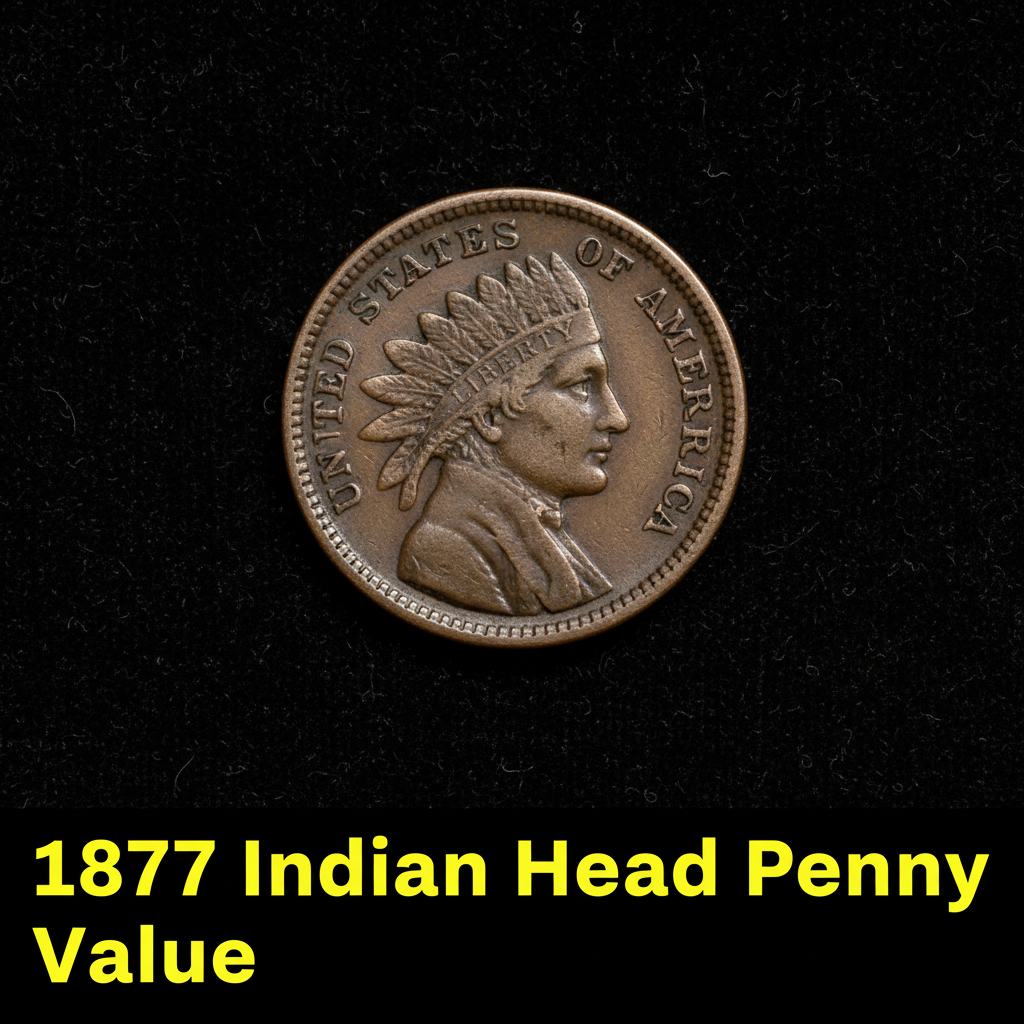
Before you assume your coin is valuable, take a close look at a few things. First, confirm the date clearly reads “1877” — worn coins can sometimes be misread. Second, examine the obverse (front). You should see Lady Liberty wearing a Native American headdress with the word “LIBERTY” inscribed on the headband. On the reverse, a wreath of oak and laurel surrounds the words “ONE CENT,” with a shield at the top.
CoinKnow is a great tool for this step. The app lets you photograph your coin and get an instant identification, helping you confirm whether you have a genuine 1877 Indian Head Penny or a different year that just looks similar. Many people confuse an 1871 or 1875 for an 1877 due to wear on the date — CoinKnow eliminates that guesswork quickly.
Beware of altered dates. Because the 1877 is so desirable, some unscrupulous sellers have modified the dates on cheaper coins. A reputable coin dealer or a professional grading service like PCGS or NGC can verify authenticity.
Red, Brown, or Red-Brown — Why Color Matters for Value
One detail that surprises many newcomers is that Indian Head Pennies (made of copper) are graded not just by wear, but also by their color designation: Red (RD), Red-Brown (RB), or Brown (BN). Coins that have retained most of their original red copper luster are designated “Red” and fetch significantly higher prices than brown examples of the same grade.
A well-preserved MS-63 Red 1877 Indian Head Penny can be worth two to three times more than an MS-63 Brown specimen. This is why condition and color both matter enormously when assessing the full value range of an 1877 penny across different grades and color designations.
If you want to maximize your coin’s value, avoid cleaning it. Even a gentle wipe with a cloth can damage the surface and strip away luster, potentially dropping your coin’s grade — and its price — dramatically.
Should You Get It Graded and Certified?
Given how valuable the 1877 Indian Head Penny is even in worn condition, professional grading is almost always worth the investment. Submitting your coin to PCGS or NGC costs between $20 and $50 for standard service, but a certified coin typically sells for significantly more than a raw (ungraded) one because buyers trust the third-party authentication.
CoinKnow can help you decide whether grading makes financial sense. Once the app gives you a rough estimate of your coin’s grade and potential value, you can weigh whether the certification fee is worth it. For an 1877 Indian Head Penny, the answer is almost always yes.
—
FAQ
Q: How do I know if my 1877 Indian Head Penny is real?
A: Look for consistent font on the date, even spacing between digits, and natural wear patterns across the entire coin. If the “7”s look sharper than the rest of the design, the date may have been altered. A professional grader or CoinKnow can help you verify authenticity quickly.
Q: Is there a mint mark on the 1877 Indian Head Penny?
A: No. All Indian Head Pennies from this era were struck at the Philadelphia Mint, which did not use a mint mark. If you see a mint mark on an 1877 Indian Head Penny, something is off.
Q: Can I sell my 1877 Indian Head Penny online?
A: Yes — platforms like eBay, Heritage Auctions, and Stack’s Bowers are popular options. For the best results, have your coin graded first. A certified 1877 Indian Head Penny in any condition will attract more serious buyers and higher bids than an ungraded example.