1908 Indian Head Penny Value with No Mint Mark What It’s Worth Today
The 1908 Indian Head Penny with no mint mark is worth anywhere from $1.50 in heavily worn condition to well over $100 in higher mint state grades. If you’ve recently discovered one of these classic copper coins, you’re in the right place to learn exactly what it might be worth.
Before diving into the details, one of the easiest ways to get a quick estimate on any old coin is by using a free coin identifier app right from your phone. These tools can help you identify the coin, grade it roughly, and point you toward current market values — all without needing to visit a coin shop first.
What Is the 1908 Indian Head Penny No Mint Mark?
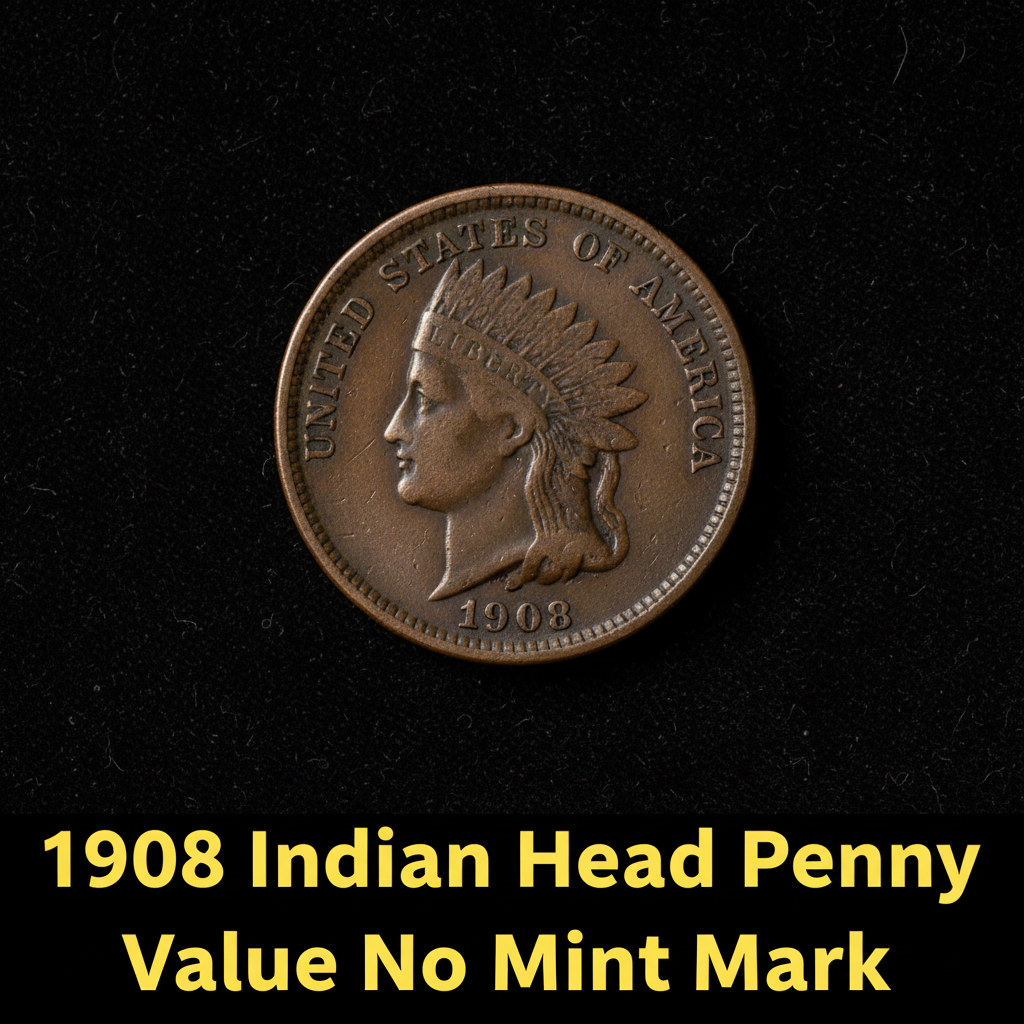
The 1908 Indian Head Penny without a mint mark was struck at the Philadelphia Mint, which traditionally did not place a mint mark on its coins. This was the final year the Indian Head Penny was produced at Philadelphia in large numbers — the design was officially replaced by the Lincoln Cent in 1909.
The coin features the iconic portrait of Lady Liberty wearing a Native American headdress, a design that has charmed collectors for over a century. On the reverse, you’ll find a wreath of oak and laurel leaves surrounding the words “ONE CENT.” The 1908 Philadelphia issue had a mintage of approximately 32.3 million coins, making it a fairly common date compared to some earlier issues in the series. That said, condition is everything when it comes to value, and even a common-date Indian Head Penny in pristine condition can bring a surprisingly strong price.
1908 Indian Head Penny Value by Grade
Coin value is almost entirely driven by grade — the better the condition, the higher the price. Here’s a general breakdown of what you can expect for a 1908 Indian Head Penny with no mint mark across different grades:
| Grade | Description | Estimated Value |
|---|---|---|
| Good (G-4) | Heavy wear, outline visible | $1.50 – $3 |
| Fine (F-12) | Moderate wear, details clear | $4 – $7 |
| Extremely Fine (EF-40) | Light wear on high points | $15 – $25 |
| About Uncirculated (AU-55) | Slight wear, strong luster | $30 – $50 |
| MS-63 Red Brown | Uncirculated, mixed luster | $60 – $90 |
| MS-65 Red | Gem uncirculated, full red | $150 – $250+ |
For the most up-to-date auction results and certified coin prices, you can check the latest 1908 Indian Head Penny MS Red price data to see how recent sales are trending in today’s market.
How Condition and Color Affect the 1908 Penny No Mint Mark Value
One detail that surprises many first-time sellers is how dramatically color affects price in Indian Head Pennies. Copper coins are graded not just by wear, but also by the color of their surface. Coins that retain their original bright copper color are designated “Red” (RD) and command the highest premiums. Coins that have partially toned are called “Red Brown” (RB), while fully toned coins are labeled “Brown” (BN).
A 1908 Indian Head Penny no mint mark graded MS-65 Red can sell for more than three times the price of the same coin graded MS-65 Brown. If you have a coin with bright, original copper luster, it could be worth getting it professionally graded by PCGS or NGC. The cost of grading is easily justified when a gem red example might bring $200 or more at auction. CoinKnow is a great tool to scan your coin and get an instant color and grade estimate before spending money on professional grading.
What Makes a 1908 Indian Head Penny More Valuable
Not all 1908 pennies with no mint mark are equal. A few factors push value significantly higher. First, sharp strike quality matters — look for full feather detail in the headdress and crisp letters in the legend. Second, eye appeal counts; a coin free of spots, corrosion, or cleaning will always fetch more money than a technically similar coin with surface problems.
Prooflike surfaces and unusually strong luster can also attract collector premiums. If your coin looks especially brilliant or mirror-like, it might be worth a closer look. You can find detailed 1908 Indian Head Penny value information including grade-by-grade pricing to compare your coin against established market benchmarks.
Also remember that the 1908 S (San Francisco) Indian Head Penny is a completely different — and much rarer — coin worth significantly more. The Philadelphia issue we’re discussing here has no mint mark at all.
Should You Clean Your 1908 Indian Head Penny?
The short answer is no — never clean an old coin. Even gentle polishing removes the natural patina that collectors prize, and a cleaned coin is almost always worth less than a naturally worn one. Professional graders at PCGS and NGC will note a coin as “cleaned,” which dramatically lowers its market value.
If you’ve found a 1908 Indian Head Penny no mint mark and want the best return, store it in a non-PVC flip or airtight coin holder, handle it only by the edges, and consult a dealer or use CoinKnow to get a quick ID and value estimate before making any decisions. Taking good care of your coin now protects its value down the road.
FAQ
Q: How do I know if my 1908 penny is from Philadelphia or San Francisco?
A: Look just below the wreath on the reverse side of the coin. A San Francisco penny will have a small “S” mint mark. If there’s no letter at all, the coin was made in Philadelphia.
Q: Is a 1908 Indian Head Penny no mint mark rare?
A: It’s not considered rare because over 32 million were minted. However, examples in high grades — especially those with full red copper color — are genuinely scarce and worth considerable money to collectors.
Q: Where is the best place to sell a 1908 Indian Head Penny?
A: Options include eBay, local coin shows, certified coin dealers, and major auction houses for high-grade examples. Consider using CoinKnow to get an estimated value first so you know what a fair price looks like before selling.