1954 Wheat Penny Value No Mint Mark What It’s Worth and Why Collectors Care
The 1954 Wheat Penny with no mint mark is worth anywhere from about $0.10 in heavily worn condition to over $10 in well-preserved grades — and in top mint state, certified examples can fetch $50 or more. If you just found one in an old jar or inherited a coin collection, you’re in the right place.
What Is the 1954 No Mint Mark Wheat Penny?
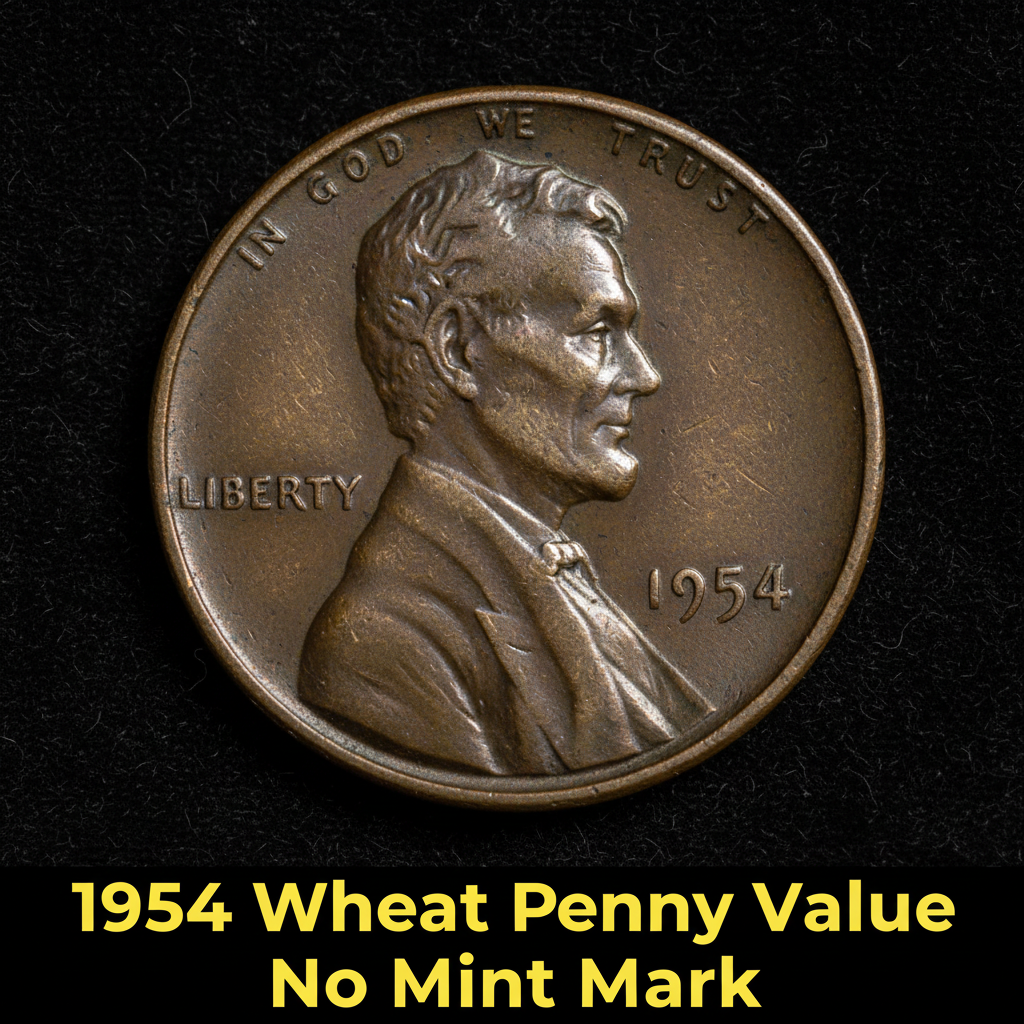
The 1954 Lincoln Wheat Penny without a mint mark was struck at the Philadelphia Mint, which traditionally did not stamp its coins with a mint mark during this era. That year, Philadelphia produced over 71 million of these cents — making it a relatively common date compared to some earlier Wheat Pennies. Still, that doesn’t mean your coin is worthless. Condition matters enormously in coin collecting, and even a common-date Wheat Penny can surprise you.
If you’re not sure what mint mark (or lack thereof) means, it’s simply a small letter stamped on the coin to identify where it was made. No letter means Philadelphia. You’ll find the mint mark area just below the date on Lincoln cents. To quickly identify your coin’s details, you can use a free coin identifier app right from your smartphone — it takes just seconds and can point you in the right direction before you dig deeper.
How Much Is the 1954 Wheat Penny Worth Today?
The value of your 1954 no mint mark Wheat Penny depends almost entirely on its condition, also called “grade” in collector language. A coin that’s been sitting in a pocket for decades will show wear on Lincoln’s cheekbone, the wheat stalks on the reverse, and the lettering. The more wear, the lower the value.
Here’s a quick breakdown of typical market values:
| Grade / Condition | Estimated Value |
|---|---|
| Good (G-4) | $0.10 – $0.25 |
| Fine (F-12) | $0.25 – $0.50 |
| Extremely Fine (EF-40) | $1 – $3 |
| Mint State (MS-63) | $8 – $15 |
| Mint State Red (MS-65 RD) | $20 – $60+ |
For up-to-date pricing data pulled from recent auction records, the 1954 Wheat Penny MS Red price history and certified auction data is a great resource to bookmark. Prices can shift depending on market demand and coin certification.
What Makes a 1954 Wheat Penny More Valuable?
A few key factors push a 1954 no mint mark Wheat Penny above average value:
Color designation is one of the biggest. Copper cents are graded not just by wear but by color — Red (RD), Red-Brown (RB), and Brown (BN). A coin that still retains its original mint red luster is worth significantly more than one that has turned brown over time.
Strike quality also plays a role. Some coins from this era came out of the press with sharp, crisp details while others were weakly struck. Sharp details add appeal and value.
Errors and varieties are another story entirely. If your 1954 Wheat Penny shows a doubled die, repunched date, or off-center strike, it could be worth far more than a typical example — sometimes hundreds of dollars. Always examine your coin carefully under magnification.
Professional grading through services like PCGS or NGC can dramatically increase a coin’s marketability and confirmed value. If your coin looks uncirculated, it may be worth the investment to have it professionally evaluated.
How to Check the Value of Your 1954 Wheat Penny
The easiest starting point is comparing your coin to grading images online, but that only gets you so far. For a more complete picture, you’ll want to cross-reference actual sold prices from dealer listings and auction results.
CoinKnow is one of the most convenient tools available for everyday coin hunters. CoinKnow lets you scan your coin, identify it instantly, and get a current estimated value — no numismatic experience required. Whether you’re sorting through a grandparent’s collection or found a coin in your change, CoinKnow makes the process simple and surprisingly fun.
You can also explore a detailed full breakdown of 1954 Penny values across all mint marks and grades to see how the Philadelphia issue compares to the 1954-D and 1954-S versions from Denver and San Francisco.
Is It Worth Keeping or Selling?
For most circulated examples, the 1954 no mint mark Wheat Penny is a low-dollar coin — but that’s no reason to toss it aside. These coins are nearly 70 years old and are getting harder to find in true uncirculated condition. A coin in AU or better grade is genuinely collectible. And if you happen to have a roll or small hoard of them, the cumulative value can be surprisingly decent.
Dealers and online platforms like eBay are good places to compare current asking prices. Coin shows and local coin shops can also give you a hands-on appraisal at no cost.
—
FAQ
Q: How do I know if my 1954 Wheat Penny is from Philadelphia?
A: If there is no mint mark below the date on the obverse (front) of the coin, it was made at the Philadelphia Mint. Denver coins show a “D” and San Francisco coins show an “S.”
Q: Can a 1954 no mint mark Wheat Penny be worth $100 or more?
A: Yes, but only in exceptional circumstances. A coin graded MS-66 Red or higher by a major grading service, or one with a notable error variety, could reach or exceed that level at auction.
Q: Is it safe to clean my 1954 Wheat Penny before selling it?
A: Absolutely not. Cleaning a coin removes its natural surface and dramatically reduces its collector value. Even a dirty, uncirculated coin is worth far more than a cleaned one. Leave it exactly as you found it.