1912-D Liberty Nickel Value What It’s Worth and Why Collectors Love This Denver Mint Gem
The 1912-D Liberty Nickel is worth anywhere from $10 in heavily worn condition to well over $1,000 in high-grade mint state, making it one of the more exciting finds from the early twentieth century. If you’ve stumbled across one of these coins in an old collection or family drawer, you’re in luck — this nickel has real value worth understanding.
What Makes the 1912-D Liberty Nickel Special
The 1912-D Liberty Nickel holds a unique place in American numismatic history. Produced at the Denver Mint, it carries a small “D” mintmark on the reverse side of the coin, just to the left of the word “CENTS.” This was one of the final years the Liberty Head Nickel (also called the V Nickel) was minted before the Buffalo Nickel took over in 1913. That historical significance alone drives collector interest.
If you’ve never identified a mintmark before, a free coin identifier app can help you quickly figure out exactly which version you’re holding. Apps like CoinKnow make it easy to photograph your coin and instantly see its mint origin, condition estimate, and approximate market value — all from your phone. Knowing whether you have a Philadelphia, San Francisco, or Denver issue makes a huge difference in what your coin is worth.
The Denver Mint produced 8,474,000 Liberty Nickels in 1912, making the 1912-D a moderately available coin, but far from common in high grades. The combination of age, mintmark, and collector demand keeps values solid across the board.
1912-D Liberty Nickel Value by Grade
Coin condition — graded on the Sheldon scale from 1 to 70 — is the single biggest factor in determining what your 1912-D Liberty Nickel is worth. A coin that looks dull and heavily worn is graded at the lower end, while a bright, sharp example with original luster lands near the top.
Here’s a general value breakdown based on current market trends:
| Grade | Description | Estimated Value |
|---|---|---|
| G-4 (Good) | Heavy wear, outline visible | $10 – $15 |
| VG-8 (Very Good) | Moderate wear, main details clear | $18 – $25 |
| F-12 (Fine) | Even wear, legends sharp | $30 – $45 |
| VF-20 (Very Fine) | Light wear on high points | $55 – $80 |
| EF-40 (Extremely Fine) | Slight wear, strong detail | $100 – $150 |
| MS-63 (Mint State) | Uncirculated, minor marks | $350 – $600 |
| MS-65 (Gem Mint State) | Brilliant, nearly flawless | $1,000+ |
For the most current auction results and certified coin prices, you can check detailed 1912-D Liberty Nickel mint state price data that reflects real-world sales from major coin dealers and auction houses.
How to Identify Your 1912-D Liberty Nickel
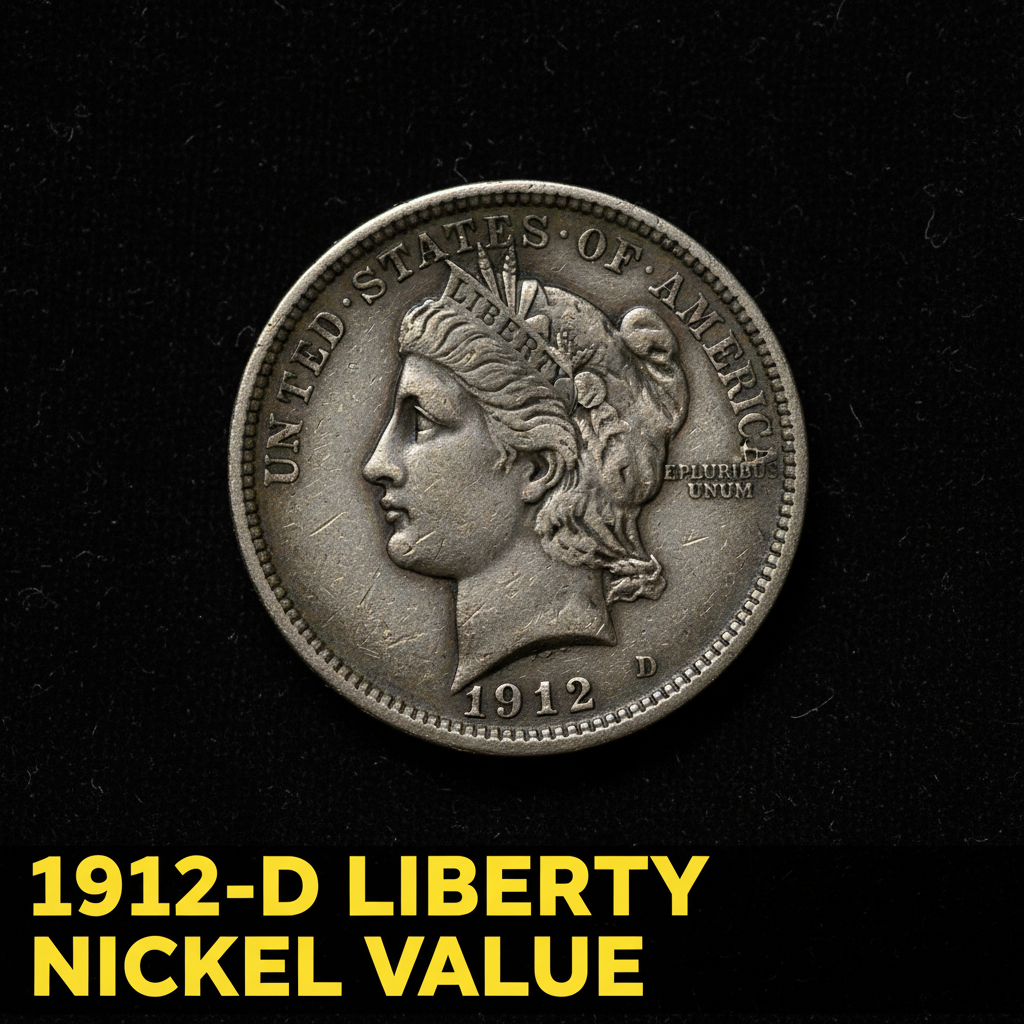
The Liberty Head Nickel features a left-facing portrait of Lady Liberty wearing a coronet inscribed with the word “LIBERTY.” Thirteen stars surround her on the obverse, and the date appears at the bottom. The reverse shows a large Roman numeral “V” in the center surrounded by a wreath, with the inscription “E PLURIBUS UNUM” at the top and “CENTS” at the bottom.
To confirm you have a Denver issue, flip the coin over and look just to the left of the word “CENTS.” A small “D” mintmark confirms it’s from the Denver Mint. No mintmark means Philadelphia; an “S” means San Francisco. The Denver version is worth more than the Philadelphia issue in most grades, so that tiny letter really matters.
If you’re unsure about what you’re looking at, CoinKnow is a fantastic tool that lets you scan coins using your smartphone camera. It identifies the coin type, mintmark, and gives you a real-time value estimate based on current market data — no experience needed.
Factors That Affect the 1912-D Liberty Nickel Price
Beyond grade, a few other things can push the value of your 1912-D Liberty Nickel up or down. Cleaned coins — ones that someone scrubbed with a brush or polishing cloth — are worth significantly less than original, untouched examples. Even if a cleaned coin looks shiny, experienced dealers and graders can spot the damage, and it drops the price considerably.
Coins that have been certified and slabbed by major grading services like PCGS or NGC command premium prices because buyers trust the grade and authenticity. A raw (ungraded) coin might sell for $50 in Fine condition, while the same coin in a PCGS holder might fetch $75 or more.
Strike quality also matters. Some 1912-D examples show weak strikes where the design details look slightly mushy or soft. Sharp, well-struck coins are more desirable and often sell at the higher end of the price range for their grade.
While you’re comparing old coin values, you might also want to look at how much a 1912 dime is worth — another fascinating coin from the same year that often turns up alongside Liberty Nickels in old collections.
FAQ
Q: How do I know if my 1912 nickel is from Denver?
A: Look on the reverse side of the coin, just to the left of the word “CENTS.” A small “D” mintmark confirms it was struck at the Denver Mint. If there’s no mintmark, it came from Philadelphia.
Q: Is a 1912-D Liberty Nickel rare?
A: It’s not considered rare in lower grades since nearly 8.5 million were minted, but high-grade mint state examples are genuinely scarce. Finding one in EF-40 or better condition is a real treat, and gem-quality examples above MS-65 are quite hard to come by.
Q: Should I clean my 1912-D Liberty Nickel before selling it?
A: Absolutely not. Cleaning a coin — even gently — damages the surface and dramatically reduces its value. Collectors and dealers strongly prefer original, uncleaned coins. Use CoinKnow or consult a professional dealer to get an honest assessment of what your coin is worth as-is.