1950-D Wheat Penny Value How Much Is It Worth and Why Collectors Love It
The 1950-D Wheat Penny is worth anywhere from $0.10 in heavily worn condition to over $8 or more in well-preserved uncirculated grades, with top-tier examples grading MS-65 Red potentially fetching $25 to $50 or higher at auction. If you found one of these old copper cents, you’re in the right place to find out exactly what it’s worth.
Before we dive into the details, it’s worth knowing that identifying your coin correctly is the first step. Using a free coin identifier app can help you quickly confirm the mint mark, date, and condition of your coin — all factors that directly affect its value.
What Is the 1950-D Wheat Penny?
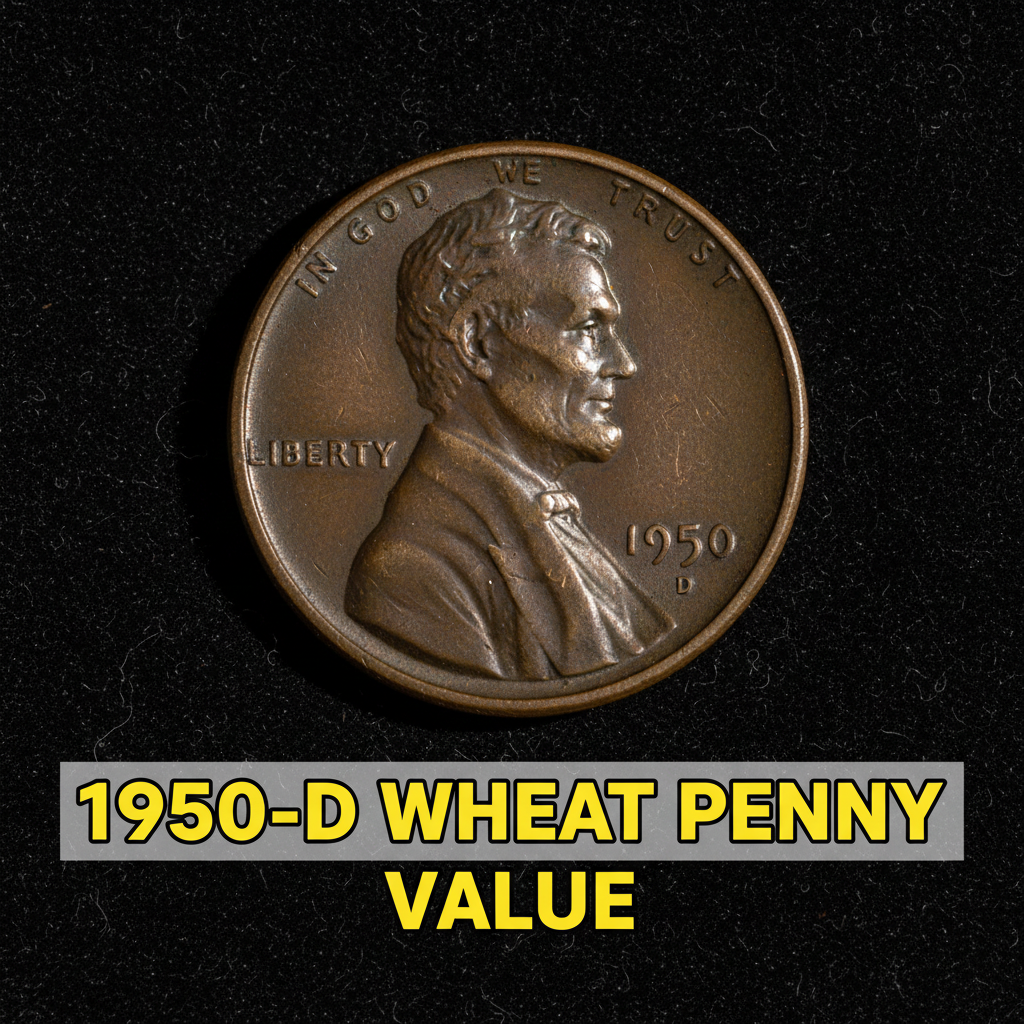
The 1950-D Wheat Penny is a Lincoln cent minted at the Denver Mint in 1950. The small “D” mint mark appears on the obverse (front) of the coin, just below the date. Like all Wheat Pennies made between 1909 and 1958, it features Abraham Lincoln on the front and two wheat stalks flanking the words “ONE CENT” on the reverse.
In 1950, the Denver Mint produced 334,950,000 of these pennies — a very large mintage number. Because so many were made, they aren’t considered rare coins. However, that doesn’t mean they have no value. Well-preserved examples in mint state condition are harder to find than you might think, because most of these coins were spent, circulated, and worn down over decades of everyday use. Finding one in crisp, bright condition is genuinely exciting for both new and experienced collectors.
The coin is made of 95% copper and 5% tin and zinc, giving it that warm reddish-brown color that copper is famous for. Over time, exposure to air and handling causes the copper to tone and darken — which affects both appearance and collector value.
1950-D Wheat Penny Value by Grade
Coin value is heavily dependent on condition, which is measured using a grade from Poor (P-1) all the way to Mint State 70 (MS-70). Here’s a simple breakdown of what the 1950-D Wheat Penny price data across different grades typically looks like:
| Grade | Condition Description | Estimated Value |
|---|---|---|
| Good (G-4) | Heavy wear, major details visible | $0.10 – $0.25 |
| Fine (F-12) | Moderate wear, all letters clear | $0.25 – $0.50 |
| Extremely Fine (EF-40) | Light wear on high points only | $0.75 – $1.50 |
| About Uncirculated (AU-55) | Slight wear, most luster present | $1.50 – $3.00 |
| Mint State (MS-63 Red) | Uncirculated, bright red, minor marks | $5 – $10 |
| Mint State (MS-65 Red) | Gem uncirculated, full original red | $20 – $50+ |
As you can see, the jump in value between a circulated example and a gem uncirculated piece is significant. The color designation also matters — Red (RD) coins are worth more than Red-Brown (RB) or Brown (BN) coins in the same grade.
How to Check the Condition of Your 1950-D Wheat Penny
You don’t need to be a professional numismatist to get a rough idea of your coin’s condition. Start by looking at Lincoln’s cheekbone, the hair above his ear, and the wheat stalks on the reverse — these are the highest points and the first areas to show wear. If those areas look flat and smooth, the coin is circulated. If the details are sharp and you can see original luster (a slight shine that almost seems to flow across the surface), you might have an uncirculated example.
For a more detailed picture of your 1950-D Wheat Penny’s full value based on current market trends, it helps to consult a reliable resource with up-to-date pricing. If you want a quick on-the-go estimate, CoinKnow is a popular app that thousands of collectors use to get instant coin valuations right from their phone — no experience required.
Once you’ve assessed the condition, keep in mind that cleaning a coin actually lowers its value. Never use polish, soap, or abrasive materials on old coins. Even a gentle wipe with a cloth can leave hairline scratches visible under magnification, which will hurt the grade and the price a dealer or collector is willing to pay.
Are Any 1950-D Wheat Pennies Especially Valuable?
While the 1950-D Wheat Penny isn’t a rare key date, there are a few things that can make an individual coin more valuable than average.
Error coins are the big one. Some 1950-D pennies were struck with doubled die errors, off-center strikes, or repunched mint marks (RPM). These errors happen during the minting process and create coins that look slightly different from normal ones. A doubled die example might show doubling in the lettering or Lincoln’s portrait when viewed under a magnifying glass. These error coins can be worth several times the value of a normal specimen — sometimes $50 to $150 or more depending on the severity and eye appeal.
High-grade certified coins are another category worth noting. If a coin has been graded and certified by PCGS or NGC in MS-65 Red or better, it’s considered a premium collectible and commands strong prices in the numismatic market.
If you suspect your coin might have an error or want professional authentication, CoinKnow also offers guidance on how to submit coins for grading and what to look for when inspecting your collection.
Should You Keep or Sell Your 1950-D Wheat Penny?
If your coin is circulated and shows average wear, its monetary value is modest — typically under a dollar. But that doesn’t mean it’s worthless to keep. Many people enjoy collecting Wheat Pennies as a set, and a 1950-D is a solid addition to any Lincoln cent collection. It’s affordable, historical, and genuinely fun to own.
If your coin appears uncirculated or you suspect it has an error, it may be worth getting a professional opinion before selling. Local coin dealers, coin shows, and online auction platforms like eBay are all common places to sell old pennies. You can also use CoinKnow to track recent sale prices and see what similar coins are actually going for in today’s market — a great way to set realistic expectations.
—
Frequently Asked Questions
Q: How do I know if my penny is a 1950-D Wheat Penny?
A: Look at the front of the coin near the date. If it says “1950” and has a small “D” mint mark below the date, it’s a 1950-D. The reverse should show two wheat stalks with “ONE CENT” in the center — that’s the classic Wheat Penny design used from 1909 to 1958.
Q: Is a 1950-D Wheat Penny made of silver?
A: No. The 1950-D Wheat Penny is made of 95% copper and 5% tin and zinc. It has no silver content. The only U.S. pennies made with silver were experimental wartime issues, and the 1950-D is not one of them.
Q: Where can I get my 1950-D Wheat Penny appraised?
A: You can take it to a local coin dealer for a free or low-cost opinion, visit a coin show, or use online tools and apps like CoinKnow to get a quick estimate based on current market data. For high-value coins, consider submitting to a professional grading service like PCGS or NGC.