1971 Lincoln Penny Value No Mint Mark — What’s It Really Worth?
If you’ve got a 1971 Lincoln penny with no mint mark sitting in a jar or old coin roll, you might be surprised to learn it can be worth anywhere from face value to over $25 in mint state, with rare error coins fetching much more. Here’s what you need to know about this common but sometimes valuable coin.
What the No Mint Mark Means on a 1971 Penny
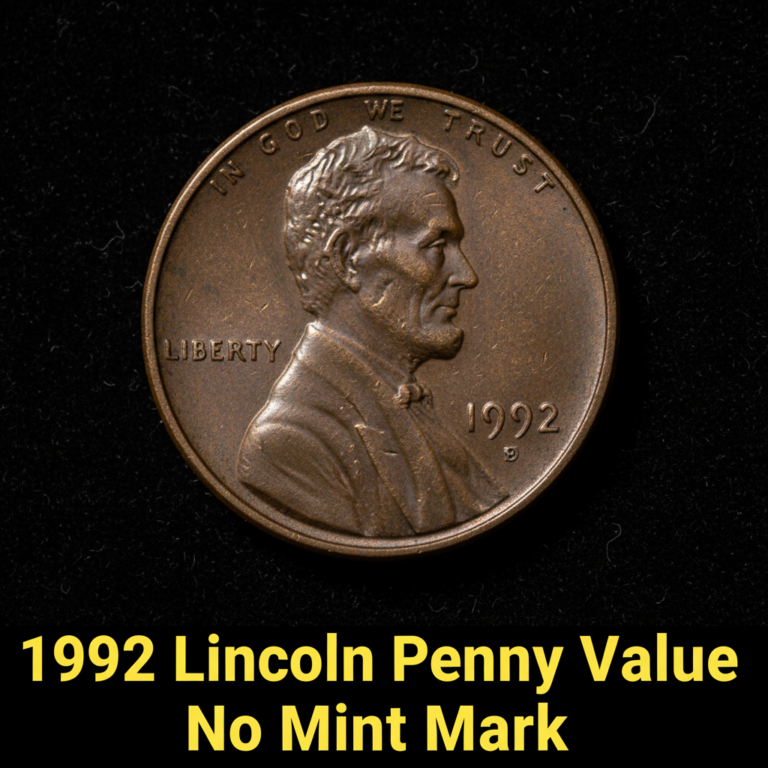
When you flip over a 1971 Lincoln penny and don’t see a small letter beneath the date, that’s not a mistake — it just means the coin was struck at the Philadelphia Mint. Philadelphia has historically not used a mint mark on its cents, which is why so many pennies from this era look “blank” below the date. In 1971, the Philadelphia Mint produced over 1.6 billion Lincoln cents, making them extremely common in circulation today.
If you’re just getting started with coin collecting and want a quick way to identify what you have, a free coin identifier app can help you figure out the mint mark, grade, and approximate value of coins in seconds. Apps like CoinKnow are especially beginner-friendly, letting you snap a photo and get instant results without needing any prior coin knowledge.
1971 Lincoln Penny No Mint Mark Value by Condition
The value of your 1971 penny without a mint mark depends almost entirely on its condition, or “grade” in collector terms. Most circulated examples — meaning coins that have been used in everyday commerce — are only worth face value or a small premium. However, coins that were never used and remain in brilliant, original condition (called “mint state”) can fetch real money from collectors.
Check out the 1971 Lincoln penny mint state price data to see how values climb sharply as the grade increases from MS-63 up to MS-67.
Here’s a general value breakdown:
| Grade / Condition | Description | Estimated Value |
|---|---|---|
| Good (G-4) | Heavy wear, design visible | $0.01–$0.05 |
| Fine (F-12) | Moderate wear | $0.05–$0.10 |
| Extremely Fine (EF-40) | Light wear on high points | $0.10–$0.50 |
| Mint State (MS-63) | Uncirculated, some blemishes | $1–$5 |
| Mint State (MS-65) | Gem uncirculated | $5–$15 |
| Mint State (MS-67+) | Superb gem, near-perfect | $25–$100+ |
Error Coins That Can Make the 1971 Penny Worth Big Money
The most valuable 1971 pennies with no mint mark aren’t high-grade examples — they’re errors. The most famous is the 1971 doubled die obverse, where Lincoln’s portrait, lettering, and date show visible doubling to the naked eye. Confirmed doubled die examples have sold at auction for hundreds of dollars, with the best specimens crossing the $500 mark.
Other errors to look for include off-center strikes, where the design is noticeably shifted from the center of the coin, and die cap errors, which are extremely rare and can be worth thousands. Always examine your 1971 pennies carefully under a loupe or magnifying glass before spending them.
For a complete picture of what your 1971 penny is worth based on grade and variety, including error coins and proof issues, it’s worth spending a few minutes researching before you assume it’s worthless. You might be holding something special.
How to Tell If Your Coin Is Worth Getting Graded
Professional grading by PCGS or NGC can add significant value to a 1971 Lincoln penny no mint mark — but only if the coin is truly exceptional. Grading fees typically start around $20–$30 per coin, so it only makes financial sense if your coin grades MS-66 or higher, or if you suspect it’s a confirmed doubled die.
If you’re unsure whether your coin is worth submitting, try using CoinKnow first. The app lets you photograph both sides of your coin and gives you an estimated grade and value instantly, which can help you decide whether professional grading is worth the investment. It’s a smart first step before spending money on third-party services.
Where to Sell a 1971 Penny No Mint Mark
For most circulated 1971 pennies with no mint mark, the best you’ll do is sell them to a coin dealer for face value or drop them in a collection jar. But for uncirculated gems and confirmed errors, the market is active. eBay is a popular platform for selling individual coins, and Heritage Auctions or Stack’s Bowers handle high-value pieces. Always compare recent sold listings rather than asking prices to set realistic expectations.
CoinKnow also includes a built-in marketplace feature where you can list coins directly to interested buyers — a convenient option if you’d rather avoid auction fees or shipping headaches.
Frequently Asked Questions
Q: Is a 1971 penny with no mint mark rare?
A: No, the 1971 Lincoln penny from Philadelphia is one of the most common coins ever made, with over 1.6 billion produced. It’s only valuable in high uncirculated grades or as a confirmed error coin like the doubled die variety.
Q: How do I know if my 1971 penny is a doubled die?
A: Look at Lincoln’s portrait, the date, and the words “LIBERTY” and “IN GOD WE TRUST” under a magnifying glass or jeweler’s loupe. If you see clear doubling — as if the design was stamped twice — you may have a valuable doubled die. Compare photos online or use an app like CoinKnow to help confirm.
Q: What does “no mint mark” mean on a 1971 penny?
A: It means the coin was minted at the Philadelphia Mint. Philadelphia did not place a mint mark on Lincoln cents during this era. Coins from Denver carry a “D” and proof coins from San Francisco carry an “S.” The absence of a mint mark is completely normal and not a sign of an error on its own.