1981-S Type 1 Lincoln Penny Value and What It’s Worth Today
The 1981-S Type 1 Lincoln Penny is worth anywhere from $1 to $5 in typical circulated condition, but proof examples — the kind most collectors actually seek — can sell for $3 to $15 or more depending on grade and eye appeal. If you found one tucked away in an old coin collection or bought a proof set at an estate sale, you’re in the right place.
What Makes the 1981-S Type 1 Different From Other Lincoln Pennies
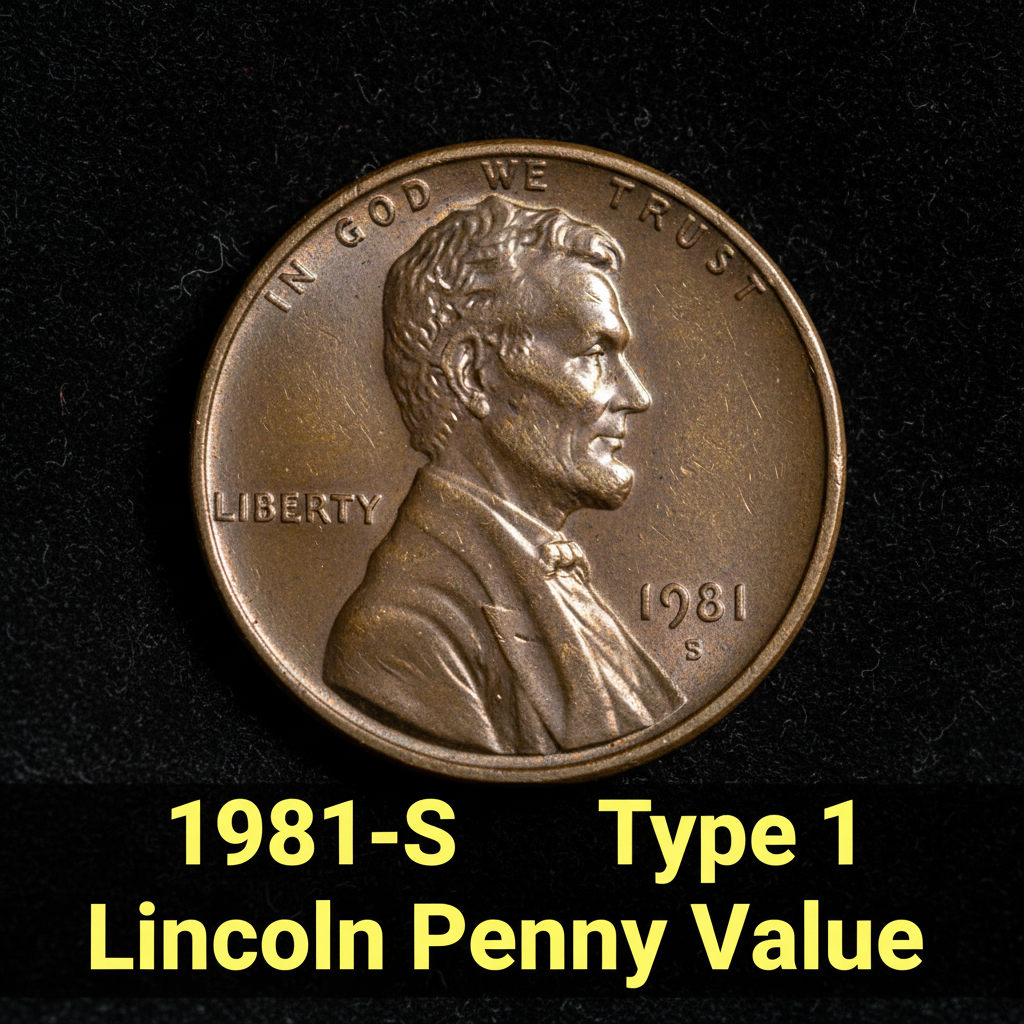
Not all 1981-S pennies are created equal, and that’s exactly what makes this coin so interesting. The San Francisco Mint produced two varieties of proof Lincoln cents in 1981, known as Type 1 and Type 2. The difference comes down to the mintmark itself. On the Type 1, the “S” mintmark has a rounded, filled appearance — this was the older-style punch used by the mint. On the Type 2, released later in the year, the “S” is sharper and more defined with a cleaner shape.
The Type 1 is actually the more common of the two varieties, which keeps values more modest. However, that doesn’t mean it’s without collector appeal. Proof coins were never meant for circulation — they were struck specially for collectors using polished dies and planchets, giving them a mirror-like finish and crisp details. If you have a coin that looks unusually shiny and sharp, especially if it came in an original proof set packaging, there’s a good chance you’re holding a genuine proof example.
Using a free coin identifier app on your smartphone is one of the easiest first steps to confirm what you’re looking at before heading to a coin dealer or doing deeper research.
1981-S Type 1 Lincoln Penny Value by Grade
Proof coins are graded on the PR (or PF) scale, ranging from PR60 at the lower end to a perfect PR70. The higher the grade, the fewer blemishes and contact marks on the surface, and the more vivid the cameo contrast between the frosted design and the mirror fields.
Here’s a general value breakdown for the 1981-S Type 1 Lincoln Penny:
| Grade | Description | Estimated Value |
|---|---|---|
| PR60–PR63 | Proof with visible hairlines or spots | $1 – $3 |
| PR64–PR66 | Sharp proof, minor imperfections | $3 – $6 |
| PR67 DCAM | Deep cameo, near-perfect surfaces | $8 – $15 |
| PR68–PR70 DCAM | Gem deep cameo proof | $15 – $50+ |
For a closer look at certified sale prices and up-to-date market data, you can explore detailed 1981 Lincoln Penny price records by grade and finish to see how real auction results compare to guide values.
How to Tell If You Have a Type 1 or Type 2
The mintmark distinction is subtle but real. On the 1981-S Type 1, the “S” looks slightly blobby or filled in — the serifs and interior spaces of the letter appear less distinct. On the Type 2, those same features are clean and open. You’ll likely need a loupe or magnifying glass of at least 5x to 10x magnification to see the difference clearly.
If you have a full 1981 proof set, it almost certainly contains the Type 1 unless you have a late-issue set. Coin dealers and grading services like PCGS and NGC can officially attribute the variety on a certified holder. CoinKnow is a popular app among collectors for exactly this kind of quick coin research — you can scan your coin and pull up variety information, mintage data, and current market values all in one place.
Where the 1981-S Type 1 Penny Fits in Lincoln Cent Collecting
The Lincoln cent series runs from 1909 to the present, making it one of the most widely collected series in American numismatics. Proof issues from the 1980s are considered modern proofs, and while they aren’t rare in the traditional sense — mintage for the 1981-S proof set was over 4 million — high-grade examples with pristine cameo contrast are harder to find than people expect.
For collectors building a complete proof Lincoln cent set, the 1981-S Type 1 is a required piece, especially since it differs from the Type 2 issued the same year. That variety dynamic adds a layer of challenge and interest that makes even “common” modern proofs worth pursuing.
You can also check out a comprehensive guide to what the 1981 Lincoln penny is worth across all mint marks and conditions to put your coin’s value in full context. And if you want to track your collection, catalog your finds, and get instant value estimates, CoinKnow makes it easy whether you’re a first-timer or a seasoned collector.
Tips for Storing and Selling Your 1981-S Type 1 Penny
Proof coins are sensitive to handling and environmental damage. Never clean a proof penny — even gentle wiping can leave hairlines that drop the grade and value significantly. Store it in an airtight flip or original mint packaging away from humidity and direct light.
If you’re thinking about selling, consider having high-grade examples (PR67 and above, especially with deep cameo designation) certified by PCGS or NGC. The cost of slabbing is usually worth it at that level. For lower-grade examples, selling as part of a complete 1981 proof set often brings more than selling the penny alone. Online platforms like eBay, coin shows, and local coin shops are all solid options depending on your timeline and goals. CoinKnow can also help you get a baseline value before you commit to any sale.
FAQ
Q: How do I know if my 1981-S penny is a Type 1 or Type 2?
A: Look at the “S” mintmark under magnification. The Type 1 has a rounder, more filled-in “S” with less distinct serifs, while the Type 2 has a cleaner, sharper “S” with clearly open spaces. A 10x loupe works well for this comparison.
Q: Is the 1981-S Type 1 Lincoln Penny rare?
A: Not particularly — it was produced as part of a proof set with a mintage over 4 million. However, top-grade examples with strong deep cameo contrast are genuinely scarce and can command premiums among serious collectors.
Q: Can I find a 1981-S Type 1 penny in pocket change?
A: It’s very unlikely. Proof coins were sold directly to collectors through proof sets and were never intended for circulation. If you find an “S” mint penny in change, it’s more likely a circulated business strike from an earlier era rather than a proof coin.