1934-D Wheat Penny Value How Much Is It Worth Today
The 1934-D Wheat Penny is worth anywhere from $0.25 in heavily worn condition to over $100 or more in higher mint state grades. If you just pulled one of these old Lincoln cents out of a jar or coin roll, you’re in the right place to find out exactly what it’s worth.
What Is the 1934-D Wheat Penny and Why Does the “D” Matter?
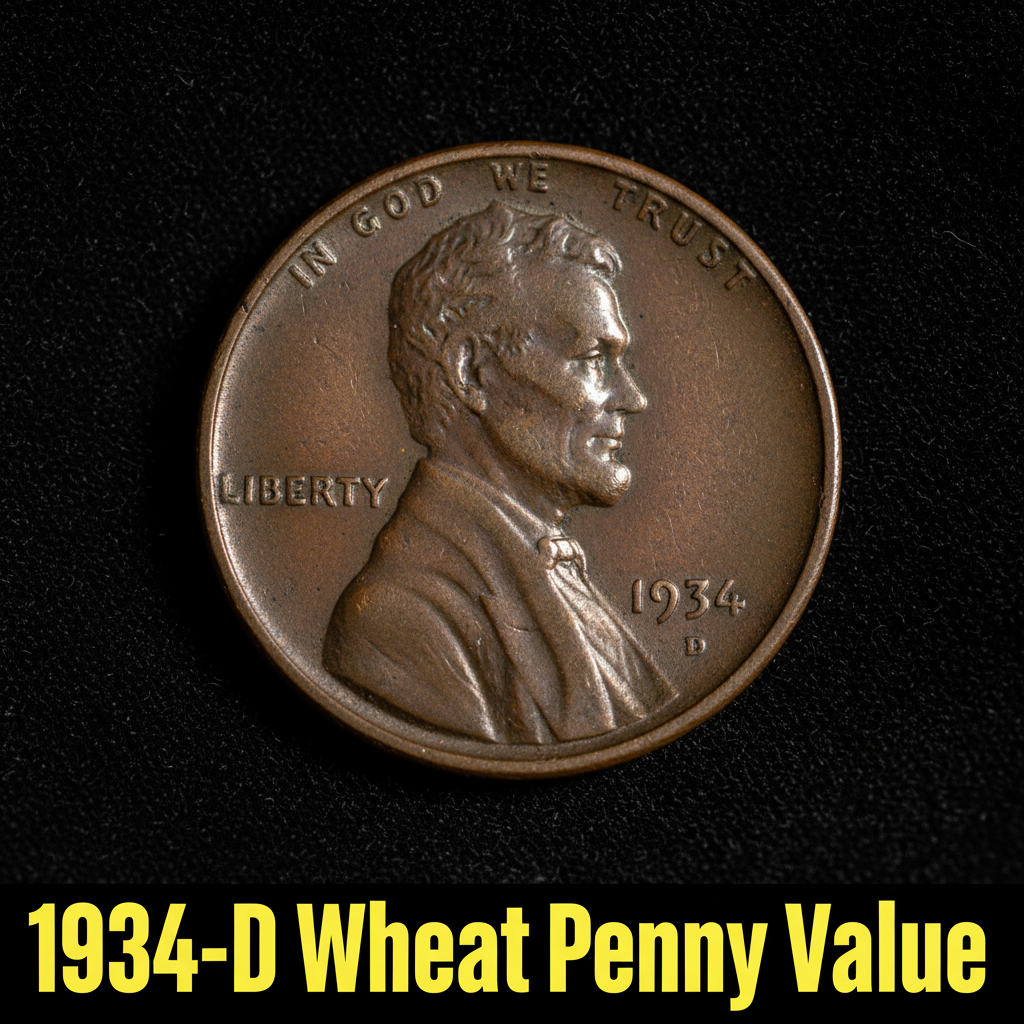
The “D” on a 1934-D Wheat Penny stands for Denver — as in the Denver Mint. During the 1930s, the U.S. Mint operated facilities in Philadelphia, Denver, and San Francisco, each stamping a different mintmark on coins. Philadelphia coins had no mintmark, while Denver used “D” and San Francisco used “S.” Finding that tiny “D” just below the date on your Lincoln cent means your coin came out of the Denver Mint in 1934.
That mintmark matters more than most people realize. Mintmarks affect both the rarity and the value of a coin. The 1934-D had a mintage of around 28.4 million coins — lower than the Philadelphia issue for the same year, which hit nearly 219 million. That smaller production number generally makes the Denver version more collectible, especially in nicer grades.
If you’re not sure what you’re looking at, a free coin identifier app can help you confirm the mintmark, date, and even get a rough value estimate right from your smartphone. Tools like CoinKnow are especially popular for beginners who want quick, reliable coin identification without needing to visit a dealer first.
1934-D Wheat Penny Value by Grade
The condition of your coin — what collectors call its “grade” — has the biggest impact on value. A coin that’s been passed through hundreds of wallets will look very different from one that sat untouched in a mint bag for decades. Here’s a general value breakdown:
| Grade | Description | Estimated Value |
|---|---|---|
| Good (G-4) | Heavy wear, outline visible | $0.25 – $0.50 |
| Fine (F-12) | Moderate wear, major details clear | $1 – $3 |
| Extremely Fine (EF-40) | Light wear on high points only | $5 – $12 |
| About Uncirculated (AU-55) | Slight wear, most luster present | $15 – $30 |
| Mint State (MS-63) | No wear, minor contact marks | $40 – $75 |
| Gem Mint State (MS-65+) | Sharp strike, full luster, few flaws | $100 – $300+ |
For a more detailed look at how auction prices and certified grades affect real-world sales, you can check out this 1934-D Wheat Penny price data in MS-RD grade to see how top-condition red examples have performed at recent sales.
What Makes a 1934-D Wheat Penny More Valuable
Beyond grade, a few other factors can push the value of your 1934-D Wheat Penny significantly higher. Color is one of the biggest. Copper coins are graded not just by wear but by their original surface color. A coin that retains its original red-orange color (designated “RD” by grading services) is worth considerably more than one that has turned brown (BN) or is partially toned (RB).
Strike quality also matters. Some 1934-D cents are known for being weakly struck, which means details like Lincoln’s hair and the wheat stalks on the reverse may appear soft even on lightly circulated examples. A coin with a sharp, full strike in high grade is a premium piece.
Errors and die varieties can also add value. While the 1934-D isn’t especially famous for dramatic errors, doubled die varieties and repunched mintmark (RPM) coins do exist and attract attention from specialist collectors. If your coin looks like something is doubled or the “D” mintmark appears to have been stamped more than once, it may be worth having examined by a professional.
How to Find Out What Your 1934-D Wheat Penny Is Really Worth
The best way to get an accurate value for your specific coin is to compare it against recent sales data and graded examples. CoinKnow is a great starting point — the app lets you scan your coin, check comparable grades, and browse recent market prices all in one place. It’s designed for everyday collectors and casual finders alike, so you don’t need to be an expert to use it.
You can also explore a complete guide to 1934 Wheat Penny values across all grades and mintmarks for a broader picture of how the entire 1934 Lincoln cent series compares.
For coins you believe are in Mint State or better, consider submitting to a professional grading service like PCGS or NGC. A certified grade adds credibility and often increases resale value significantly — especially for key dates and better-quality Denver Mint issues.
Should You Hold Onto Your 1934-D Wheat Penny?
Most circulated 1934-D Wheat Pennies are worth a dollar or two at most. But even that is many times their face value, and there’s always a chance yours is hiding something special. Before you toss it in a box or sell it for pocket change, take a few minutes to examine it carefully. Look at the color, check the sharpness of the design, and inspect both sides under good lighting.
Use CoinKnow or another reliable coin tool to compare your coin against known examples. If anything looks unusual — odd doubling, strange mintmark placement, or unusually vivid original red color — it may be worth more than you’d expect from a Depression-era penny.
FAQ
Q: How do I know if my penny is a 1934-D or a regular 1934 Philadelphia issue?
A: Look just below the date on the front of the coin. If you see a small “D,” it was minted in Denver. If there’s no mintmark at all, it’s a Philadelphia coin. You may need a magnifying glass to spot it clearly.
Q: Is the 1934-D Wheat Penny rare?
A: It’s not considered a rare coin in worn grades — about 28 million were made. However, finding one in original mint red condition or with a full sharp strike is genuinely uncommon and can command strong premiums among serious collectors.
Q: What’s the most a 1934-D Wheat Penny has ever sold for?
A: Gem examples graded MS-66 RD or higher by PCGS or NGC have sold at auction for several hundred dollars, with exceptional pieces reaching into the low thousands. The value jumps dramatically when you combine top grade with original red color and a strong strike.