1911-D Wheat Penny Value Guide How Much Is Your Denver Minted Cent Worth
The 1911-D Wheat Penny is worth anywhere from $3 in heavily worn condition to well over $200 in higher mint state grades — and in top-tier uncirculated condition, it can fetch $500 or more. If you found one of these old Lincoln cents in a jar, drawer, or inherited coin collection, you might be sitting on a nice little treasure.
What Makes the 1911-D Wheat Penny Special
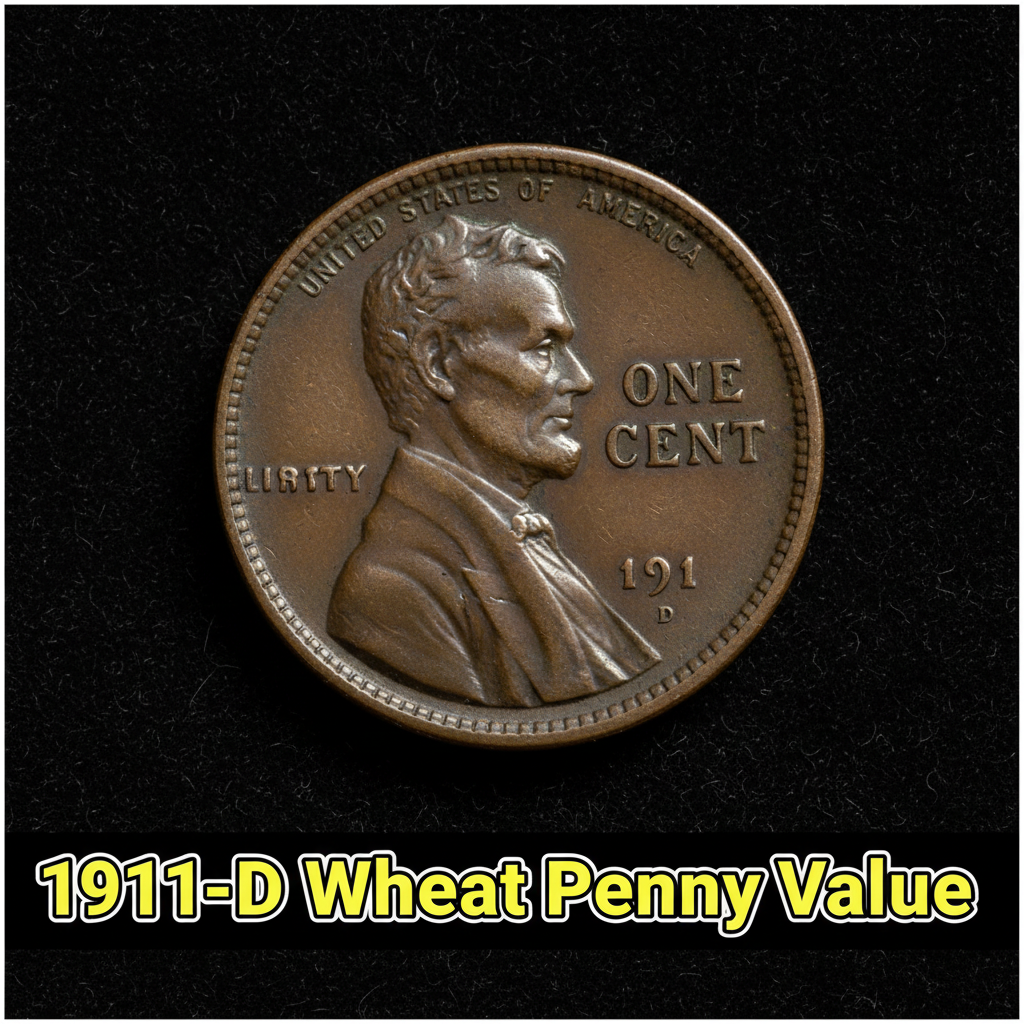
The 1911-D Wheat Penny was struck at the Denver Mint, which you can identify by the small “D” mintmark located on the obverse (front) of the coin, just below the date. This was still the early days of the Lincoln cent series, which had only launched in 1909. Coins from this era tend to carry more collector interest than later, more common dates.
If you’re not sure whether what you’re holding is actually a 1911-D, or you want help identifying it quickly, a free coin identifier app can scan your coin using your phone’s camera and give you an instant result. It’s a great starting point before you dive deeper into valuation.
The Denver Mint produced about 12.67 million Lincoln cents in 1911, which sounds like a lot — but compared to modern coin runs in the billions, it’s quite modest. Lower mintage generally means fewer examples survive today, especially in nice condition, which is a big part of why collectors are willing to pay premium prices for well-preserved specimens.
1911-D Wheat Penny Value by Grade
Coin value depends heavily on condition, which numismatists (coin experts) measure using a grading scale from 1 to 70. A coin that’s been circulated for years will show wear on Lincoln’s cheek, hair, and the wheat stalks on the back, while an uncirculated example will look almost as sharp as the day it was minted.
Here’s a general value breakdown for the 1911-D Wheat Penny:
| Grade | Condition | Estimated Value |
|---|---|---|
| G-4 (Good) | Heavy wear, date visible | $3 – $6 |
| VG-8 (Very Good) | Moderate wear, some detail | $7 – $12 |
| F-12 (Fine) | Even wear, clear lettering | $15 – $25 |
| VF-20 (Very Fine) | Light wear on high points | $30 – $50 |
| EF-40 (Extremely Fine) | Slight wear, sharp details | $70 – $110 |
| MS-63 (Uncirculated) | No wear, some marks | $175 – $275 |
| MS-65 (Gem Uncirculated) | Brilliant, minimal marks | $450 – $700+ |
For the most up-to-date auction records and certified coin prices, you can check out the latest 1911-D Wheat Penny price data in mint red uncirculated grades, which tracks real sales from major coin platforms.
How to Tell If Your 1911-D Wheat Penny Is Worth More
Beyond basic grade, a few other factors can push the value of your 1911-D Wheat Penny significantly higher. The first is color. Copper cents are graded not just by wear but by how much of their original color remains. A coin labeled “RD” (Red) retains 95% or more of its original copper luster and is worth considerably more than a “BN” (Brown) example of the same grade.
Strike quality also matters. Some 1911-D cents show weak strikes, where the detail on Lincoln’s portrait or the wheat stalks appears soft or flat — not from wear, but because the dies didn’t press hard enough during minting. A strongly struck coin stands out to collectors and commands better prices.
Finally, look for any unusual characteristics. While no major varieties or errors are officially recognized for the 1911-D like doubled dies or repunched mintmarks in widespread collector guides, minor die variations do exist. CoinKnow is a handy app that can help you scan your coin and flag any notable features worth researching further.
Should You Get Your 1911-D Wheat Penny Graded?
If your coin looks like it’s in Very Fine condition or better — meaning Lincoln’s details are still sharp and the wheat stalks on the reverse are well defined — it may be worth submitting to a professional grading service like PCGS or NGC. Certified coins typically sell for higher prices because buyers trust the independent grade.
That said, grading fees can run $30–$50 or more per coin, so it only makes sense if your coin is worth at least a few times that amount. For a lower-grade 1911-D, you’re probably better off selling it as-is to a local dealer or through an online coin marketplace.
Not sure where to start? The CoinKnow app lets you photograph your coin, get an estimated grade range, and even compare it to certified examples — all from your phone. It’s a practical tool for anyone just getting started with coin collecting or valuation.
For a broader look at what your cent might be worth across all grades and mint years, this detailed 1911 penny value reference covering all mint marks and conditions is a solid resource to bookmark.
Where to Sell Your 1911-D Wheat Penny
Once you know what you have, selling is the next step. Your best options include eBay (great for reaching collectors directly), local coin shows, or a reputable coin dealer. Always compare recent sold listings before pricing your coin — what people ask for and what they actually receive can be very different.
If you have multiple old pennies, it might be worth sorting through them with the CoinKnow app to identify any other hidden gems before you sell. Early Lincoln cents from 1909 to 1919 are consistently popular with collectors, and some dates are far more valuable than others.
Frequently Asked Questions
Q: How do I know if my penny is the 1911-D and not the 1911 or 1911-S?
A: Look just below the date on the front of the coin. A “D” mintmark means Denver, an “S” means San Francisco, and no mintmark at all means Philadelphia. The Denver (D) and San Francisco (S) versions are both more valuable than the common Philadelphia issue, so the mintmark makes a real difference.
Q: My 1911-D Wheat Penny looks really dark and worn. Is it still worth anything?
A: Yes, even heavily worn examples in Good (G-4) condition are worth $3 to $6 over face value. While that may not sound like a windfall, it’s still a collectible coin that’s over 110 years old — and if you have several worn early Wheat Pennies, they can add up quickly when sold as a lot.
Q: What’s the most valuable 1911-D Wheat Penny ever sold?
A: Top-grade certified examples in MS-66 Red or better have sold at auction for over $2,000. These are coins that essentially never touched a pocket or a cash register — they were likely saved from the mint in nearly perfect condition and have stayed that way for over a century. Finding one in that condition today would be an extraordinary find.