1894 Indian Head Penny Value What Is This Old Cent Worth Today
The 1894 Indian Head Penny is worth anywhere from $2 in heavily worn condition to over $150 or more in mint state, with some high-grade examples fetching even higher prices at auction. If you just found one of these old cents in a jar, a drawer, or an old coin collection, you’re in the right place to find out exactly what it’s worth.
—
What Is the 1894 Indian Head Penny?
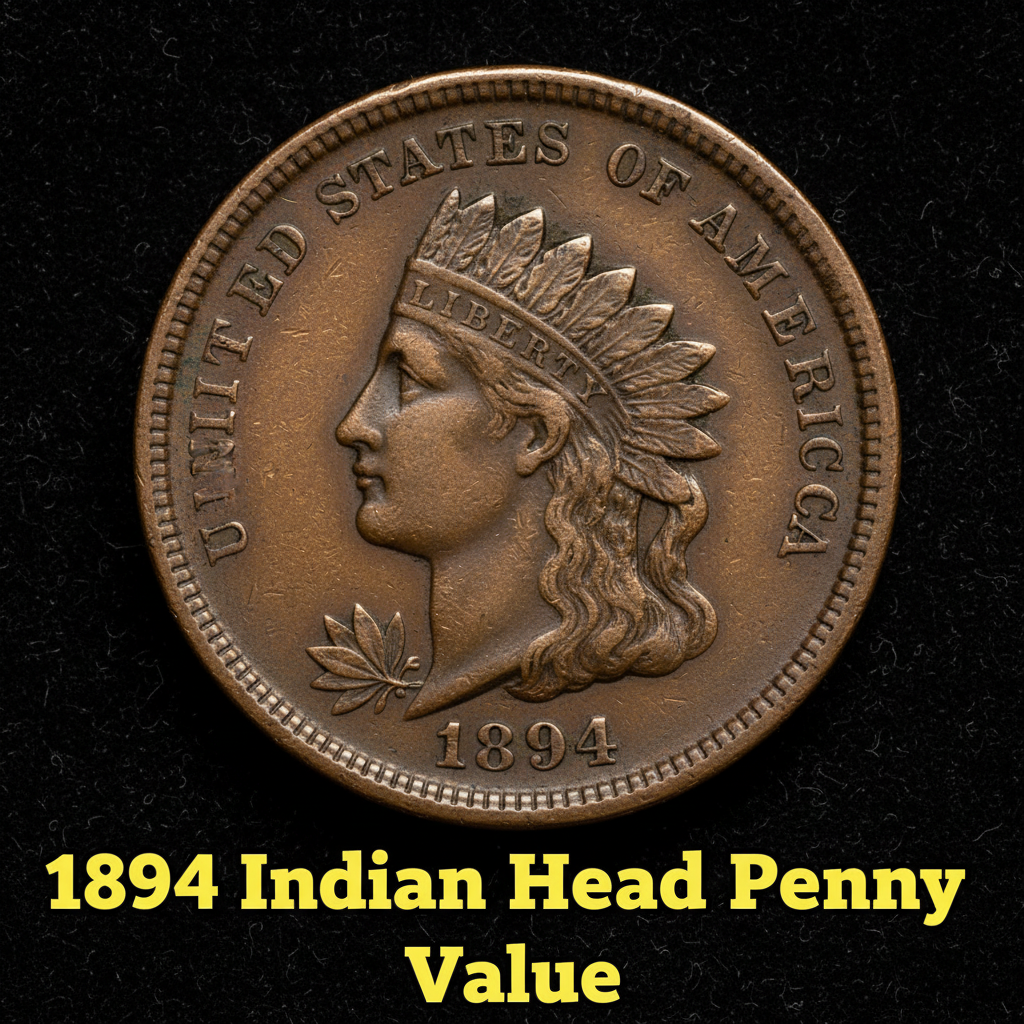
The 1894 Indian Head Penny is a one-cent coin struck by the United States Mint during the late Victorian era. Designed by James Barton Longacre, the coin features Lady Liberty wearing a Native American headdress on the obverse, with a wreath and the denomination on the reverse. By 1894, these cents were made of 95% copper and 5% tin and zinc — a composition that gives surviving examples that warm reddish-brown color most collectors are familiar with today.
If you’re not sure whether what you have is actually an 1894 Indian Head Cent or something else entirely, it helps to use a free coin identifier app to confirm the coin’s identity before you start researching its value. These tools can save you a lot of time and guesswork.
The Philadelphia Mint produced approximately 16,752,132 Indian Head Pennies in 1894 — a relatively modest mintage for the era. That number matters when it comes to value: lower supply combined with strong collector demand means even circulated examples are worth more than face value, and high-grade coins are genuinely desirable.
—
1894 Indian Head Penny Value by Grade
Coin value is almost entirely driven by condition, or “grade.” A coin that looks nearly new is worth dramatically more than one that’s been rubbed smooth from decades of pocket change. Here’s a general breakdown of what the 1894 Indian Head Penny is worth across different grades:
| Grade | Description | Estimated Value |
|---|---|---|
| Good (G-4) | Heavy wear, design visible but flat | $2 – $4 |
| Fine (F-12) | Moderate wear, some detail remains | $6 – $10 |
| Extremely Fine (EF-40) | Light wear on high points only | $20 – $35 |
| About Uncirculated (AU-55) | Slight friction, mostly sharp | $45 – $70 |
| Mint State Red (MS-65 RD) | Full original luster, no wear | $150 – $300+ |
For the most up-to-date pricing on high-grade examples, you can check current 1894 Indian Head Penny MS Red price data directly. Prices can shift based on recent auction results, so live data is always more reliable than printed guides.
—
What Makes Some 1894 Pennies Worth More?
Not all 1894 Indian Head Pennies are created equal. A few key factors push certain coins well above average values:
Color designation is one of the biggest factors for uncirculated coins. Grading services classify mint-state copper coins as Red (RD), Red-Brown (RB), or Brown (BN). Full Red coins — meaning they’ve kept most of their original copper luster — command a strong premium. A MS-63 Brown might sell for $40, while the same coin graded MS-63 Red could be worth $100 or more.
Strike quality also matters. Some 1894 cents came out of the press with weak or mushy details, particularly in the feather tips of Lady Liberty’s headdress. A sharply struck coin with crisp, well-defined details will always bring more money from serious collectors.
Surface preservation — the absence of contact marks, scratches, or cleaning — makes a huge difference too. Cleaned coins are heavily discounted in the hobby, even if they look shiny to the untrained eye. CoinKnow is a great tool to help you understand grading standards and identify whether your coin has been cleaned or altered before you try to sell it.
—
How Does the 1894 Compare to Other Indian Head Cents?
The Indian Head Penny series ran from 1859 to 1909, and values vary a lot across the series. The 1894 sits in the middle ground — it’s not a rare key date, but it’s not the most common issue either. Its mintage of just under 17 million places it on the scarcer side compared to some years in the 1890s and 1900s.
For comparison, if you’re curious how a nearby year stacks up, you can read about what the 1898 Indian Head Penny is worth to see how slight differences in mintage and collector demand affect value across the series.
The true key dates in the Indian Head series — coins like the 1877 or 1909-S — are worth thousands of dollars. The 1894 won’t reach those heights in average grades, but a gem Red example is still a genuinely appealing and valuable coin. CoinKnow can help you compare your coin to certified examples so you can get a realistic sense of where yours stands.
—
FAQ
Q: Is the 1894 Indian Head Penny rare?
A: It’s not considered a rare key date, but with a mintage of about 16.75 million it’s on the lower end for the series. Circulated examples are easy to find, but high-grade Red specimens are genuinely scarce and sought after by collectors.
Q: Should I clean my 1894 Indian Head Penny before selling it?
A: Absolutely not. Cleaning a coin — even with gentle soap and water — removes the natural patina and almost always reduces its value significantly. Collectors and dealers strongly prefer coins in original, unaltered condition, even if they look dark or dirty.
Q: How can I tell what grade my 1894 Indian Head Penny is?
A: Start by examining how much detail remains in the coin’s design, particularly the feathers in the headdress and the letters in LIBERTY on the headband. Compare your coin to grading photos online, or use CoinKnow to get a better sense of the grading scale. For coins you believe might be worth $50 or more, professional grading through PCGS or NGC is worth considering.