1918-D Wheat Penny Value Guide How Much Is Your Denver Coin Worth
The 1918-D Wheat Penny is worth anywhere from $0.50 in heavily worn condition to well over $100 in high-grade mint state examples. If you’ve dug one of these old Lincoln cents out of a jar or inherited a coin collection, you’re in the right place to find out exactly what it’s worth.
If you want a quick and easy way to identify and value old coins like this one, try using a free coin identifier app on your phone — it can save you a lot of guesswork before you head to a dealer.
—
What Is the 1918-D Wheat Penny?
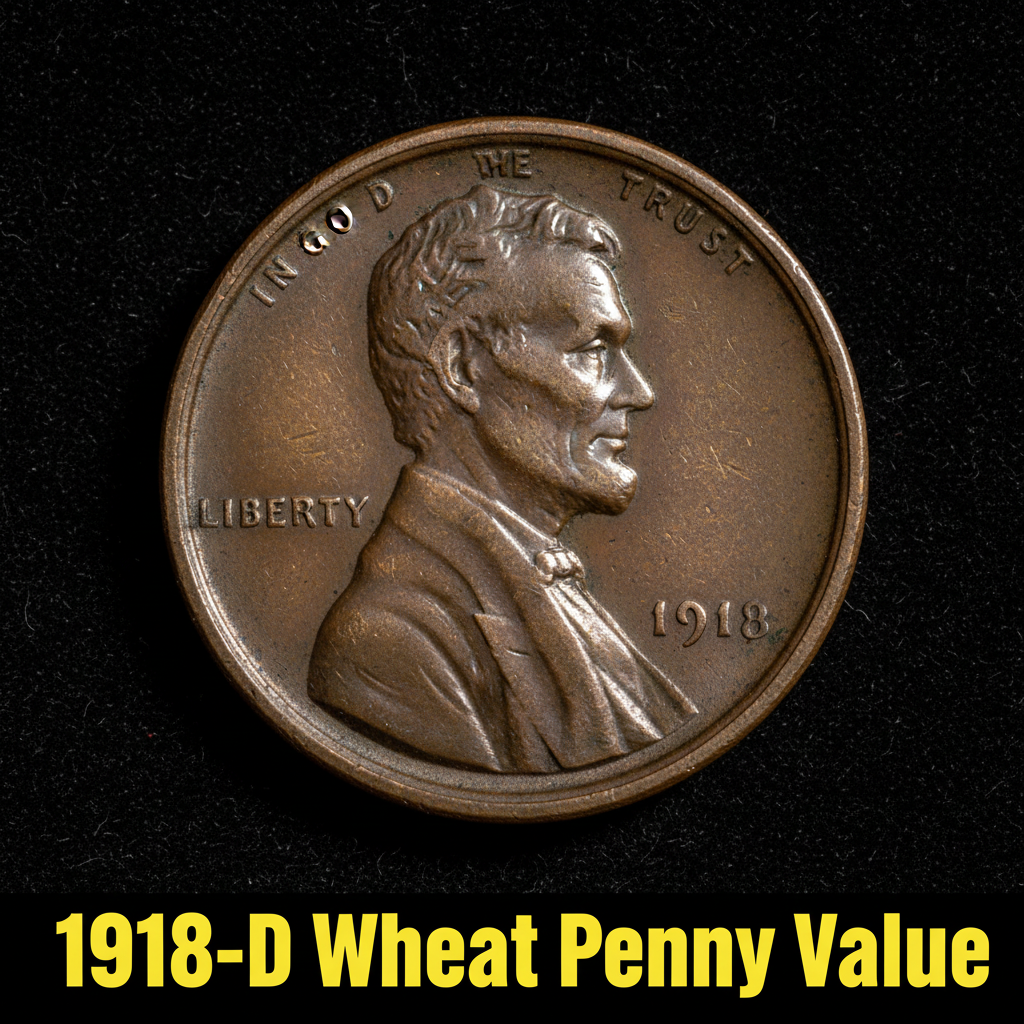
The 1918-D Wheat Penny is a Lincoln Wheat cent struck at the Denver Mint during World War I. The small “D” mintmark appears just below the date on the obverse (front) of the coin. It was made from 95% copper and 5% tin and zinc — the same composition used for most early Lincoln cents.
The Denver Mint produced 47,830,000 of these coins in 1918, making it a fairly common issue by wheat penny standards. However, most of them circulated heavily, meaning coins in truly excellent condition are harder to come by than you might think. The 1918-D Wheat Penny is a solid collectible that appeals to both beginners building date-and-mintmark sets and experienced collectors hunting high-grade examples.
Understanding the mint of origin matters because coins from different mints can carry very different values, even for the same year. The Philadelphia Mint (no mintmark) and San Francisco Mint (“S” mintmark) also produced Lincoln cents in 1918, and their values differ from the Denver issue.
—
1918-D Wheat Penny Value by Grade
The grade — or condition — of your coin is the single biggest factor in determining its value. A coin that looks shiny and detailed is worth far more than one that’s scratched, dark, or worn smooth. Here’s a general breakdown of what the 1918-D Wheat Penny is worth across different grades:
| Grade | Description | Estimated Value |
|---|---|---|
| Good (G-4) | Heavy wear, outline visible | $0.50 – $1.00 |
| Very Good (VG-8) | Major details clear, moderate wear | $1.50 – $3.00 |
| Fine (F-12) | Moderate wear, all lettering sharp | $3.00 – $6.00 |
| Very Fine (VF-20/30) | Light wear on high points | $7.00 – $15.00 |
| Extremely Fine (EF-40) | Slight wear, strong details | $18.00 – $30.00 |
| About Uncirculated (AU-50) | Trace wear only | $35.00 – $55.00 |
| Mint State (MS-63) | No wear, some marks | $65.00 – $100.00 |
| Gem Mint State (MS-65+) | No wear, minimal marks, full luster | $150.00 – $400.00+ |
For a more detailed look at 1918-D Wheat Penny prices in red mint state grades, professional auction databases can give you real sale prices from recent years.
—
How to Tell What Grade Your 1918-D Wheat Penny Is
Grading coins at home takes a little practice, but you don’t need to be an expert to get a ballpark sense of your coin’s condition. Start by looking at Lincoln’s cheekbone and the wheat stalks on the reverse — these are the high points that wear down first.
If Lincoln’s face looks flat and featureless with no hair detail, your coin is probably in Good to Very Good condition and worth under $5. If you can see individual hair strands above Lincoln’s ear and the wheat lines are sharp and well-separated, you’re looking at a Fine to Very Fine coin worth $5–$15. A coin with luster (a slight sheen or glow) and no visible wear is considered Uncirculated and can be worth significantly more.
CoinKnow is a popular mobile app that many collectors use to grade and identify their coins quickly. You can scan your coin with your phone camera and get an instant estimate — great if you’re just getting started. Whether you’re checking a single coin or working through a whole collection, CoinKnow makes the process fast and beginner-friendly.
—
What Makes a 1918-D Wheat Penny More Valuable
Beyond grade, a few other factors can push your coin’s value higher:
Color designation plays a big role for Uncirculated coins. Coin grading services like PCGS and NGC label copper coins as Red (RD), Red-Brown (RB), or Brown (BN). A fully Red coin — meaning it still has its original copper-orange color with no toning — is worth significantly more than a Brown example of the same grade.
Strike quality also matters. Some 1918-D coins were weakly struck, especially in the hair detail and the central reverse. A sharply struck example stands out and commands a premium from serious collectors.
Original surfaces without cleaning or artificial toning add value too. Unfortunately, many old coins were polished or dipped by well-meaning previous owners, which actually reduces their desirability and value considerably.
If you want a reliable and thorough breakdown of 1918 Wheat Penny values across all three mints, comparing the Philadelphia, Denver, and San Francisco issues side by side is a great way to understand where your coin stands.
—
Should You Get Your 1918-D Wheat Penny Graded?
Professional grading from PCGS or NGC is worth considering if your coin appears to be in About Uncirculated or better condition. Grading fees typically start around $30–$50 per coin, so it only makes financial sense if your coin is likely worth $75 or more in a slab.
For circulated coins in lower grades, the cost of professional grading would exceed the coin’s value. In that case, it’s smarter to simply use a reference guide or an app like CoinKnow to get a solid estimate and then sell through eBay, a local coin show, or a coin dealer.
—
FAQ
Q: How do I know if my penny is a 1918-D and not a 1918-P?
A: Look just below the date on the front of the coin. If you see a small “D,” it was made in Denver. If there’s no mintmark at all, it came from the Philadelphia Mint. A magnifying glass helps a lot here.
Q: Is a 1918-D Wheat Penny rare?
A: Not particularly. With nearly 48 million minted, it’s considered a common date in worn grades. However, high-grade Mint State examples — especially those with full Red color — are genuinely scarce and worth good money to serious collectors.
Q: Can I clean my 1918-D Wheat Penny to make it worth more?
A: No — never clean an old coin. Cleaning removes the natural patina and surface metal, which makes the coin look unnatural to experienced collectors and dealers. A cleaned coin is always worth less than an uncleaned one in the same grade, even if it looks shinier to the naked eye.