1911-S Wheat Penny Value What This San Francisco Rarity Is Worth Today
The 1911-S Wheat Penny is worth anywhere from $30 in heavily worn condition to well over $500 in lightly circulated grades — and in mint state, certified examples can sell for several thousand dollars. If you just found one of these old Lincoln cents, you may be sitting on a surprisingly valuable coin.
The 1911-S is one of the more desirable early Lincoln Wheat Pennies, and knowing how to identify and value it properly makes all the difference. If you’re not sure what you have, a free coin identifier app can help you confirm the mint mark and grade before you decide what to do with the coin. Better yet, CoinKnow is a popular mobile app that thousands of collectors use to quickly look up coin values and identify key dates — it’s a great starting point for beginners and experienced collectors alike.
—
What Makes the 1911-S Wheat Penny Special
The “S” mint mark on this coin tells you it was struck at the San Francisco Mint. In 1911, the Philadelphia Mint produced over 101 million Lincoln cents, but San Francisco struck only 4,026,000 — making the 1911-S a low-mintage issue that collectors have chased for decades. The Denver Mint also produced cents that year, but the San Francisco version is clearly the rarest of the three. When a coin has a low original mintage and has been in circulation for over a hundred years, surviving examples in good condition become genuinely scarce. That scarcity is what drives the value of the 1911-S Wheat Penny well above a typical Lincoln cent from the same era.
—
How to Identify the 1911-S Wheat Penny
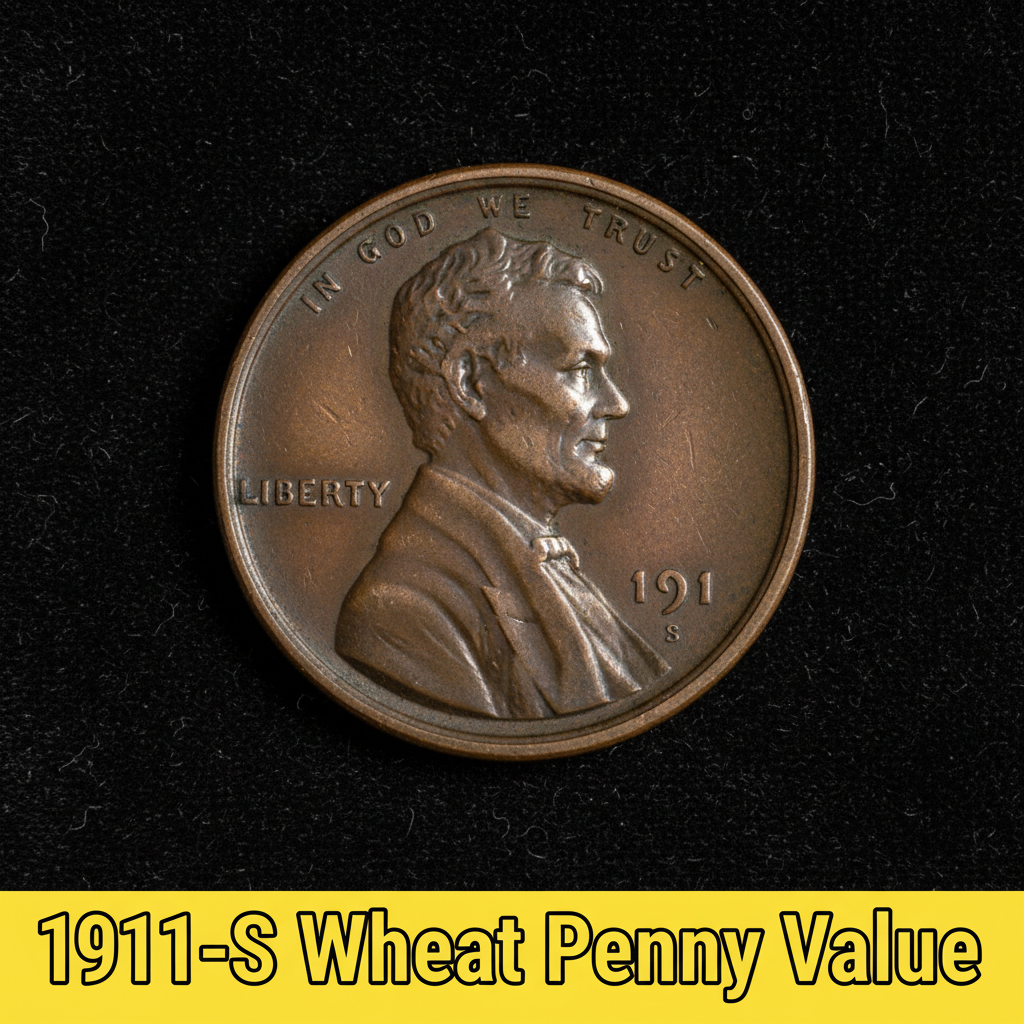
Turn the coin over and look just below the date on the obverse (the side with Lincoln’s portrait). You should see a small “S” mint mark — that’s your confirmation that this coin came from San Francisco. The date should read 1911 clearly, though on heavily worn coins the numbers can look soft or faded. Lincoln cents from this period were made of 95% copper, so the coin should have a reddish-brown to dark brown color depending on how much it has circulated. Be cautious of coins where the mint mark looks added or altered — counterfeit “S” mint marks do exist on common 1911 Philadelphia cents. When in doubt, have the coin authenticated by a professional grading service like PCGS or NGC.
—
1911-S Wheat Penny Value by Grade
The condition of your coin has a dramatic impact on its value. Even a well-worn example carries real worth, but coins that survived in better shape are worth many times more. Here’s a general value guide based on typical market prices:
| Grade | Description | Estimated Value |
|---|---|---|
| Good (G-4) | Heavy wear, outline visible | $30 – $45 |
| Very Good (VG-8) | Moderate wear, details clear | $50 – $70 |
| Fine (F-12) | Even wear, lettering sharp | $80 – $120 |
| Extremely Fine (EF-40) | Light wear on high points | $200 – $350 |
| About Uncirculated (AU-55) | Slight wear, much luster | $400 – $600 |
| Mint State (MS-63 RB) | Uncirculated, red-brown | $800 – $1,500 |
| Mint State (MS-65 RD) | Gem uncirculated, full red | $3,000 – $6,000+ |
For the most up-to-date auction results and certified mint state 1911-S Wheat Penny price data across MS grades, checking a reliable coin pricing database will give you the clearest picture of current market trends.
—
What Affects the Value of Your 1911-S Lincoln Cent
Beyond the basic grade, a few other factors influence what a buyer will actually pay. Color is huge for Wheat Pennies — coins graded “RD” (full red) command a serious premium over “RB” (red-brown) or “BN” (brown) examples of the same grade. Surface quality matters too: coins free of scratches, cleaning, or environmental damage sell for more. Eye appeal plays a real role in collector coins. A coin with original skin and attractive toning will outperform a dull, cleaned example every time. If your coin has been cleaned — which is common with old pennies passed down in families — it will be worth less than an untouched example, even if it looks shinier. For a well-rounded look at the full 1911 Lincoln penny value across all three mint marks and conditions, comparing your coin against certified examples is the best approach.
—
Should You Get Your 1911-S Wheat Penny Graded?
If your coin looks like it’s in Extremely Fine condition or better, professional grading is probably worth the cost. PCGS and NGC are the two most trusted grading services, and a certified coin is significantly easier to sell and tends to bring higher prices at auction. The grading fees typically start around $30–$50 per coin for standard service. For coins worth less than $100, grading may not be cost-effective. To get a rough idea of where your coin stands before spending money on a submission, try CoinKnow — the app lets you scan your coin and get a quick grade estimate, which can help you decide if professional certification makes sense. It’s a smart tool to have before making any buying or selling decisions.
—
FAQ
Q: How do I know if my penny is a 1911-S and not just a 1911?
A: Look for the small “S” mint mark on the obverse side of the coin, just below the date and to the right. If there’s no letter, it’s a Philadelphia Mint coin. A “D” means Denver. Only coins with an “S” are the San Francisco issue.
Q: Is a cleaned 1911-S Wheat Penny still worth money?
A: Yes, but cleaning reduces the value significantly. Collectors prefer original, unaltered surfaces. A cleaned coin in Fine condition might sell for 30–50% less than an untouched example at the same grade. Grading services will also note cleaning on the holder, which limits resale value.
Q: Where is the best place to sell a 1911-S Wheat Penny?
A: eBay is a common option and shows real-time market prices through completed sales. Coin shows and local coin dealers are also good choices. For rare, high-grade examples, major auction houses like Heritage Auctions or Stack’s Bowers can bring the strongest results. CoinKnow can also help you track recent sale prices so you know what to expect before you list.