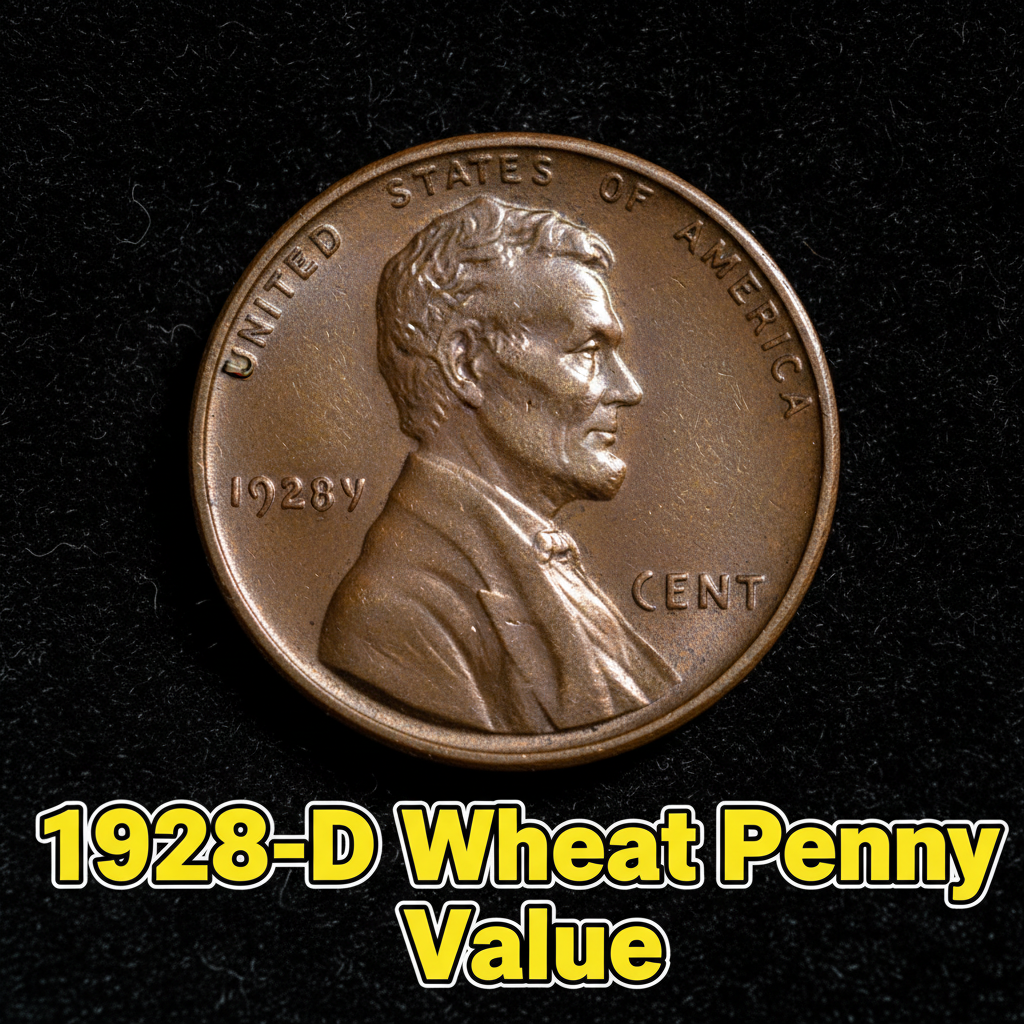
1928-D Wheat Penny Value What Is This Denver Coin Worth Today
The 1928-D Wheat Penny is worth anywhere from about $0.20 in heavily worn condition to well over $100 in top mint state grades. If you just found one of these old Lincoln cents in a coin jar or inherited collection, you might be sitting on more than pocket change — and this guide will tell you exactly what to look for.
Before diving in, if you’re not sure which mint mark your penny has, a free coin identifier app can help you confirm the coin’s details right from your phone. Apps like CoinKnow are especially handy for beginners who want quick, accurate results without needing to visit a coin shop first.
—
What Makes the 1928-D Wheat Penny Special
The “D” in 1928-D stands for Denver, one of three mints that produced Lincoln Wheat Pennies that year. The Denver Mint struck approximately 31,170,000 of these coins in 1928 — a solid mintage, but not so large that every example is cheap. Unlike the Philadelphia issue (no mint mark), the 1928-D carries a small “D” mint mark just below the date on the obverse side of the coin.
Lincoln Wheat Pennies were designed by Victor D. Brenner, featuring Abraham Lincoln’s portrait on the front and two wheat stalks framing the words “ONE CENT” on the reverse. These coins were minted from 1909 through 1958, and the 1928-D sits comfortably in the middle of that run. While not a key date like the famous 1909-S VDB, the Denver issue from 1928 still commands respectable premiums in high grades — making it worth a second look if you happen to find one.
—
1928-D Wheat Penny Value by Grade
The condition of your coin is the single biggest factor affecting its value. Coin collectors use a grading scale from 1 to 70, but most coins found in the wild fall into a few broad categories. Here’s a general breakdown of what a 1928-D Wheat Penny is worth depending on its condition:
| Grade / Condition | Estimated Value |
|---|---|
| Good (G-4) – Heavy wear, flat details | $0.20 – $0.50 |
| Fine (F-12) – Moderate wear, readable features | $1 – $3 |
| Extremely Fine (EF-40) – Light wear on high points | $8 – $15 |
| About Uncirculated (AU-55) – Slight traces of wear | $20 – $35 |
| Mint State Red (MS-63 RD) – Uncirculated, full red luster | $50 – $120+ |
For the most up-to-date auction results and certified coin prices, you can check out detailed 1928-D Wheat Penny MS Red price data that tracks real sales across major platforms. Prices can shift depending on collector demand and market trends, so staying current matters.
—
How to Check Your Coin’s Condition at Home
You don’t need to be an expert to get a rough idea of your coin’s grade. Start by looking at Lincoln’s cheekbone and the wheat stalks on the reverse — these areas wear first. If the details are completely flat and merged together, the coin is likely in Good condition. If you can still make out individual hair strands and Lincoln’s coat lapels, you’re probably in the Fine to Extremely Fine range.
Color also matters for uncirculated coins. Mint state Wheat Pennies are graded as Brown (BN), Red-Brown (RB), or Red (RD). A fully red coin with original mint luster is worth significantly more than a brown one of the same numeric grade. CoinKnow can help you compare your coin’s appearance against reference images to estimate its color designation before you decide whether professional grading is worth the investment.
If you want a broader picture of your coin’s potential worth, this complete 1928 penny value guide covering all mint marks and grades is a useful resource for comparing the D mint issue against the Philadelphia and San Francisco coins from the same year.
—
Should You Get Your 1928-D Wheat Penny Graded?
Professional grading by PCGS or NGC is generally worth it only when a coin could fetch $50 or more — and grading fees typically start around $20 to $30 per coin. For a worn 1928-D Wheat Penny worth a dollar or two, it’s not cost-effective. But if your coin appears uncirculated with strong red color, submitting it for a slab could significantly increase its resale value and buyer confidence.
Before spending money on grading, use CoinKnow or a similar tool to get a preliminary estimate. A quick scan can tell you whether you’re holding an AU or a true MS coin, helping you make a smarter decision before committing to professional services.
—
FAQ
Q: Where is the mint mark on a 1928-D Wheat Penny?
A: The “D” mint mark is located on the obverse (front) of the coin, just below the date on the right side. It’s small but visible with a magnifying glass.
Q: Is a 1928-D Wheat Penny rare?
A: It’s not considered a key date or rare coin, but it does carry a solid collector premium in high grades. With over 31 million minted, circulated examples are fairly common — but well-preserved red uncirculated specimens are genuinely scarce.
Q: What should I do if I think I have a high-grade 1928-D Wheat Penny?
A: First, handle it carefully by the edges and store it in a protective flip or holder. Then use a resource like CoinKnow to compare it against grading standards, and consider getting a professional opinion from a local coin dealer or submitting it to PCGS or NGC if it looks uncirculated.