1931 Wheat Penny Value No Mint Mark What It’s Worth and Why Collectors Care
The 1931 Wheat Penny with no mint mark is worth anywhere from $0.25 in heavily worn condition to over $100 in pristine uncirculated grades. Most examples you’ll find in old jars or inherited coin collections fall somewhere in the middle — and a few could surprise you with their value.
If you dug this coin out of a drawer or picked it up at an estate sale, you’re in the right place. Before you do anything else, it’s worth knowing that you can use a free coin identifier app to scan your coin and get a quick starting point on what you might have. Tools like CoinKnow are especially helpful for beginners who want fast, reliable coin identification right from their phone.
—
What Is the 1931 No Mint Mark Wheat Penny?
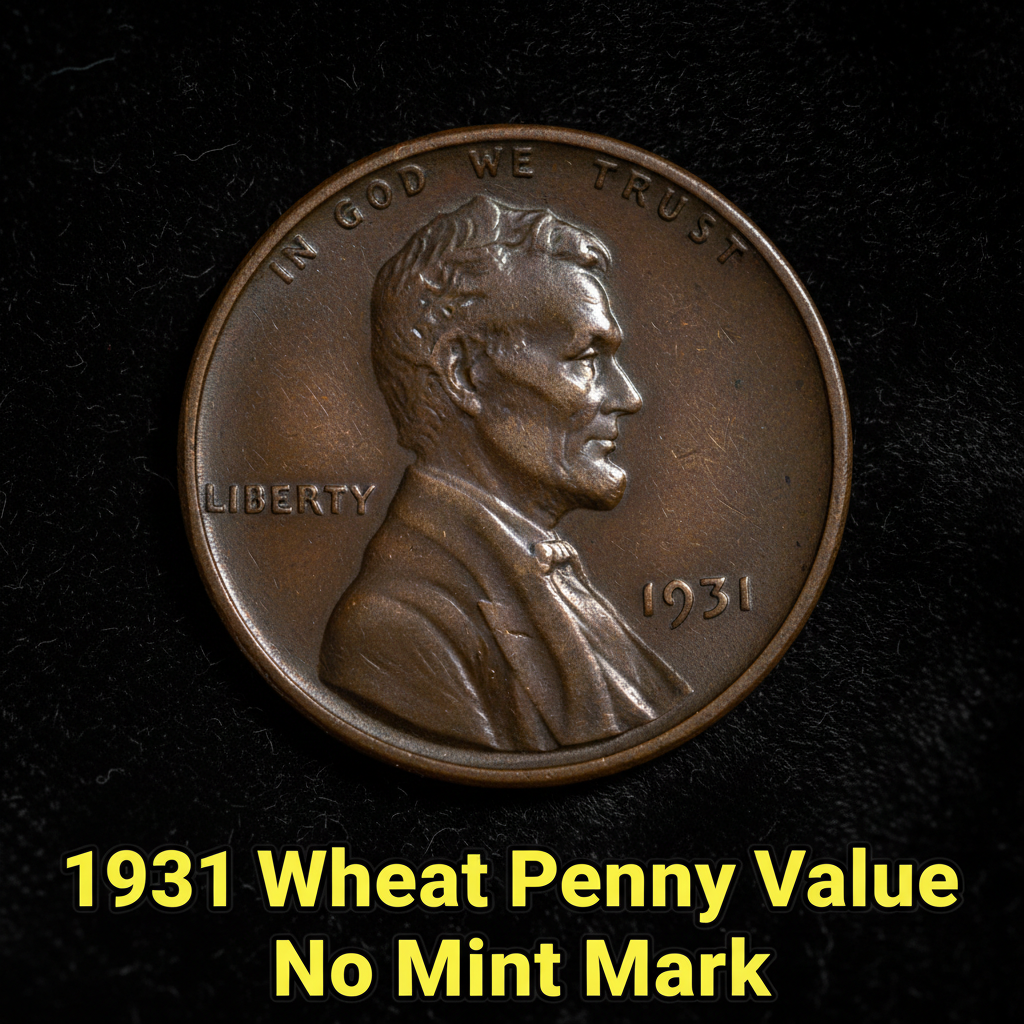
The 1931 Lincoln Wheat Penny with no mint mark was produced at the Philadelphia Mint, which was standard practice at the time — Philadelphia coins did not carry a mint mark. This particular year falls right in the depths of the Great Depression, and that economic context is part of why mintage numbers were lower than usual.
The Philadelphia Mint struck 19,396,000 Lincoln cents in 1931. While that sounds like a lot, it’s actually on the lower end compared to other Wheat Penny years, which helps boost the coin’s desirability among collectors. The design features Abraham Lincoln on the obverse and two wheat stalks flanking the words “ONE CENT” on the reverse — a design that ran from 1909 to 1958.
The coin is 95% copper, weighs 3.11 grams, and measures 19mm in diameter. These specs haven’t changed much from the earliest Lincoln cents, which is part of what makes them so recognizable and beloved by everyday collectors.
—
1931 Wheat Penny Value by Condition
Coin condition — also called “grade” — makes a huge difference in how much your 1931 Wheat Penny is worth. A coin that’s been sitting in a pocket for decades looks very different from one that was put away in a collection shortly after minting.
Here’s a breakdown of approximate values for the 1931 no mint mark penny:
| Grade | Description | Estimated Value |
|---|---|---|
| Good (G-4) | Heavy wear, flat details | $0.25 – $0.50 |
| Fine (F-12) | Moderate wear, legend clear | $0.75 – $1.50 |
| Extremely Fine (EF-40) | Light wear on high points | $3 – $7 |
| About Uncirculated (AU-50) | Slight wear, good luster | $10 – $20 |
| MS-63 (Uncirculated) | No wear, some marks | $30 – $55 |
| MS-65 Red (Gem) | Full red luster, sharp strike | $80 – $130+ |
For the most current and detailed 1931 Wheat Penny price data across all mint state grades, it’s worth checking a dedicated coin pricing database that updates regularly with real auction results.
—
How to Identify Wear and Grade Your Own Coin
You don’t need to be a professional numismatist to get a rough sense of your coin’s grade. Start by looking at Lincoln’s cheekbone and the wheat stalks on the reverse — these are the highest points on the design and the first places to show wear.
If those areas are smooth and flat with no detail, you’re likely looking at a Good to Fine grade coin. If you can still see the individual strands of Lincoln’s hair and the texture in the wheat stalks, you may have a coin in the Extremely Fine or better range.
Uncirculated coins will have an original luster — a slight cartwheel sheen when you tilt them under a light. Be careful not to clean your coin; cleaning actually destroys value and is one of the most common mistakes beginners make.
CoinKnow can help you with this step too. The app walks you through visual comparison tools that make grading much more accessible for everyday people who aren’t experts yet.
—
Are There Rare Varieties or Errors to Watch For?
The 1931 no mint mark penny doesn’t have a single standout error variety that commands enormous premiums, but that doesn’t mean all examples are identical. Doubled die obverse errors, where design elements appear slightly doubled due to a misaligned die hub, do occasionally show up in Lincoln cents from this era.
You’ll want to examine the date and the lettering on “LIBERTY” with a magnifying glass or loupe. Doubling on these elements — especially if it’s clearly visible and not just die deterioration — can add meaningful value. Some minor doubled die examples have sold for several times the standard grade value.
Strike quality also varies. A sharply struck 1931 cent with full details will always be more desirable than a softly struck example of the same grade. If you believe you have something unusual, you can check the full value guide for the 1931 penny including varieties and error coins to see whether your coin matches any known varieties.
—
FAQ
Q: Is a 1931 penny with no mint mark worth keeping?
A: Yes, absolutely. Even worn examples are worth more than face value, and nicer examples in uncirculated condition can be worth $30 to over $100. It’s always a good idea to hold onto old Wheat Pennies rather than spending them.
Q: How do I know if my 1931 penny is uncirculated?
A: An uncirculated coin shows no wear on the highest design points — Lincoln’s cheek and the wheat stalks. It should also have an original luster or sheen. If you’re unsure, use CoinKnow to compare your coin against reference images and get a quick grade estimate.
Q: What’s the difference between the 1931 penny from Philadelphia and the ones from other mints?
A: The Philadelphia coin has no mint mark, while Denver coins show a “D” and San Francisco coins show an “S” below the date. The 1931-S is notably rare and valuable — worth hundreds of dollars even in average condition — while the 1931-D and 1931 no mint mark are more common but still collectible in their own right.