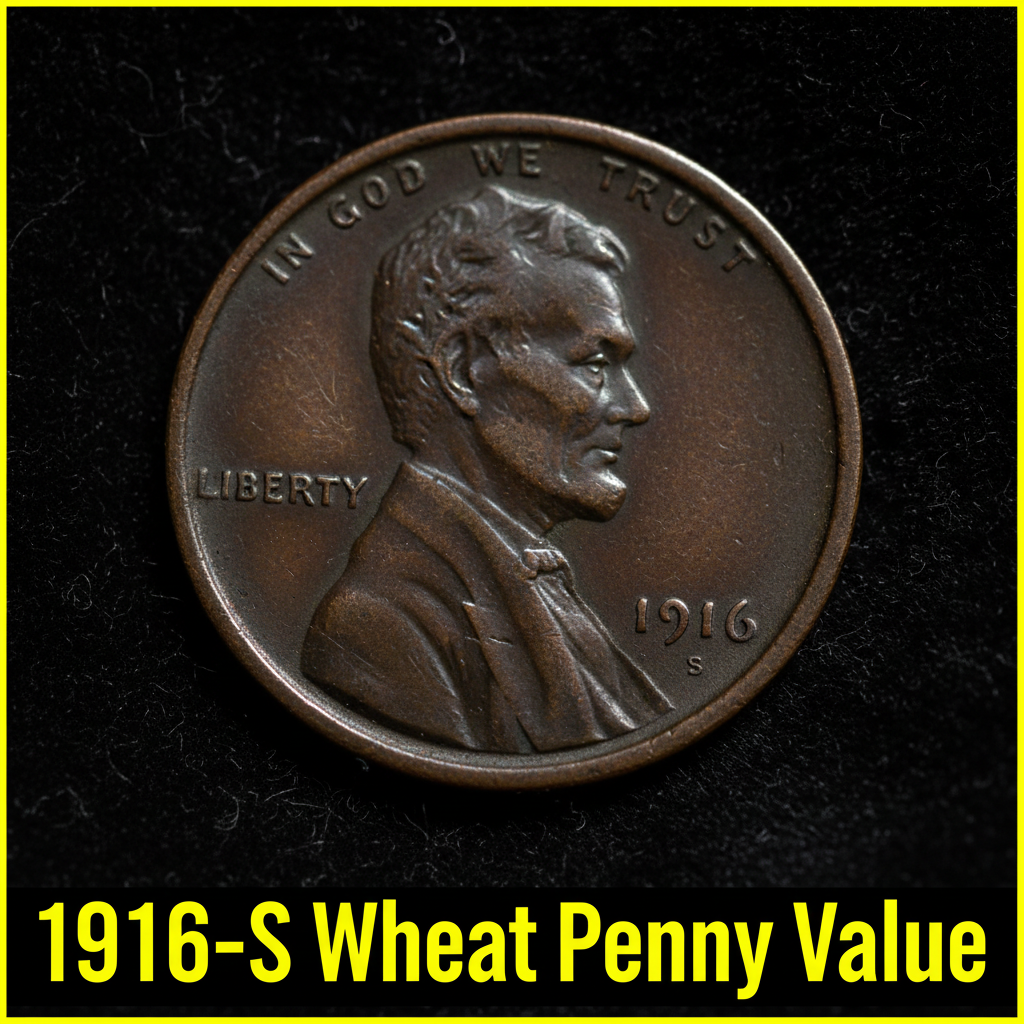
1916-S Wheat Penny Value: What Your San Francisco Cent Is Really Worth
The 1916-S Wheat Penny is worth anywhere from $2 in heavily worn condition to over $200 or more in well-preserved mint state grades — and certain high-grade examples have sold for thousands at auction. If you just found one of these old Lincoln cents, you’re in for an interesting story.
The 1916-S Lincoln Wheat Penny was struck at the San Francisco Mint during the early years of the Lincoln cent series. If you’re not sure whether what you have is actually a 1916-S, you can use a free coin identifier app to quickly confirm the coin’s identity before diving into valuation. The small “S” mintmark sits just below the date on the obverse side of the coin. Once you’ve confirmed you have the real thing, let’s break down exactly what it might be worth.
Background: The 1916-S Wheat Penny in History
The Lincoln cent was introduced in 1909, and by 1916 it was already a staple of everyday American commerce. That year, the San Francisco Mint produced approximately 22,510,000 Lincoln Wheat Pennies. While that sounds like a lot, nearly all of those coins were spent, carried in pockets, and worn down through decades of use. Finding a 1916-S in decent shape today is genuinely exciting.
The design by Victor David Brenner features Abraham Lincoln on the obverse and two wheat stalks flanking the words “ONE CENT” on the reverse — a design that remained in use until 1958. The 1916-S is considered a moderately scarce coin in high grades, which is exactly what drives collector demand and value.
1916-S Wheat Penny Value by Grade
Coin values vary dramatically depending on condition, so grading matters a lot here. A coin graded “Good” (G-4) shows heavy wear with flat features, while coins graded “Extremely Fine” (EF-40) still show sharp details. Mint State coins (MS-60 and above) are uncirculated examples that never saw a day in your grandfather’s pocket.
Here’s a general value table to give you a clear picture:
| Grade | Description | Estimated Value |
|---|---|---|
| Good (G-4) | Heavy wear, outline visible | $2 – $4 |
| Very Good (VG-8) | Moderate wear, main details clear | $5 – $8 |
| Fine (F-12) | Even wear, lettering sharp | $10 – $15 |
| Very Fine (VF-20/30) | Light wear on high points | $20 – $35 |
| Extremely Fine (EF-40) | Slight wear, strong detail | $45 – $65 |
| About Uncirculated (AU-50) | Trace wear only | $80 – $120 |
| Mint State (MS-63) | Uncirculated, minor marks | $150 – $250 |
| Mint State (MS-65+) | Gem uncirculated | $400 – $1,000+ |
For the most current and detailed 1916-S Wheat Penny price data across all mint state grades, market prices can shift with collector demand, so it helps to check regularly.
What Makes a 1916-S Wheat Penny More Valuable
Beyond the basic grade, a few other factors can push your coin’s value higher. Color is one of the biggest. Copper cents are graded not just by wear but by their surface color: Red (RD), Red-Brown (RB), or Brown (BN). A fully Red 1916-S Wheat Penny in MS-65 can be worth significantly more than a Brown example of the same grade because original mint luster is rare and highly prized.
Strike quality also matters. Some San Francisco coins from this era show weak strikes, especially on Lincoln’s cheekbone and the wheat stalks. A well-struck example is worth more.
Eye appeal is the third big factor. A coin with clean fields, no spots, and strong contrast simply looks better — and collectors pay a premium for beauty. CoinKnow uses AI to help you evaluate exactly these kinds of details by analyzing your coin photo in seconds, giving you an instant read on what you’re working with.
How to Check Your 1916-S Wheat Penny’s Value Today
The smartest first step is to examine the coin under good lighting with a magnifier. Look at Lincoln’s hair, his ear, and the wheat stalks on the reverse. The more detail you can see, the better the grade — and the higher the value.
You can also get a solid starting estimate by checking the full 1916 Wheat Penny value breakdown including all mint marks and grades, which covers everything from circulated finds to high-end collector pieces. For serious coins — anything that might grade MS-63 or higher — professional grading through PCGS or NGC is absolutely worth the fee. A certified coin sells for more and is easier to sell to other collectors or dealers.
CoinKnow is a great tool for this process. Just photograph your coin, upload it to the app, and get an instant AI-powered assessment of what you might have. It’s one of the easiest ways to get a ballpark before spending money on professional grading.
If you decide to sell, consider auction houses, online platforms like eBay, or local coin shows. A raw (uncertified) circulated 1916-S will sell quickly to dealers, while high-grade certified examples attract competitive bidding from serious collectors.
FAQ About the 1916-S Wheat Penny
Q: How can I tell if my Lincoln cent is a 1916-S?
A: Look just below the date on the front of the coin. If you see a small “S” mintmark, it was made at the San Francisco Mint. No mintmark means it came from Philadelphia. You can also use CoinKnow to confirm the coin’s identity instantly with a photo.
Q: Is the 1916-S Wheat Penny rare?
A: It’s not a key date, but it’s moderately scarce in higher grades. Over 22 million were minted, but very few survived in collectible condition. In circulated grades it’s affordable; in gem mint state it becomes genuinely difficult to find.
Q: What is the most valuable 1916-S Wheat Penny ever sold?
A: Top-grade Red examples certified MS-66 or MS-67 by PCGS or NGC have sold at auction for over $2,000 to $5,000 depending on eye appeal and color. These are extremely rare and represent the very best surviving specimens from over a century ago.