1917 Wheat Penny Value No Mint Mark and What It’s Worth Today
The 1917 Wheat Penny with no mint mark is worth anywhere from $0.35 in heavily worn condition to over $100 or more in high mint state grades. If you just found one of these old Lincoln cents, you’re in the right place — let’s break down exactly what it’s worth and why.
When you’re holding a coin that’s over 100 years old, it’s natural to wonder whether you’re sitting on a hidden treasure. A free coin identifier app can be a great first step to confirm what you have, but this guide will walk you through everything you need to know about the 1917 no mint mark Wheat Penny — from its history to its real-world value in today’s collector market.
—
What Is the 1917 No Mint Mark Wheat Penny?
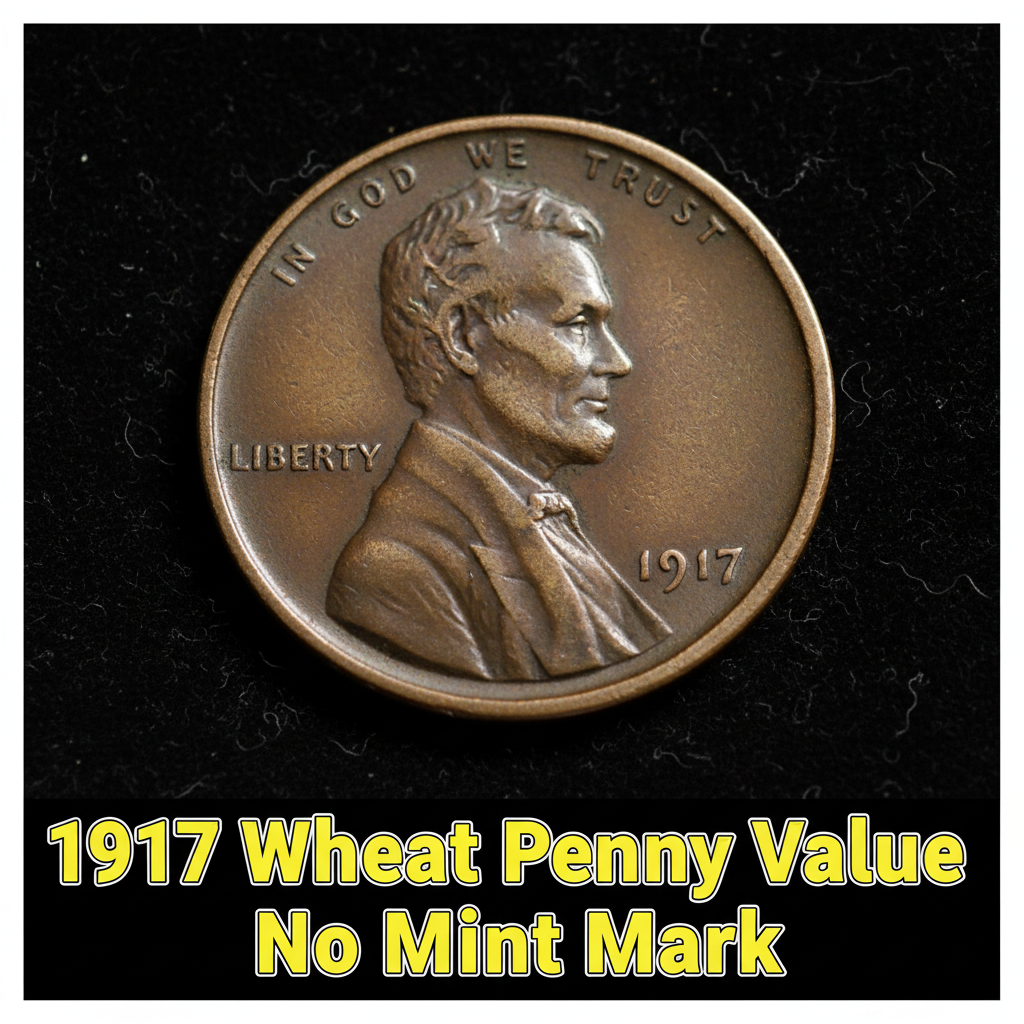
The 1917 Lincoln Wheat Penny without a mint mark was struck at the Philadelphia Mint, which was the standard practice at the time — Philadelphia coins simply didn’t carry a “P” mint mark in that era. The Philadelphia Mint produced an enormous 196,429,785 coins that year, making this one of the more common dates in the early Wheat Penny series.
Designed by Victor David Brenner, the obverse features a portrait of Abraham Lincoln, while the reverse displays two stalks of wheat framing the words “ONE CENT.” These coins were minted in 95% copper, giving them that warm reddish-brown color that collectors love. Despite the large mintage, well-preserved examples — especially those with original red luster — can command serious premiums. For most everyday finds, though, condition is everything.
—
1917 Wheat Penny Value by Grade
Coin values vary significantly based on wear. Here’s a general look at what the 1917 no mint mark Lincoln cent is worth across different grades:
| Grade | Condition Description | Estimated Value |
|---|---|---|
| Good (G-4) | Heavy wear, major details visible | $0.35 – $0.75 |
| Fine (F-12) | Moderate wear, all features clear | $1 – $2 |
| Extremely Fine (EF-40) | Light wear on high points | $4 – $8 |
| MS-63 (Uncirculated) | No wear, some minor marks | $25 – $45 |
| MS-65 Red (Gem) | Brilliant luster, nearly perfect | $100 – $200+ |
For a more detailed breakdown of certified auction results and population data, you can check out the 1917 Wheat Penny MS Red price data across top auction houses to see what high-grade examples have actually sold for.
—
What Makes a 1917 Penny More Valuable?
While most circulated 1917 Wheat Pennies are common finds worth under a dollar, several factors can push the value much higher:
Color designation is one of the biggest value drivers in uncirculated Lincoln cents. Coins graded “RD” (Red) have retained their original copper luster and are worth far more than “BN” (Brown) or “RB” (Red-Brown) examples of the same grade. A gem MS-65 RD example can fetch over $150, while the same grade in brown might only bring $20–$30.
Strike quality also matters. Some 1917 Philly cents were struck from worn dies late in the production run, resulting in weaker details — especially in Lincoln’s hair and cheek. Sharp, well-struck examples are noticeably more desirable.
Error coins can also multiply value dramatically. Known varieties for the 1917 Lincoln cent include doubled die obverse and repunched date varieties. These can sell for anywhere from $25 to several hundred dollars even in circulated grades. Always examine your coin carefully under good lighting or a loupe.
CoinKnow is a handy app that can help you identify potential varieties and errors on your 1917 Wheat Penny before you decide to sell or get it graded.
—
How to Check Your 1917 Penny’s Condition at Home
You don’t need to be an expert grader to get a rough idea of what your coin is worth. Start by examining the high points of Lincoln’s portrait — specifically his cheekbone, jaw, and the top of his head. On a well-worn coin (Good grade), these areas will be flat and blended into the field. On a Fine-grade coin, you’ll still see hair strands but the high points will be smooth.
Hold the coin at an angle under a single light source to check for luster — that cartwheel-like shimmer that shows up on uncirculated coins. If you can see that shimmer rolling across the surface as you tilt the coin, you may have an uncirculated piece worth significantly more.
If you think your coin might be in mint state condition, it’s worth getting a professional opinion or using CoinKnow to get an instant estimate before sending it off for grading. You can also find a comprehensive overview of the 1917 Penny value across all grades and mint marks to compare how your Philadelphia example stacks up against its Denver and San Francisco counterparts.
—
Should You Clean or Sell Your 1917 Wheat Penny?
Whatever you do, do not clean your coin. Cleaning removes the natural patina that forms over decades and actually lowers the value in the eyes of collectors and grading services. A cleaned coin — even one in otherwise excellent condition — will often be labeled “improperly cleaned” by PCGS or NGC and receive a details grade, drastically reducing what it can sell for.
As for selling, circulated examples worth under a dollar are probably not worth the effort to individually list online. However, uncirculated or near-mint examples, or any coin you suspect might be an error variety, deserve more attention. Online marketplaces like eBay, coin shows, and local dealers are all solid options. For high-grade coins, third-party grading through PCGS or NGC adds credibility and can significantly increase sale price. CoinKnow can also connect you with pricing benchmarks and community resources to help you make the right call.
—
FAQ
Q: What is a 1917 Wheat Penny with no mint mark worth?
A: In typical circulated condition, a 1917 no mint mark Wheat Penny is worth between $0.35 and $8. In uncirculated grades, values climb from around $25 up to $200 or more for gem red examples.
Q: Where was the 1917 no mint mark penny made?
A: The no mint mark version was made at the Philadelphia Mint. At that time, Philadelphia did not place a mint mark on its coins, which is why you won’t see a letter below the date.
Q: Is a 1917 Wheat Penny rare?
A: No, the Philadelphia issue is not considered rare due to its high mintage of over 196 million coins. However, high-grade examples with original red color are genuinely scarce and collectible, making condition the most important factor in determining value.