1941 Wheat Penny Value With No Mint Mark and What It’s Really Worth
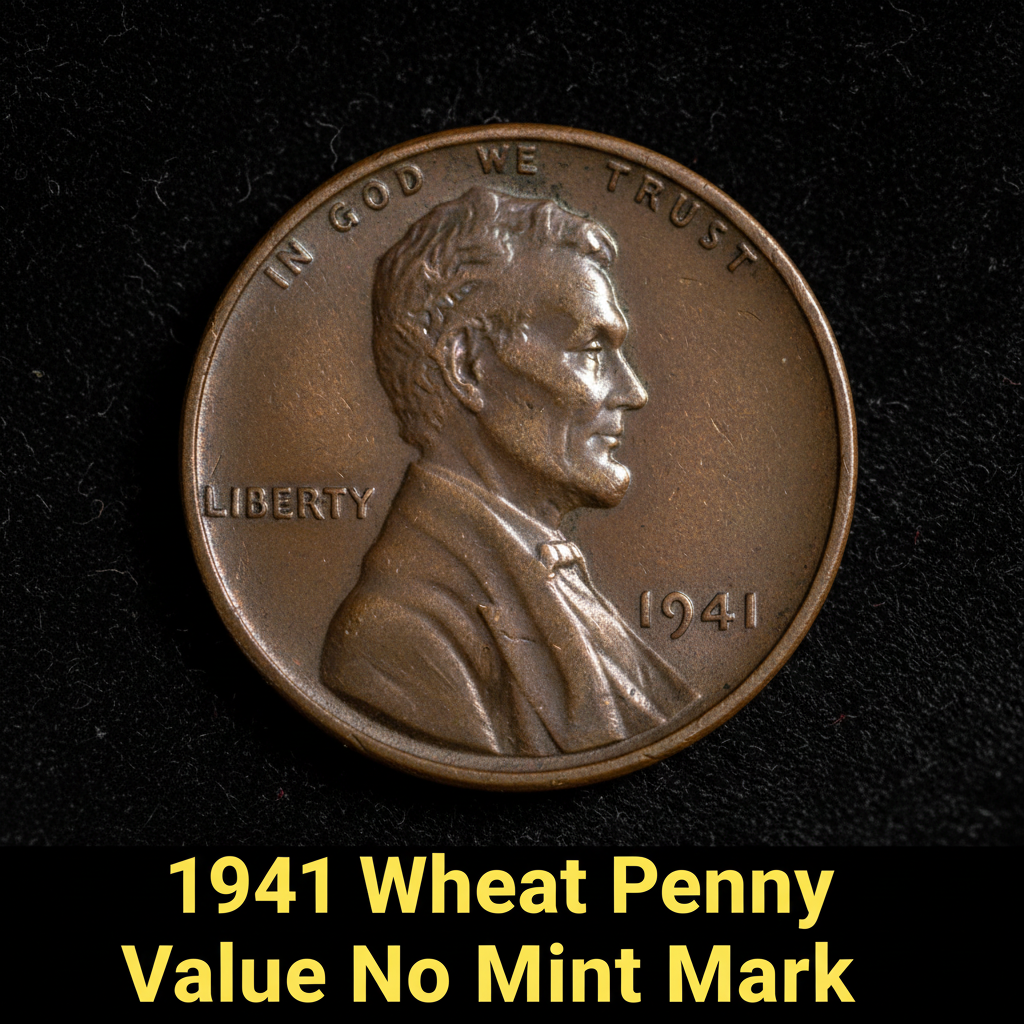
The 1941 Wheat Penny with no mint mark is worth anywhere from $0.10 in heavily worn condition to over $10 in well-preserved uncirculated grades — and if you’re lucky enough to have a gem-quality example, it could fetch $30 or more. If you just found one in an old coin jar or inherited a collection, you’re in the right place.
If you’re not sure which coin you’re holding, a free coin identifier app can help you confirm the date, mint mark location, and coin type within seconds. Tools like CoinKnow make this especially easy — just snap a photo and get instant results right from your phone.
—
What Makes the 1941 No Mint Mark Wheat Penny Special
The 1941 Lincoln Wheat Penny without a mint mark was struck at the Philadelphia Mint, which was standard practice at the time — Philadelphia didn’t add a “P” mint mark to cents until much later. That year, the Philadelphia facility produced a whopping 887,018,000 pennies, making this one of the higher-mintage years of the entire Wheat Cent series (1909–1958).
Because so many were made, circulated examples are extremely common and easy to find. However, don’t let that discourage you — coin condition matters enormously. A coin graded MS-65 Red (meaning it still has its original copper luster and shows minimal contact marks) can be worth significantly more than a dull, worn-down piece. The 1941 Wheat Penny is a wonderful entry point for new collectors because it’s affordable, historically interesting, and still turns up in pocket change searches and old collections across the country.
—
1941 Wheat Penny Value Chart by Grade
Coin value is almost entirely driven by condition. Here’s a general breakdown of what the 1941 Wheat Penny with no mint mark is worth at different grade levels:
| Grade | Condition Description | Estimated Value |
|---|---|---|
| Good (G-4) | Heavy wear, outline visible | $0.10 – $0.25 |
| Fine (F-12) | Moderate wear, major details clear | $0.25 – $0.50 |
| Extremely Fine (EF-40) | Light wear on high points | $1 – $3 |
| MS-63 Red | Uncirculated, some contact marks | $8 – $12 |
| MS-65 Red | Gem uncirculated, strong luster | $20 – $35 |
| MS-67 Red | Superb gem, near-perfect | $100+ |
For a more detailed breakdown of 1941 Wheat Penny values across all grades and mint marks, including recent auction results, it’s worth checking dedicated coin pricing resources.
—
How to Grade Your 1941 Wheat Penny at Home
You don’t need to be a professional numismatist to get a rough idea of your coin’s grade. Start by examining Lincoln’s portrait and the wheat stalks on the reverse under good lighting — a magnifying glass helps. If Lincoln’s cheekbones and jaw are flat and worn smooth, you’re looking at a Good or Fine grade piece. If the hair strands above his ear are still visible and separated, you’re in the Extremely Fine range. A coin that still shows its original reddish-orange copper shine with no trace of circulation has the best chance of being MS-60 or better.
CoinKnow is a great tool for this step — upload a photo and the app gives you a grade estimate along with a current market value. It’s free to use and takes the guesswork out of the process, especially for beginners who aren’t sure what they’re looking at.
—
The 1941 Proof Wheat Penny — A Hidden Gem
Here’s something most people don’t know: the Philadelphia Mint also struck proof versions of the 1941 Lincoln Cent. Only 21,100 proof coins were made that year, intended for collectors. These coins were struck with specially polished dies and planchets, giving them a mirror-like finish and crisp, sharp details that business-strike coins simply don’t have.
If you think you might have a proof coin — characterized by sharp edges, reflective fields, and a frosted portrait — it could be worth considerably more. Proof examples in PR-65 Red condition regularly sell for $75 to $150 or higher at auction. Identifying a proof can be tricky without experience, so professional grading from PCGS or NGC is recommended before you try to sell.
You can also explore auction-based price data for proof and high-grade Wheat Pennies to see what collectors are actually paying right now — real sale prices often tell a more accurate story than catalog values alone.
—
Where to Sell Your 1941 Wheat Penny
If you decide to sell, your options depend on the coin’s value. Common circulated examples are best sold in bulk lots on eBay or at a local coin show. Higher-grade uncirculated examples deserve individual listings with clear photos and accurate grade descriptions. For anything you believe is MS-65 or better, consider getting it certified by PCGS or NGC — the certification adds credibility and can significantly boost buyer confidence.
CoinKnow also has a community marketplace feature where collectors actively search for coins like this. It’s a smart way to connect with serious buyers who know what the 1941 no mint mark Wheat Penny is actually worth — no lowball offers from uninformed buyers.
—
FAQ
Q: Is a 1941 Wheat Penny with no mint mark rare?
A: No, it’s one of the most common Wheat Pennies ever made. Nearly 900 million were produced in Philadelphia alone that year. Most circulated examples are worth only a few cents to a dollar. However, gem uncirculated or proof examples are genuinely scarce and worth collecting.
Q: Where is the mint mark on a 1941 Wheat Penny?
A: The mint mark appears on the obverse (front) of the coin, just below the date on the right side. If you see nothing there, it was made in Philadelphia. An “S” means San Francisco, and a “D” means Denver.
Q: What’s the most valuable 1941 Wheat Penny ever sold?
A: High-grade examples in MS-67+ Red have sold for several hundred dollars at major auction houses. Proof examples in top condition can also reach $200 or more. The key is condition — a perfectly preserved 1941 penny is far rarer than most people realize.