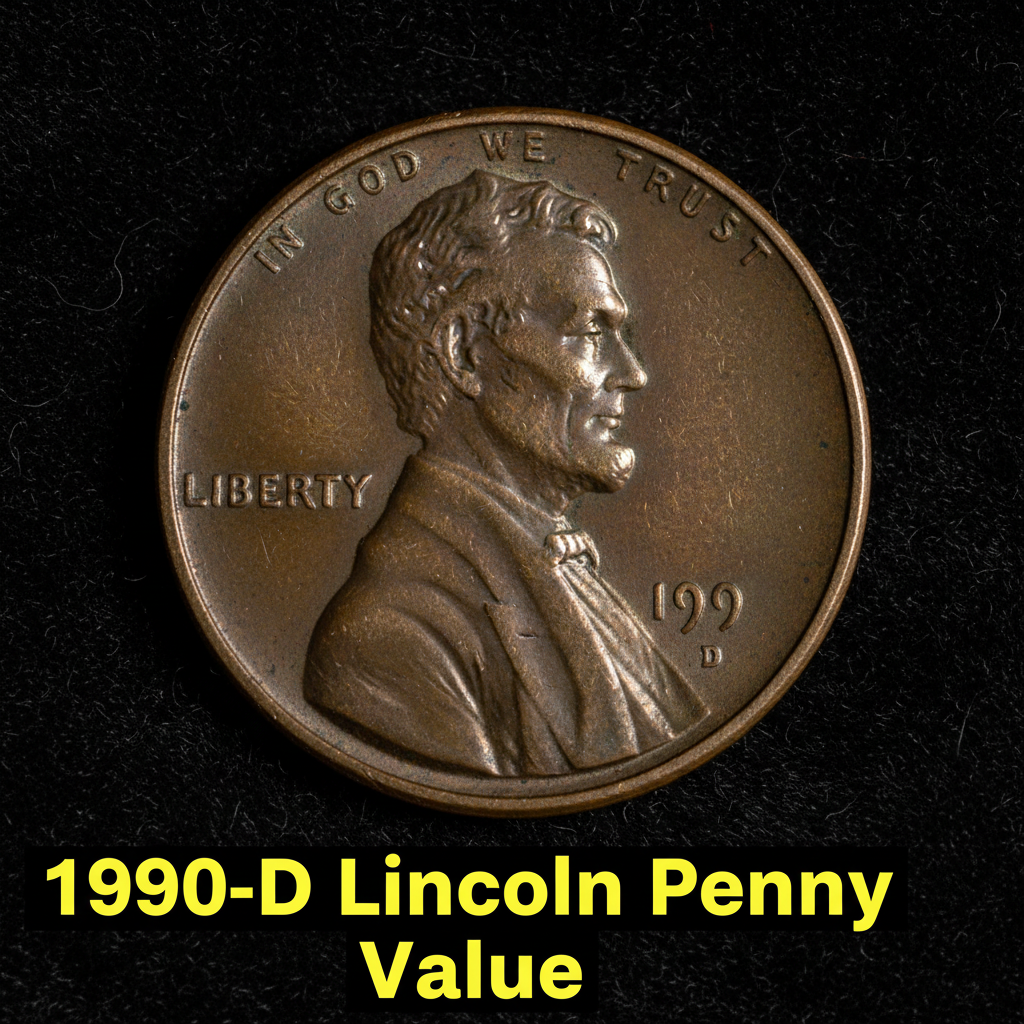
1990-D Lincoln Penny Value What It’s Worth and Why Collectors Care
The 1990-D Lincoln Penny is worth anywhere from 1 cent in heavily worn condition to over $10 or more in pristine mint state grades, with a few high-grade examples fetching significantly higher prices at auction. If you just found one in your pocket change or a coin jar, you’re in the right place to find out exactly what you’ve got.
Whether you’re new to coin collecting or just curious about that old penny sitting in your drawer, using a free coin identifier app is a great first step to quickly check your coin’s grade and value before diving deeper. Apps like CoinKnow make the whole process fast and beginner-friendly, letting you scan your coin and get an instant estimate right from your phone.
What Is the 1990-D Lincoln Penny?
The 1990-D Lincoln Penny was struck at the Denver Mint, which is indicated by the small “D” mintmark found on the obverse side of the coin, just below the date. In 1990, the Denver Mint produced over 4.9 billion Lincoln cents, making this a very common coin in general circulation. The penny features the iconic portrait of Abraham Lincoln on the front and the Lincoln Memorial on the reverse — a design that ran from 1959 all the way until 2008.
Because so many were made, most 1990-D pennies you find in change are worth just their face value of one cent. However, coins that were never circulated — meaning they went straight from the mint into collector sets or rolls — can be worth a bit more. The condition of your coin is everything when it comes to determining value.
1990-D Lincoln Penny Value by Grade
Coin grading is the system collectors and dealers use to describe a coin’s condition, typically on a scale from 1 to 70. The higher the number, the better the condition — and the higher the value. Here’s a general breakdown of what a 1990-D Lincoln Penny is worth depending on its grade:
| Grade / Condition | Description | Estimated Value |
|---|---|---|
| Good (G-4) | Heavy wear, details faint | Face value ($0.01) |
| Fine (F-12) | Moderate wear, design clear | $0.05–$0.10 |
| Extremely Fine (EF-40) | Light wear on high points | $0.25–$0.50 |
| Mint State (MS-63) | Uncirculated, some blemishes | $1–$3 |
| Mint State (MS-65 RD) | Gem uncirculated, full red | $5–$12 |
| MS-67 RD and above | Near-perfect, top population | $50–$200+ |
For a more detailed look at certified sale prices, you can check out the 1990-D Lincoln Penny MS Red price history across different mint state grades, which tracks real auction results over time.
What Makes a 1990-D Penny Worth More?
The big factor is color designation. Copper cents can be graded as Red (RD), Red-Brown (RB), or Brown (BN). A coin that retains its original bright copper-red luster is called “Red” and is the most desirable — and most valuable — designation. Even small differences in color can significantly change what a collector is willing to pay.
Beyond color, strike quality matters. A sharply struck coin with well-defined details on Lincoln’s hair and coat is more appealing than a weakly struck example. Surface quality is also critical: coins with too many contact marks, scratches, or bag marks will grade lower, regardless of whether they were circulated or not. If your penny still looks bright, shiny, and untouched, you might have a gem on your hands worth getting professionally graded.
Should You Get Your 1990-D Penny Graded?
Professional grading through a service like PCGS or NGC adds authentication and a protective slab to your coin. It’s generally worth doing only if your coin appears to be in high mint state condition — think MS-65 or better. Grading fees can run $20–$50 or more per coin, so it doesn’t make financial sense for a circulated example worth a few cents.
Not sure where your coin stands? The CoinKnow app can give you a solid starting point before you spend money on professional grading. Simply photograph both sides of your penny and let the app’s recognition technology assess its condition and approximate value. It’s a practical tool that thousands of everyday coin hunters use before making any decisions about submitting coins to a grading service.
If you want a comprehensive breakdown of what your 1990 cent could be worth across all mint marks and varieties, the full 1990 penny value guide covering all mint marks and grades is an excellent resource worth bookmarking.
Errors and Varieties to Watch For
While the 1990-D Lincoln Penny doesn’t have one blockbuster error variety like some other years, there are still minor doubled die obverse (DDO) examples and off-center strikes that show up occasionally. An off-center coin where Lincoln’s design is clearly shifted can be worth $10–$50 or more depending on how dramatic the error is and whether the date is still fully visible.
Lamination errors — where layers of the metal peel or flake — also appear sometimes and can add collector interest. The best way to spot these errors is to examine your coin under a magnifying glass or jeweler’s loupe. Better yet, CoinKnow can help you identify potential errors from photos, saving you time and giving you a quick second opinion before you consult a dealer.
—
FAQ
Q: Is the 1990-D Lincoln Penny rare?
A: No, the 1990-D penny is not rare. The Denver Mint struck nearly 5 billion of them that year, making it one of the more common Lincoln cents. Most are worth only face value unless they are in uncirculated condition.
Q: What does the “D” mintmark mean on a 1990 penny?
A: The “D” mintmark stands for the Denver Mint in Colorado. Pennies without a mintmark were made at the Philadelphia Mint. Both versions from 1990 are common, though some collectors prefer to own one of each for a complete set.
Q: How can I tell if my 1990-D penny is uncirculated?
A: An uncirculated penny will have no wear on the high points of the design — particularly Lincoln’s cheekbone, jaw, and the wheat stalks or Memorial columns on the reverse. It should also retain some degree of original mint luster or shine. If it looks dull and flat with visible rubbing, it has likely been circulated.