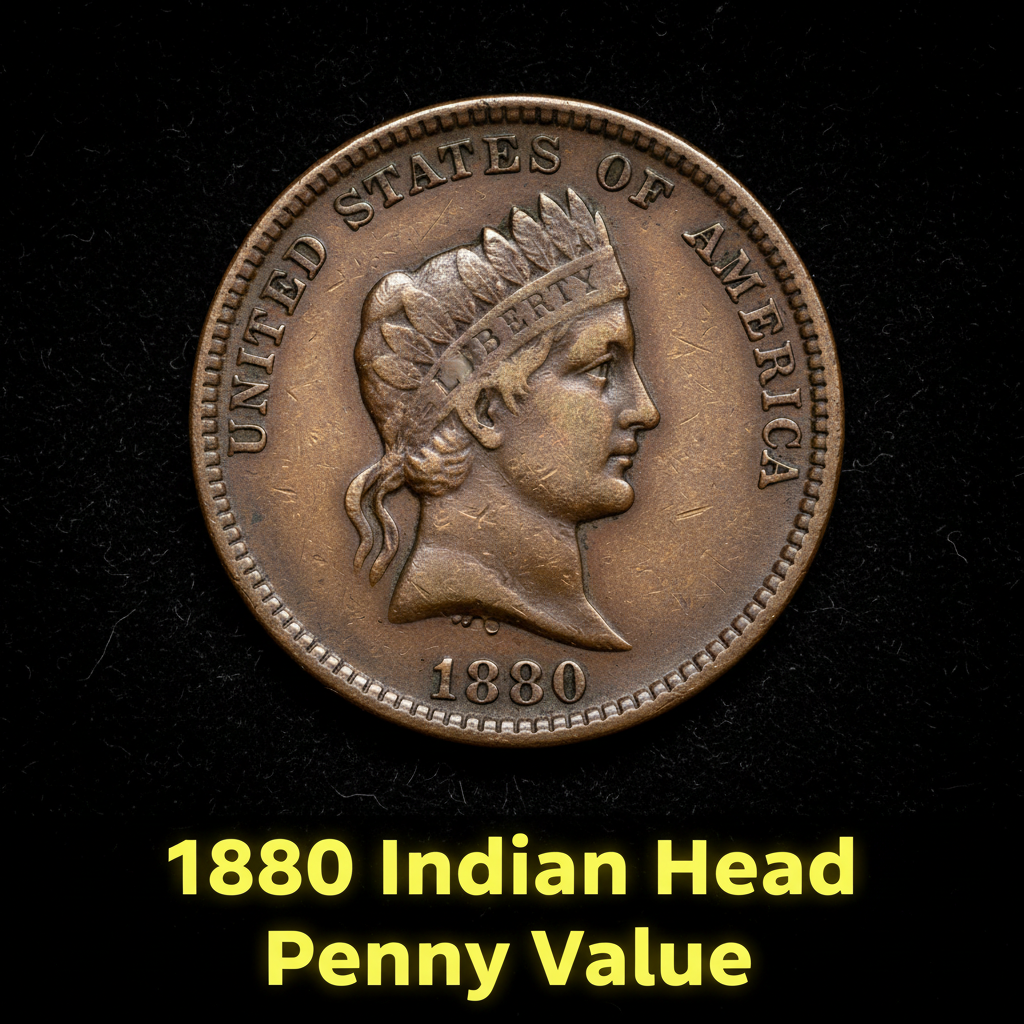
1880 Indian Head Penny Value Guide What Is It Worth Today
The 1880 Indian Head Penny is worth anywhere from $2 in heavily worn condition to over $100 or more in mint state. If you recently found one of these beautiful old cents in a drawer, coin jar, or estate collection, you’re in the right place to find out exactly what it might be worth.
What Makes the 1880 Indian Head Penny Special
The 1880 Indian Head Penny was minted during a fascinating era of American coinage. Struck at the Philadelphia Mint, over 38 million of these coins were produced that year — making them relatively common among Indian Head Penny collectors. But “common” doesn’t mean worthless. The value of your coin depends heavily on its condition, luster, and whether any errors or varieties are present.
If you’re not sure what you’re holding, try using a free coin identifier app to get a quick sense of the coin’s date, mint mark, and overall grade before diving deeper into research.
The Indian Head Penny series ran from 1859 to 1909, and the 1880 issue fits right in the middle of that run. These coins feature Lady Liberty wearing a Native American headdress on the obverse, surrounded by stars, with ONE CENT on the reverse inside a wreath. It’s a classic design that coin collectors and everyday Americans have admired for over a century.
1880 Indian Head Penny Value by Grade
The condition — or “grade” — of your coin is the single most important factor in determining its value. Numismatists use a scale from Poor (P-1) all the way to Mint State (MS-65 and beyond). Here’s a general breakdown of what the 1880 Indian Head Penny is worth at different grade levels:
| Grade | Description | Estimated Value |
|---|---|---|
| Good (G-4) | Heavy wear, design visible | $2 – $4 |
| Very Good (VG-8) | Moderate wear, some detail | $4 – $7 |
| Fine (F-12) | Even wear, clear lettering | $8 – $15 |
| Extremely Fine (EF-40) | Light wear on high points | $25 – $45 |
| About Uncirculated (AU-55) | Slight wear, much original luster | $50 – $75 |
| Mint State (MS-63+) | No wear, original mint luster | $100 – $200+ |
For the most up-to-date auction prices and certified coin sales, you can check 1880 Indian Head Penny mint state red prices and recent auction records to see how the market is trending right now.
How to Grade Your 1880 Indian Head Penny at Home
Grading coins like a professional takes practice, but there are some quick things you can check at home. Start by looking at the diamond shapes in Lady Liberty’s headdress ribbon. On a well-worn coin, those diamonds will be flat and faint. On a higher-grade coin, you’ll see crisp definition in the ribbon and the feathers. The hair curls above her ear are another key area — in Fine grade, they should still show visible separation.
Color also matters. Mint State Indian Head Pennies can be brown (BN), red-brown (RB), or full red (RD). A coin that retains most of its original red copper color is significantly more valuable than a brown example of the same grade. A CoinKnow scan can help you identify luster and color characteristics you might miss with the naked eye.
Avoid cleaning your coin. A cleaned 1880 Indian Head Penny loses significant value regardless of how shiny it looks afterward. Collectors and dealers can always spot a cleaned coin, and it typically drops the value by 50% or more.
Comparing the 1880 Penny to Other Years in the Series
The 1880 Indian Head Penny sits in a period of relatively high mintage for the series. Years like 1877 and 1909-S are famous for their rarity and sky-high values. The 1880, by contrast, is considered a “type coin” — something collectors can add to a set without spending a fortune.
That said, the 1880 issue in top mint state grades is not easy to find, and certified examples graded MS-65 Red can fetch $300–$500 at major auction houses. If you’re building a complete date set of Indian Head Pennies, the 1880 is one of the more affordable pieces to acquire.
If you’re also researching other years in the series, you might find it helpful to look at detailed value information for the 1898 Indian Head Penny to understand how condition and year affect pricing across the series. Comparing similar years side by side is a great way to build your knowledge fast.
Using CoinKnow alongside traditional price guides is one of the smartest moves you can make as a new collector. The app gives you instant access to grading examples, current market values, and detailed variety information — all in one place.
Should You Get Your 1880 Indian Head Penny Graded?
If your coin appears to be in Extremely Fine or better condition, professional grading might be worth the investment. Services like PCGS and NGC will authenticate and encapsulate your coin in a tamper-proof holder with an official grade. This makes buying and selling much easier and protects the coin’s long-term value.
For a coin graded MS-63 or higher, the cost of grading ($20–$30 at basic tier) can easily be recovered in a higher sale price. However, for circulated coins in Good to Fine condition, the grading fee may not be worth it. Use CoinKnow or a local dealer to get a quick opinion before deciding whether to submit.
—
Frequently Asked Questions
Q: How do I know if my 1880 Indian Head Penny is valuable?
A: Start by examining the condition. Look for sharp details in the headdress and hair curls. A coin in Extremely Fine or Mint State condition can be worth $25 to $200 or more. A heavily worn example will typically bring just $2–$5.
Q: Does the 1880 Indian Head Penny have any mint marks?
A: No. The 1880 Indian Head Penny was only struck at the Philadelphia Mint, which did not use a mint mark on cents during this period. All genuine 1880 cents come from Philadelphia.
Q: Is it worth cleaning my 1880 Indian Head Penny before selling it?
A: Absolutely not. Cleaning a coin removes its natural patina and surface texture, which collectors can easily detect. A cleaned coin is considered damaged and sells for far less than an uncleaned example in the same grade. Leave it as-is and let a dealer or grading service assess it naturally.