1906 Liberty Nickel Value What It’s Worth and Why Collectors Care
The 1906 Liberty Nickel is worth anywhere from $2 in heavily worn condition to over $100 in well-preserved mint state examples — and rare high-grade specimens have sold for several hundred dollars at auction. If you found one of these coins in an old drawer or jar, you might be sitting on more than you think.
If you’re just getting started figuring out what your old coins are worth, a free coin identifier app can be a great first step. These tools help you identify coins quickly using your phone camera, so you know what you’re dealing with before diving deeper into research.
What Is the 1906 Liberty Nickel?
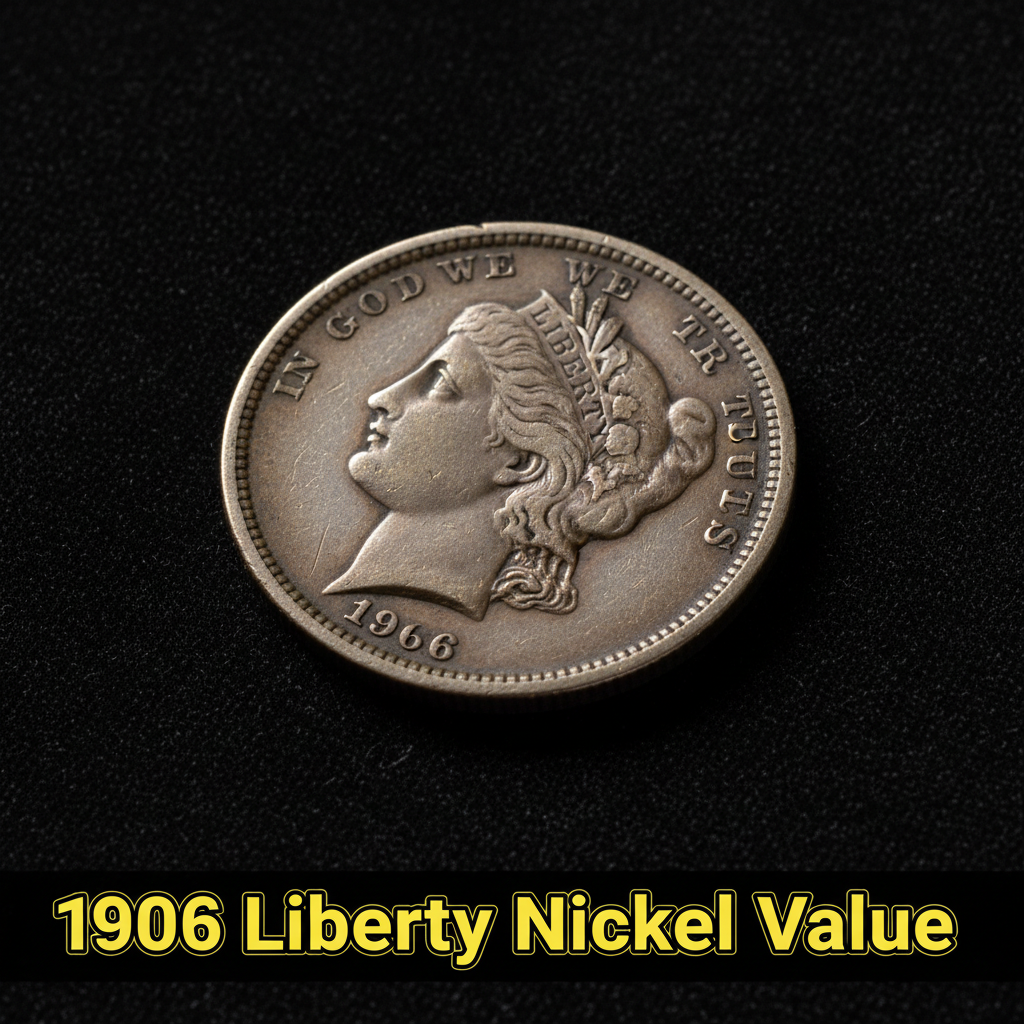
The 1906 Liberty Nickel is part of the famous “V Nickel” series, officially known as the Liberty Head Nickel, designed by Charles E. Barber. It was minted from 1883 to 1912, and 1906 sits right in the middle of that run. The obverse features Lady Liberty wearing a coronet inscribed with “LIBERTY,” while the reverse displays a large Roman numeral “V” surrounded by a laurel wreath. These coins were made of 75% copper and 25% nickel, giving them a silvery appearance that fooled more than a few people back in the day. The Philadelphia Mint produced over 38 million of these coins in 1906, making them relatively common in circulated grades — but genuinely nice examples are still collectible and worth tracking down. If you’ve got one, knowing its condition is the key to understanding its true value.
1906 Liberty Nickel Value by Grade
Like most coins, the value of the 1906 Liberty Nickel depends heavily on its condition, or “grade.” Coins are graded on a scale from Poor (P-1) to Perfect Mint State (MS-70). A well-worn coin showing heavy circulation might fetch just $2–$5, while a coin with sharp details and original luster can be worth considerably more. For collectors, the sweet spot tends to be coins graded MS-63 to MS-65, where eye appeal and value intersect nicely.
Here’s a general breakdown of 1906 Liberty Nickel prices across multiple grades:
| Grade | Description | Estimated Value |
|---|---|---|
| G-4 (Good) | Heavy wear, outline visible | $2 – $4 |
| VG-8 (Very Good) | Moderate wear, some detail | $5 – $8 |
| F-12 (Fine) | Even wear, lettering clear | $10 – $15 |
| EF-40 (Extremely Fine) | Light wear on high points | $25 – $40 |
| MS-63 (Choice Uncirculated) | No wear, some marks | $75 – $120 |
| MS-65 (Gem Uncirculated) | Exceptional luster, sharp strike | $200 – $400+ |
How Condition Affects the 1906 Liberty Nickel Price
Grading coins can feel intimidating, but a few simple checks go a long way. Hold your 1906 Liberty Nickel under good light and tilt it gently. If the hair above Liberty’s ear is completely flat and worn smooth, you’re likely looking at a Good or Very Good grade. If you can see individual hair strands and the stars around the edge are sharp and distinct, that’s a coin in Fine or better condition. Uncirculated coins — ones that never spent time in pockets or cash registers — will have a natural sheen or “mint luster” that looks almost frosty under light. These are the coins collectors compete for. CoinKnow is a popular app among coin enthusiasts that lets you scan your coin and get an instant grade estimate and value range, which is especially helpful if you’re new to grading and don’t want to guess. The difference between a Fine and a Mint State example of the 1906 Liberty Nickel can easily mean $100 or more in value.
Other Factors That Influence the Value of a 1906 Liberty Nickel
Beyond grade, a few other things can move the needle on your coin’s value. First, look for any mint mark — though the 1906 Liberty Nickel was only struck at the Philadelphia Mint, which used no mint mark at the time, so all genuine examples will be blank in that regard. However, errors and varieties can add value. For example, coins with a repunched date or die cracks sometimes attract a premium from variety collectors. Originality also matters — a coin with original, undamaged surfaces is always worth more than one that has been cleaned or polished. Many people unknowingly scrub their old coins thinking it helps, but cleaning actually destroys the coin’s surface and kills its collector value. If you want to know more about how 1906 Liberty Nickel value stacks up against similar era coins like dimes, you might find it useful to explore the 1906 Barber Dime value and compare early 20th-century coin prices — it gives great context for the period. CoinKnow also tracks these kinds of comparisons and alerts you to recent auction results so you always have up-to-date pricing in your pocket.
Should You Get Your 1906 Liberty Nickel Graded?
If your coin looks uncirculated or close to it, professional grading through PCGS or NGC is absolutely worth considering. These services authenticate and grade your coin, then seal it in a tamper-evident holder. A certified MS-65 Liberty Nickel can sell for two to four times more than a raw (ungraded) coin of similar quality simply because buyers trust the independent assessment. For lower-grade coins worth under $20, however, professional grading fees may not make economic sense. In that case, use CoinKnow to get a solid estimate, research recent sold listings on major auction platforms, and price accordingly. Either way, don’t rush to sell — understanding what you have is always the first step.
FAQ
Q: How much is a 1906 Liberty Nickel worth today?
A: A 1906 Liberty Nickel in average circulated condition is worth about $2 to $15. In mint state grades, values rise to $75–$400 or more depending on the specific grade and eye appeal.
Q: Is the 1906 Liberty Nickel rare?
A: No, it is not considered rare in circulated grades since over 38 million were struck. However, high-grade uncirculated examples are genuinely scarce and command strong collector premiums.
Q: Should I clean my 1906 Liberty Nickel before selling it?
A: Absolutely not. Cleaning removes the natural patina and surface detail that collectors value. Even light polishing can reduce a coin’s value by 50% or more. Leave it as-is and let the buyer or a professional grader assess it in original condition.