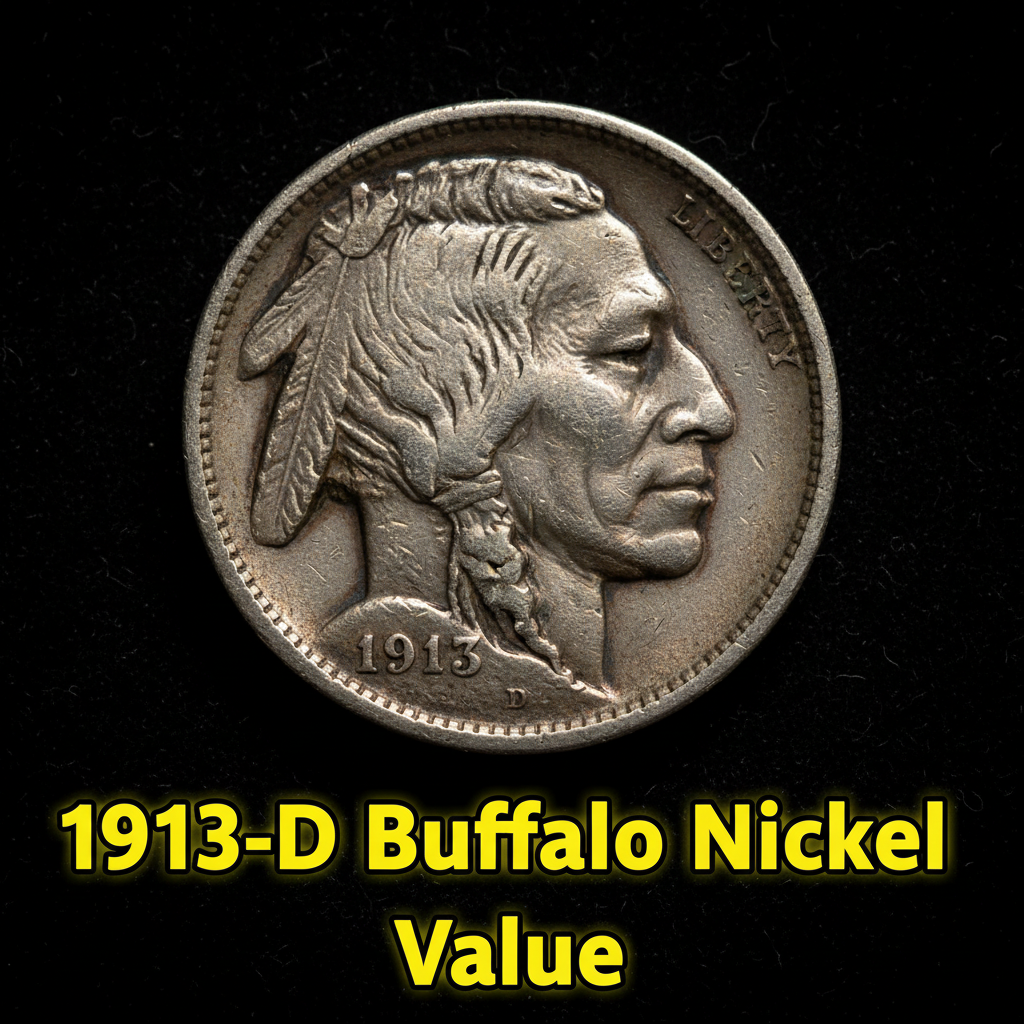
1913-D Buffalo Nickel Value What This Classic Coin Is Actually Worth Today
The 1913-D Buffalo Nickel is worth anywhere from $20 in heavily worn condition to well over $2,000 in high mint state grades — and truly pristine examples have sold at auction for tens of thousands of dollars. If you just found one of these coins in an old collection or jar of change, you may be sitting on something genuinely valuable.
If you’re not sure what you have, a free coin identifier app can help you confirm the coin’s identity before you dig deeper into its value. Once you know what you’ve got, the details below will walk you through everything you need to understand about the 1913-D Buffalo Nickel — including why the mint mark matters so much, how condition affects price, and what collectors are willing to pay today.
—
What Makes the 1913-D Buffalo Nickel Special
The Buffalo Nickel — officially called the Indian Head Nickel — was first minted in 1913, making that the very first year of issue for this iconic American coin. The design was created by sculptor James Earle Fraser and features a bold Native American portrait on the obverse and an American bison on the reverse. It’s widely considered one of the most beautiful coins ever produced by the U.S. Mint.
The “D” in 1913-D tells you this coin was made at the Denver Mint, as opposed to Philadelphia (no mint mark) or San Francisco (S). Denver struck 5,337,000 Buffalo Nickels in 1913, a decent mintage — but far fewer survive today in good condition. Most of these coins passed through decades of circulation, leaving them worn and sometimes difficult to grade.
There are also two subtypes of the 1913 Buffalo Nickel. Type 1 shows the bison standing on a mound, while Type 2 shows the bison on a flat line. The 1913-D exists in both types, and they carry different values. Most collectors and price guides treat them separately, so it’s worth knowing which one you have.
—
1913-D Buffalo Nickel Value by Grade and Type
Coin condition — or “grade” — is the single biggest factor in determining what your 1913-D Buffalo Nickel is worth. Coins are graded on a scale from 1 (barely identifiable) to 70 (perfect). Here’s a general breakdown of what you can expect at different grade levels:
| Grade | Description | 1913-D Type 1 Value | 1913-D Type 2 Value |
|---|---|---|---|
| G-4 (Good) | Heavy wear, design visible | $20–$30 | $25–$40 |
| VG-8 (Very Good) | Moderate wear, details clear | $35–$55 | $50–$70 |
| F-12 (Fine) | Light to moderate wear | $60–$90 | $80–$120 |
| VF-20 (Very Fine) | Light wear on high points | $100–$160 | $130–$200 |
| EF-40 (Extremely Fine) | Slight wear only | $200–$300 | $250–$375 |
| MS-63 (Mint State) | Uncirculated, some marks | $600–$900 | $800–$1,200 |
| MS-65 (Gem) | Exceptional uncirculated | $2,000+ | $3,000+ |
For a more detailed look at 1913-D Buffalo Nickel Type 1 mint state pricing across specific MS grades, auction records show just how dramatically values climb as condition improves.
—
How to Tell What Grade Your Coin Is
You don’t need to be an expert to get a rough idea of your coin’s grade. Start by looking at the high points of the design — the cheekbone on the Native American portrait and the bison’s hip and shoulder. If these areas are flat and worn smooth, you’re likely looking at a G or VG coin. If you can see some texture and detail, you might be in Fine or Very Fine territory.
For uncirculated coins, look for original luster — that faint cartwheel shine that comes from the minting process. Any coin that has been circulated will lose this quickly.
CoinKnow is a great tool for this step. The app lets you photograph your coin and get an instant identification along with condition clues and value estimates. It’s especially useful if you have several old coins and want to sort through them quickly without spending hours researching each one.
Professional grading services like PCGS and NGC offer official grades, which can dramatically increase a coin’s resale value — especially for higher-grade specimens.
—
Where to Sell a 1913-D Buffalo Nickel
Once you know what your coin is worth, you have several good options for selling. Online platforms like eBay, Heritage Auctions, and Great Collections are popular choices. Heritage Auctions in particular specializes in rare coins and can connect you with serious collectors willing to pay top dollar for high-grade examples.
For lower-grade coins, a local coin dealer or coin show may be more practical. Dealers can give you a quick cash offer, though they’ll typically pay 60–80% of retail value since they need to make a profit on resale.
You can also use this detailed guide to 1913 nickel values including the D mint mark to double-check current pricing before you commit to any sale. Knowing your coin’s value going in gives you real negotiating power.
CoinKnow can also help here — use it to document your coin with photos and gather comparable sales data before approaching dealers or listing online.
—
FAQ
Q: How do I know if my Buffalo Nickel is a Type 1 or Type 2?
A: Look at the reverse of the coin, specifically beneath the bison. If the buffalo is standing on a raised mound of dirt, it’s Type 1. If the buffalo stands on a flat plain with just a line beneath it, it’s Type 2. The Denver Mint produced both types in 1913.
Q: Is a worn 1913-D Buffalo Nickel still worth keeping?
A: Absolutely. Even in low grades, a 1913-D Buffalo Nickel is worth $20 to $50 — far more than face value. And if you’re unsure of the grade, try CoinKnow to get a quick estimate before selling or trading it away.
Q: Does the mint mark location matter for the 1913-D?
A: Yes, and it actually changed between Type 1 and Type 2. On Type 1, the “D” mint mark appears on the reverse below the words “FIVE CENTS,” above the mound. On Type 2, the mint mark sits below “FIVE CENTS” on the flat ground line. This placement is one of the easiest ways to distinguish between the two types.