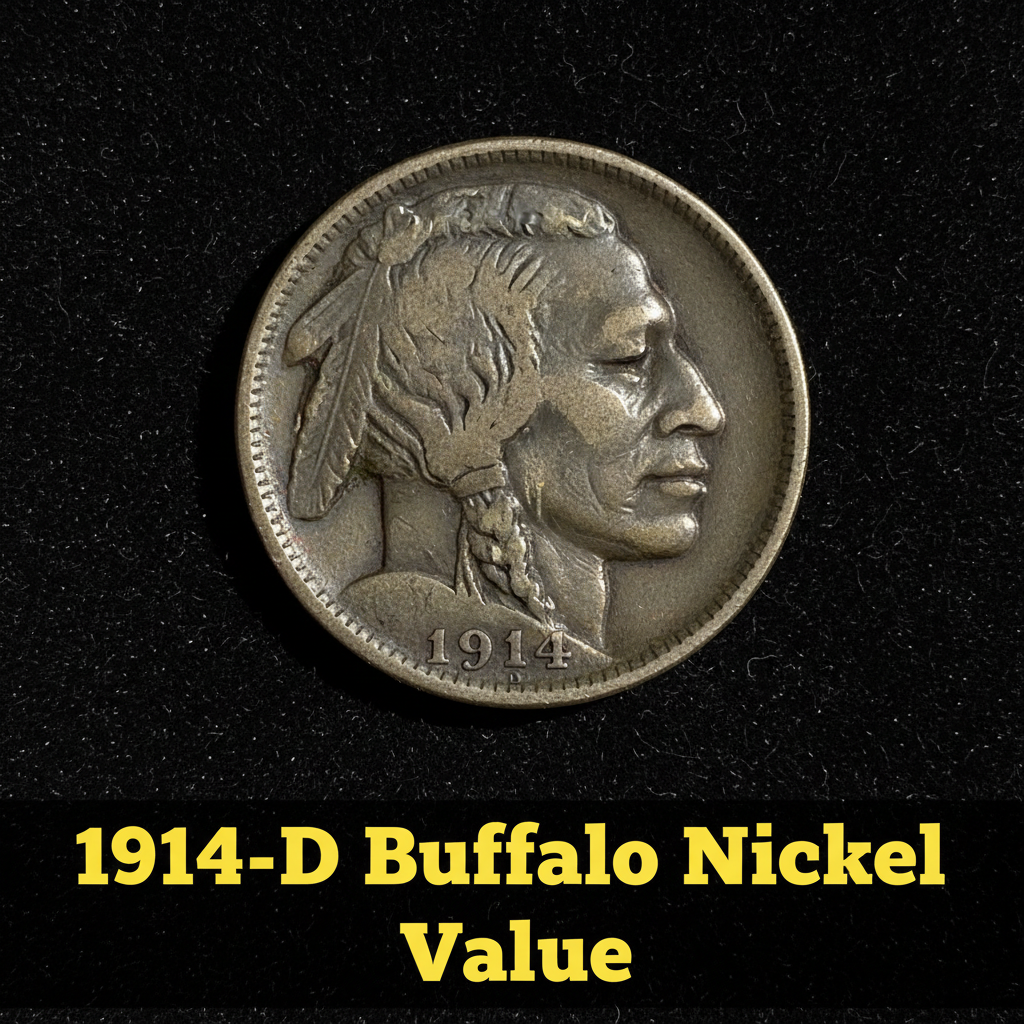
1914-D Buffalo Nickel Value Guide What It’s Worth and Why Collectors Care
The 1914-D Buffalo Nickel is worth anywhere from $30 in heavily worn condition to well over $2,000 in near-mint grades — and in top certified condition, it can fetch thousands more. If you’ve found one of these old nickels, you may be sitting on a surprisingly valuable coin.
If you’re not sure what you have, a good first step is to use a free coin identifier app to confirm the date, mintmark, and condition before you try to sell or get it appraised. Getting accurate information early saves a lot of guesswork.
—
What Makes the 1914-D Buffalo Nickel Special
The Buffalo Nickel series ran from 1913 to 1938, and every coin in the series features James Earle Fraser’s iconic design — a Native American profile on the obverse and an American bison on the reverse. The “D” mintmark stands for the Denver Mint, which struck coins with a slightly different level of quality and care than the Philadelphia Mint.
In 1914, the Denver Mint produced approximately 3,912,000 Buffalo Nickels. That’s not a tiny mintage, but survivorship rates for well-preserved examples are surprisingly low. Many of these coins were heavily circulated, leaving most in grades of Good (G-4) or Fine (F-12). Finding a Mint State example — especially one grading MS-63 or higher — is genuinely rare, and that’s a big reason why higher-grade 1914-D nickels command serious premiums.
The Denver coins from this era are also known for sometimes showing weak strikes, particularly on the high points of the design like the bison’s horn and the Native American’s cheekbone. A sharply struck 1914-D is harder to find than you might expect, making quality examples even more desirable to collectors.
—
1914-D Buffalo Nickel Value by Grade
Coin values vary dramatically depending on condition. Here’s a breakdown of what the 1914-D Buffalo Nickel is worth across common circulated and mint state grades:
| Grade | Description | Estimated Value |
|---|---|---|
| Good (G-4) | Heavy wear, major design visible | $30 – $45 |
| Very Good (VG-8) | Moderate wear, some detail remains | $50 – $75 |
| Fine (F-12) | Light to moderate wear, details clearer | $90 – $130 |
| Very Fine (VF-20/30) | Light wear on high points only | $150 – $250 |
| Extremely Fine (EF-40) | Slight wear, sharp details | $300 – $450 |
| About Uncirculated (AU-50/58) | Trace wear, nearly full luster | $500 – $900 |
| Mint State (MS-60 to MS-63) | No wear, some bag marks | $1,000 – $2,000 |
| Gem Mint State (MS-65+) | Full luster, sharp strike, minimal marks | $4,000 – $10,000+ |
You can explore detailed 1914-D Buffalo Nickel price data across Mint State grades to see how certified auction results have trended over time. Prices can shift with collector demand, so it’s smart to look at recent sales.
—
How to Tell If You Have a 1914-D Buffalo Nickel
Identifying your coin is straightforward if you know what to look for. Flip your Buffalo Nickel to the reverse side — the side with the bison. Beneath the words “FIVE CENTS,” you should see a small letter. If it says “D,” you have a Denver Mint coin. No letter means it came from Philadelphia; an “S” means San Francisco.
The date “1914” should appear on the obverse, just below the Native American portrait. Be careful — some Buffalo Nickels suffered from date wear very quickly because of how the design was raised. If the date is partially worn off, you may need a magnifying glass or a coin app to confirm. CoinKnow is a great tool here — it uses your phone’s camera to help identify coins and pull up value information quickly, which is especially helpful when you’re dealing with a coin that has worn details.
Also look out for cleaned coins. If the surfaces look unusually shiny or have fine hairline scratches, the coin may have been polished at some point. Cleaned coins are worth significantly less to collectors, even if they look attractive to the untrained eye.
—
Tips for Selling or Getting Your 1914-D Nickel Appraised
Once you’ve identified your coin and have a rough idea of its grade, you have a few solid options. Coin dealers are a quick route if you want cash now, though they’ll typically offer 50–70% of retail value. Online auction platforms like eBay or Heritage Auctions can get you closer to full market value, but they take time and a little experience to navigate well.
For coins you believe are in Very Fine or better condition, professional grading through PCGS or NGC is often worth the investment. A certified grade adds credibility and usually raises the sale price enough to more than cover the grading fee.
You can also look up the 1914-D Buffalo Nickel’s current market value and historical pricing to set realistic expectations before you sell. Going in with solid data helps you avoid lowball offers.
And if you want to keep learning as you go, CoinKnow is a handy reference to have on your phone — it covers Buffalo Nickels and hundreds of other U.S. coins, making it easy to look up values wherever you are.
—
FAQ
Q: Is a 1914-D Buffalo Nickel rare?
A: It’s not the rarest coin in the Buffalo Nickel series, but it’s considerably scarcer than common-date issues, especially in well-preserved condition. With a mintage just under 4 million and most surviving examples in heavily worn grades, any 1914-D in Fine or better condition is worth real collector attention.
Q: What does the “D” mintmark mean on a Buffalo Nickel?
A: The “D” stands for the Denver Mint. You’ll find the mintmark on the reverse of the coin, just below the words “FIVE CENTS.” Denver-minted Buffalo Nickels are generally more desirable than Philadelphia coins in certain years, and 1914 is one of those years where the “D” mintmark adds significant value.
Q: How do I know if my 1914-D Buffalo Nickel has been cleaned?
A: Look for an unnatural brightness or tiny parallel scratches on the coin’s surface. Genuine uncirculated coins have a soft, original luster — not a harsh shine. If you’re unsure, CoinKnow or a local coin dealer can give you a second opinion. Cleaned coins lose collectible value even if they look nicer at first glance.