1926-D Buffalo Nickel Value How Much Is It Worth Today
The 1926-D Buffalo Nickel is worth anywhere from $10 in heavily worn condition to well over $3,000 or more in high-grade mint state — making it one of the most exciting Denver Mint nickels from the entire Buffalo series. If you just found one of these in an old coin jar or inherited collection, you may be sitting on a real treasure.
What Makes the 1926-D Buffalo Nickel Special
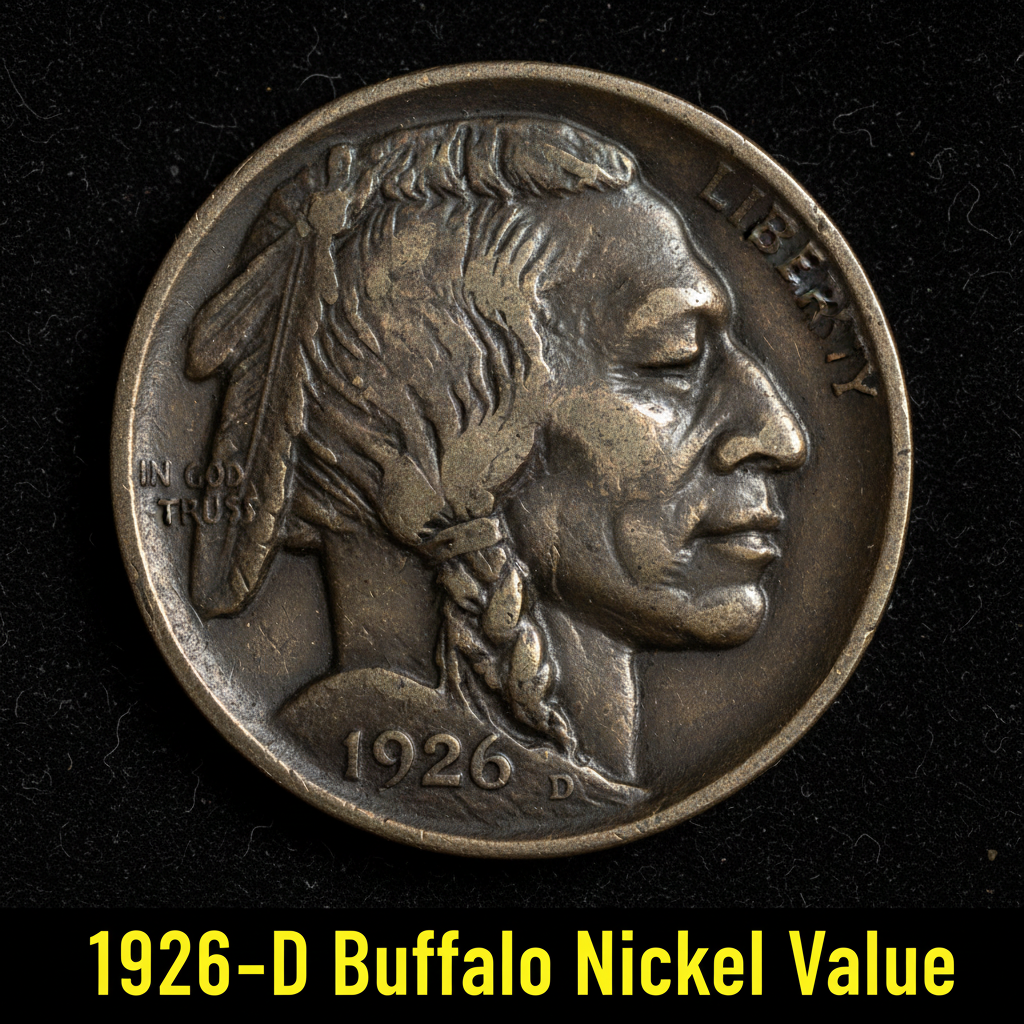
The 1926-D Buffalo Nickel was struck at the Denver Mint and carries a small “D” mintmark on the reverse, just below the words “FIVE CENTS.” What makes this coin stand out is its relatively low mintage compared to the Philadelphia issue that same year. Only about 5.6 million 1926-D nickels were produced, which sounds like a lot — but after nearly a century of circulation, surviving examples in decent condition are genuinely scarce. Collectors actively seek this date, and even a well-worn example commands a solid premium. If you’re not sure whether your coin has a mintmark or want help identifying it quickly, a free coin identifier app can be a handy first step before you start digging into value guides. Tools like CoinKnow let you snap a photo of your coin and get an instant identification, which is perfect when you’re just getting started and don’t know what you’re looking at yet.
1926-D Buffalo Nickel Value by Grade
Coin value is almost entirely determined by condition, also known as grade. The grading scale runs from Poor (P-1) all the way up to Mint State (MS-65 and beyond). For the 1926-D Buffalo Nickel, the difference between a worn coin and a pristine one is enormous. A heavily circulated example with a flat horn on the buffalo might only be worth $10–$20, while a choice uncirculated specimen can easily reach four figures. Here’s a breakdown of approximate retail values:
| Grade | Description | Estimated Value |
|---|---|---|
| G-4 (Good) | Heavy wear, date visible | $10 – $18 |
| VG-8 (Very Good) | Moderate wear, some detail | $20 – $35 |
| F-12 (Fine) | Even wear, clear design | $40 – $70 |
| VF-20 (Very Fine) | Light wear on high points | $80 – $130 |
| EF-40 (Extremely Fine) | Slight wear, strong detail | $175 – $275 |
| AU-55 (About Uncirculated) | Trace wear, nearly full luster | $400 – $650 |
| MS-63 (Mint State) | Uncirculated, some marks | $1,200 – $2,000 |
| MS-65 (Gem Mint State) | Full luster, minimal marks | $3,000+ |
For the most up-to-date auction records and certified sale prices, you can review recent 1926-D Buffalo Nickel mint state price data to see exactly what collectors are paying right now.
How to Check Your Coin’s Condition at Home
You don’t need to be an expert to do a basic condition check. Start by looking at the buffalo’s horn — on worn coins, it’s usually completely flat and blended into the head. A coin in Fine condition will still show a partial horn. Next, check the Indian’s cheekbone and the braid behind the head. The sharper and more defined these details are, the higher the grade. Use a magnifying glass and good lighting. Avoid cleaning the coin — even a gentle wipe with a cloth can leave hairline scratches that tank the value significantly. If you want a second opinion without leaving your couch, CoinKnow offers a quick grading estimate based on your photo, which is a great way to get a ballpark sense of what you have before paying for a professional appraisal.
Should You Get It Graded Professionally
If your 1926-D Buffalo Nickel looks like it’s in Very Fine condition or better, it’s probably worth submitting to a professional grading service like PCGS or NGC. Certified coins in slabs (sealed holders) consistently sell for more than raw, ungraded coins because buyers trust the independent grade. A coin you think is AU-55 might actually be MS-62 — and that difference could be worth several hundred dollars. For a full picture of what the 1926 Buffalo Nickel is worth across all grades and mint marks, a dedicated coin value resource can help you compare your coin’s condition to certified examples. Submitting for grading typically costs $30–$50 per coin, so it makes sense to do it when your coin is likely worth $150 or more.
Where to Sell Your 1926-D Buffalo Nickel
Once you know what you have, selling is the easy part. Popular options include eBay (great for reaching collectors directly), coin shows, local coin dealers, and online auction platforms like Heritage Auctions or Stack’s Bowers for higher-grade coins. Always get more than one offer before selling — dealers typically pay 60–80% of retail value. For common circulated grades, eBay completed listings are your best benchmark for real-world prices. And if you’re building a collection yourself, CoinKnow can help you track values over time and alert you when a coin you’re watching hits your target price.
FAQ
Q: How do I know if my coin is the 1926-D and not the regular 1926?
A: Look at the reverse of the coin, just below “FIVE CENTS.” If you see a small letter “D,” it was minted in Denver. No mintmark means it came from Philadelphia. The 1926-S (San Francisco) also exists but is far rarer.
Q: Is a 1926-D Buffalo Nickel rare?
A: It’s considered scarce, especially in higher grades. The mintage of about 5.6 million sounds large, but most were heavily circulated. Finding a solid Very Fine or better example is genuinely uncommon, and gem uncirculated coins are rare and valuable.
Q: Can I clean my 1926-D Buffalo Nickel to make it look better?
A: Please don’t. Cleaning a coin — even with water or a soft cloth — removes the natural patina and leaves microscopic scratches that professional graders can easily spot. A cleaned coin is considered damaged and worth significantly less than an original-surface coin of the same grade.