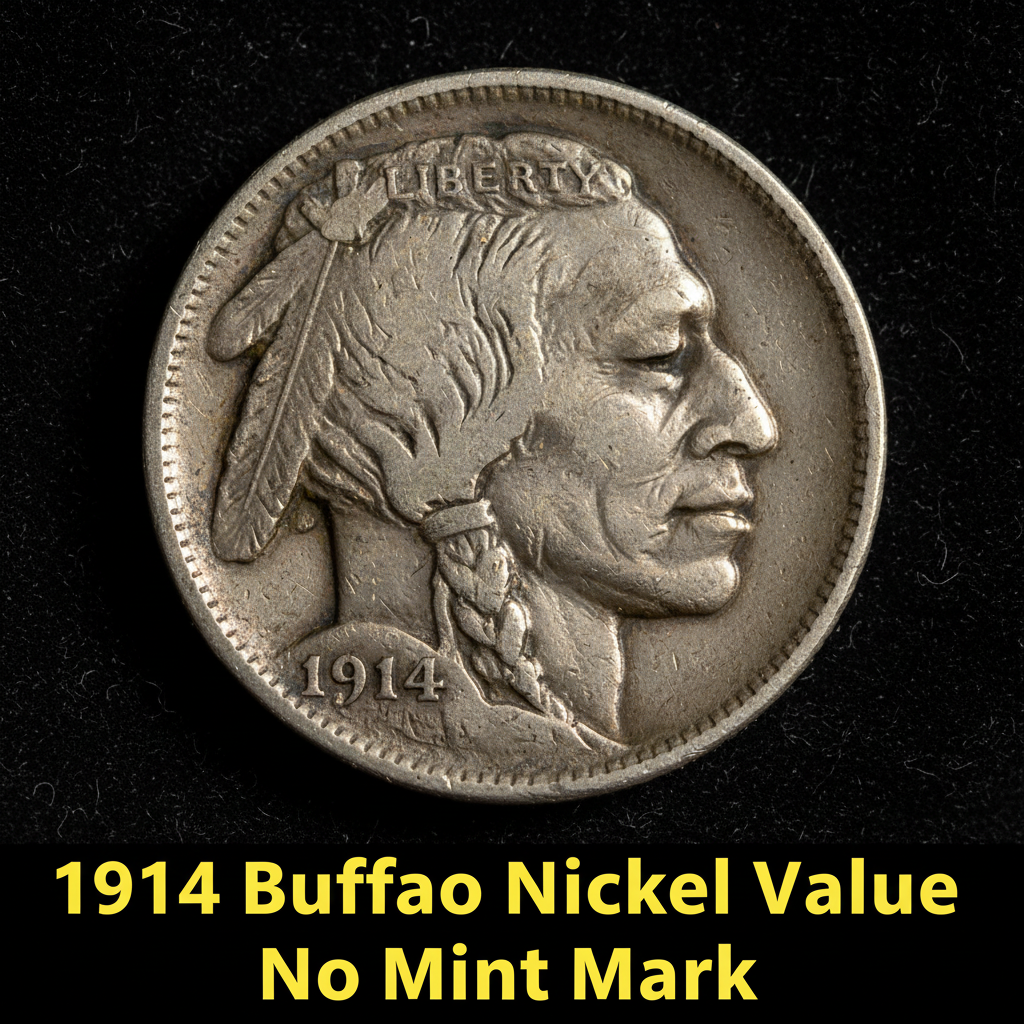
1914 Buffalo Nickel Value with No Mint Mark and What It’s Worth Today
The 1914 Buffalo Nickel with no mint mark is worth anywhere from $10 in heavily worn condition to over $1,500 or more in top mint state grades. If you’ve found one of these old nickels at the bottom of a drawer or in a coin jar, you might be sitting on a surprisingly valuable piece of American history.
Before diving into the details, it helps to use a free coin identifier app to get a quick first look at what you have. These tools can help you confirm the date, mint mark, and condition before you take the next step. For a more in-depth look, CoinKnow is a popular app among casual collectors and beginners that walks you through grading basics and gives you real-time value estimates right from your phone.
—
What Is the 1914 Buffalo Nickel No Mint Mark
The 1914 Buffalo Nickel with no mint mark was struck at the Philadelphia Mint, which was the standard practice at the time — Philadelphia coins didn’t carry a mint mark. The Buffalo Nickel series, also known as the Indian Head Nickel, was designed by sculptor James Earle Fraser and debuted in 1913. Fraser’s design featured a Native American portrait on the obverse and an American bison on the reverse, making it one of the most iconic coin designs in U.S. history.
In 1914, the Philadelphia Mint produced approximately 20.6 million Buffalo Nickels with no mint mark. That’s a decent mintage by historical standards, which is part of why circulated examples aren’t incredibly rare — but lightly worn or uncirculated specimens can still command serious money from collectors who appreciate the design and historical significance of the series.
—
How Much Is the 1914 Buffalo Nickel Worth by Grade
Condition is everything when it comes to coin values, and the 1914 Buffalo Nickel is no exception. A coin that spent decades in circulation will show heavy wear, while one that was tucked away shortly after minting can look almost brand new. Numismatists use a scale called the Sheldon scale, ranging from 1 (barely identifiable) to 70 (perfect uncirculated), to assign grades.
Here’s a general value breakdown based on grade:
| Grade | Description | Estimated Value |
|---|---|---|
| Good (G-4) | Heavy wear, outline visible | $10 – $15 |
| Fine (F-12) | Moderate wear, details present | $25 – $40 |
| Extremely Fine (EF-40) | Light wear on high points | $80 – $120 |
| About Uncirculated (AU-58) | Slight friction, nearly full luster | $150 – $250 |
| MS-63 | Choice uncirculated, minor marks | $400 – $600 |
| MS-65 | Gem uncirculated, sharp strike | $1,000 – $1,500+ |
For the most up-to-date auction results and graded sale prices, you can check out detailed mint state price data for the 1914 Buffalo Nickel to see what examples have actually sold for recently.
—
What Makes Some 1914 Buffalo Nickels More Valuable
Not all 1914 Buffalo Nickels with no mint mark are worth the same amount. Several factors can push the value higher — or lower — than the average.
Strike quality plays a major role. Buffalo Nickels were notorious for weak strikes, especially on the bison’s horn and the Native American’s hair detail. A coin with a sharp, full strike is far more desirable to collectors and can command a premium over a coin of the same grade that shows a flat or mushy design.
Eye appeal also matters. Natural, original patina — the gentle toning that develops on a coin over decades — is considered attractive by most serious collectors. Coins that have been cleaned, polished, or dipped typically lose significant value, even if they appear shiny. If your coin looks too bright for its age, it may have been cleaned at some point.
Finally, error coins are worth watching for. The 1914 issue is not particularly famous for dramatic errors, but any significant die variety, doubled die, or off-center strike can multiply a coin’s value. A reputable grading service like PCGS or NGC can help authenticate these.
You can also find a thorough overview of what your 1914 Buffalo Nickel is worth based on condition and variety to help you better understand where your coin falls on the value spectrum.
—
How to Sell Your 1914 Buffalo Nickel
Once you have a sense of your coin’s grade and value, you have several options for selling. Online platforms like eBay allow you to reach a wide audience, but you’ll need good photos and an honest description to attract buyers. Local coin dealers offer convenience and immediate payment, though they typically buy at wholesale prices — usually 50 to 70 percent of retail value — since they need room for profit.
For higher-grade coins worth $200 or more, it’s often worth getting the coin professionally graded and slabbed by PCGS or NGC before selling. A certified grade adds credibility and can help you realize a better price. CoinKnow is a handy app to have during this process, letting you research comparable sales and understand the fair market value before you walk into a dealer’s shop or list online.
Coin shows are another great venue where you can get multiple offers in one afternoon and connect with serious collectors who specialize in Buffalo Nickels.
—
FAQ
Q: Is a 1914 Buffalo Nickel with no mint mark rare?
A: It’s not considered rare in circulated grades, since over 20 million were minted in Philadelphia. However, finding one in truly uncirculated condition is uncommon, and gem examples grading MS-65 or better are genuinely scarce and quite valuable.
Q: How can I tell if my 1914 Buffalo Nickel has been cleaned?
A: Cleaned coins often look unnaturally shiny or have fine hairline scratches visible under magnification. Original coins tend to have softer, more muted surfaces with natural toning. If your nickel looks too bright or too uniform in color, it may have been cleaned, which reduces its collector value.
Q: Should I get my 1914 Buffalo Nickel graded professionally?
A: If your coin appears to be in Fine condition or better and shows good eye appeal, professional grading from PCGS or NGC can be worthwhile — especially for coins that might grade AU or higher. The certification cost typically pays off at those grade levels. For heavily worn examples worth under $30, grading fees may outweigh the benefit. Use CoinKnow to get a rough value estimate first before deciding.