1963 Lincoln Penny Value No Mint Mark What It’s Worth and Why Collectors Care
The 1963 Lincoln Penny with no mint mark is worth anywhere from 1 cent in heavily circulated condition to over $10 or more in pristine uncirculated grades, with some high-end examples grading MS67 Red fetching hundreds of dollars at auction. If you’ve found one of these in a jar of old coins, you’re in the right place to learn exactly what you’ve got.
What the No Mint Mark Means on a 1963 Penny
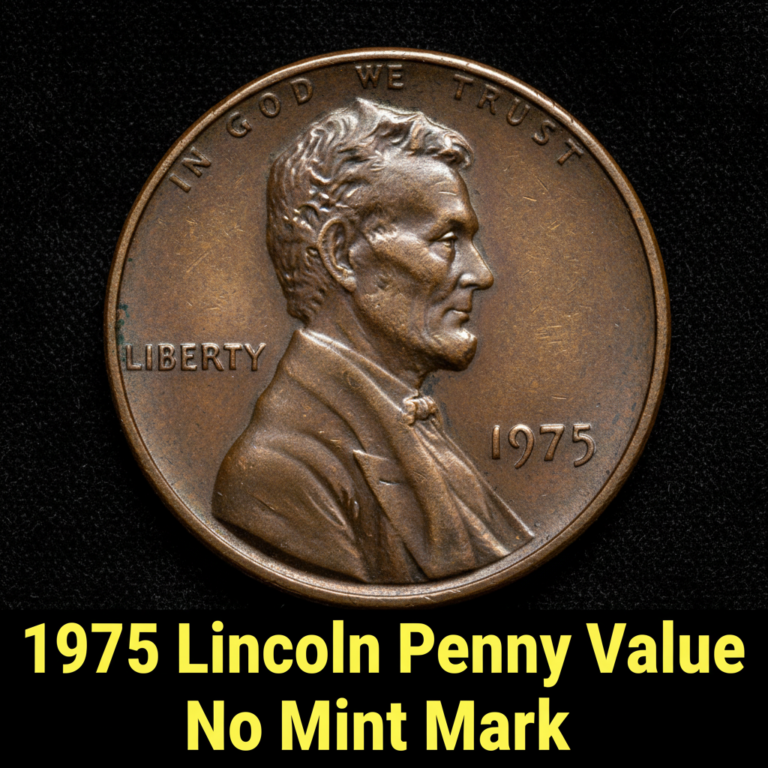
When you look at a 1963 Lincoln Penny and see no mint mark, that tells you it was struck at the Philadelphia Mint. During this era, Philadelphia didn’t stamp its coins with a “P” — that practice didn’t come along until much later. So if your penny was made in 1963 and has nothing below the date, it came straight from Philly.
The Philadelphia Mint produced a massive number of these coins in 1963 — over 754 million, to be exact. That’s a huge mintage, which is part of why most circulated examples aren’t worth much more than face value. But that doesn’t mean your coin is worthless. Condition is everything in the coin world, and even a common-date coin can surprise you if it’s been sitting safely in a drawer all these years.
If you’re not sure what you’ve found, a free coin identifier app can help you quickly confirm the date, mint mark, and basic details before you dive deeper into valuation. It’s one of the easiest ways for beginners to get started.
How Much Is a 1963 Lincoln Penny No Mint Mark Worth Today
The value of a 1963 Lincoln Penny with no mint mark depends almost entirely on its condition, also called grade. A worn coin that’s been rattling around in pockets for decades is worth face value or just a few cents. But a coin that’s been tucked away and shows its original red copper luster can be worth real money to the right collector.
Here’s a general breakdown of what you can expect:
| Grade | Description | Estimated Value |
|---|---|---|
| Good (G-4) | Heavily worn, details visible | $0.01 – $0.05 |
| Fine (F-12) | Moderate wear, clear design | $0.05 – $0.15 |
| Extremely Fine (EF-40) | Light wear on high points | $0.25 – $0.75 |
| Mint State (MS-63 RB) | Uncirculated, some toning | $2 – $5 |
| Mint State (MS-65 RD) | Gem uncirculated, full red | $8 – $20 |
| MS-67 RD (Top Grade) | Superb gem, rare at this level | $200+ |
For a closer look at certified MS Red pricing data for the 1963 Lincoln Penny, you can find professional grading references that show exactly what buyers are paying at different grade levels.
What Makes Some 1963 Pennies More Valuable
Beyond grade, there are a few other factors that can bump up the value of your 1963 Lincoln Penny with no mint mark. Color is one of the biggest. Copper coins are graded as Red (RD), Red-Brown (RB), or Brown (BN). A fully red coin — meaning it has retained nearly all of its original copper shine — is worth significantly more than a brown example of the same grade.
Errors also play a role. While dramatic errors on 1963 pennies are rare, doubled die varieties, off-center strikes, and die cracks do pop up occasionally. These error coins can be worth multiples of a normal example. If something about your coin looks “off” — like a slight doubling in the lettering or Lincoln’s features — it’s worth getting a second opinion.
Strike quality matters too. A coin that was struck with a crisp, well-aligned die and shows sharp details on Lincoln’s beard and the Memorial building on the reverse will always command more attention from serious collectors.
CoinKnow is a great tool to use here — it helps you identify coin varieties, compare grades, and understand which features collectors are actually paying a premium for. Whether you’re a total beginner or you’ve been collecting for years, CoinKnow makes the research process much faster and more accurate.
Proof Versions of the 1963 Lincoln Penny
It’s worth knowing that in 1963, the U.S. Mint also produced special Proof coins intended for collectors. These were made at the Philadelphia Mint with extra care — polished dies, slower strikes, and brilliant mirror-like surfaces. The Mint sold 3,075,645 proof sets that year, each containing a 1963 Proof Lincoln Penny.
Proof coins are not the same as regular business strike coins. They were never meant for circulation and usually come housed in original government packaging. A 1963 Proof Lincoln Penny in perfect condition (PR-69) can fetch $50 to $150 or more, depending on eye appeal and whether it’s been certified by a major grading service like PCGS or NGC.
If your coin has that deep mirror-like background and razor-sharp details, it may actually be a proof rather than a regular strike. That distinction matters quite a bit for value. For a full breakdown of what the 1963 penny is worth across all grades and varieties, a dedicated coin value resource can walk you through every scenario.
Should You Get Your 1963 Penny Graded
If your 1963 Lincoln Penny appears to be in uncirculated condition — no wear, original luster, and strong color — it might be worth submitting it to a professional grading service. PCGS and NGC are the two most respected names in the business. Getting a coin graded and encapsulated in a tamper-proof holder adds credibility and often increases its resale value.
That said, for most common-grade examples, the cost of grading ($20 to $40 per coin at minimum) won’t be worth it unless your coin is truly exceptional — think MS-65 Red or better. A quick check on recent auction records can tell you if your coin is in that territory.
CoinKnow can help you quickly scan recent sales, look up graded population reports, and decide whether professional grading makes financial sense before you commit to the submission fees.
FAQ
Q: Is a 1963 penny with no mint mark rare?
A: No, the 1963 Lincoln Penny with no mint mark is not rare. Philadelphia produced over 754 million of them. Most circulated examples are worth only face value. However, high-grade uncirculated specimens, especially those graded MS-66 or MS-67 in full Red, are genuinely scarce and can carry significant premiums.
Q: What does “Red,” “Red-Brown,” and “Brown” mean for a 1963 penny’s value?
A: These designations refer to how much of the original copper color the coin has retained. A Red (RD) coin has kept 95% or more of its original luster and is the most valuable. Red-Brown (RB) falls in the middle, and Brown (BN) has lost most of its copper tone. For example, an MS-65 Red coin may be worth twice as much as an MS-65 Brown example.
Q: Can I spend a 1963 penny I found, or should I save it?
A: If your 1963 Lincoln Penny is worn and shows no special features or errors, it’s worth face value and fine to spend. But if it looks bright, uncirculated, or unusual in any way, hold onto it and do a little research first. A few minutes of checking could save you from accidentally spending something worth far more than a cent.