1916-D Buffalo Nickel Value and What Makes This Coin So Special
The 1916-D Buffalo Nickel is worth anywhere from $30 in heavily worn condition to over $3,000 or more in high mint state grades. If you’ve come across one of these classic American coins, you might be sitting on something truly valuable — and this guide will help you figure out exactly what you have.
What Is the 1916-D Buffalo Nickel?
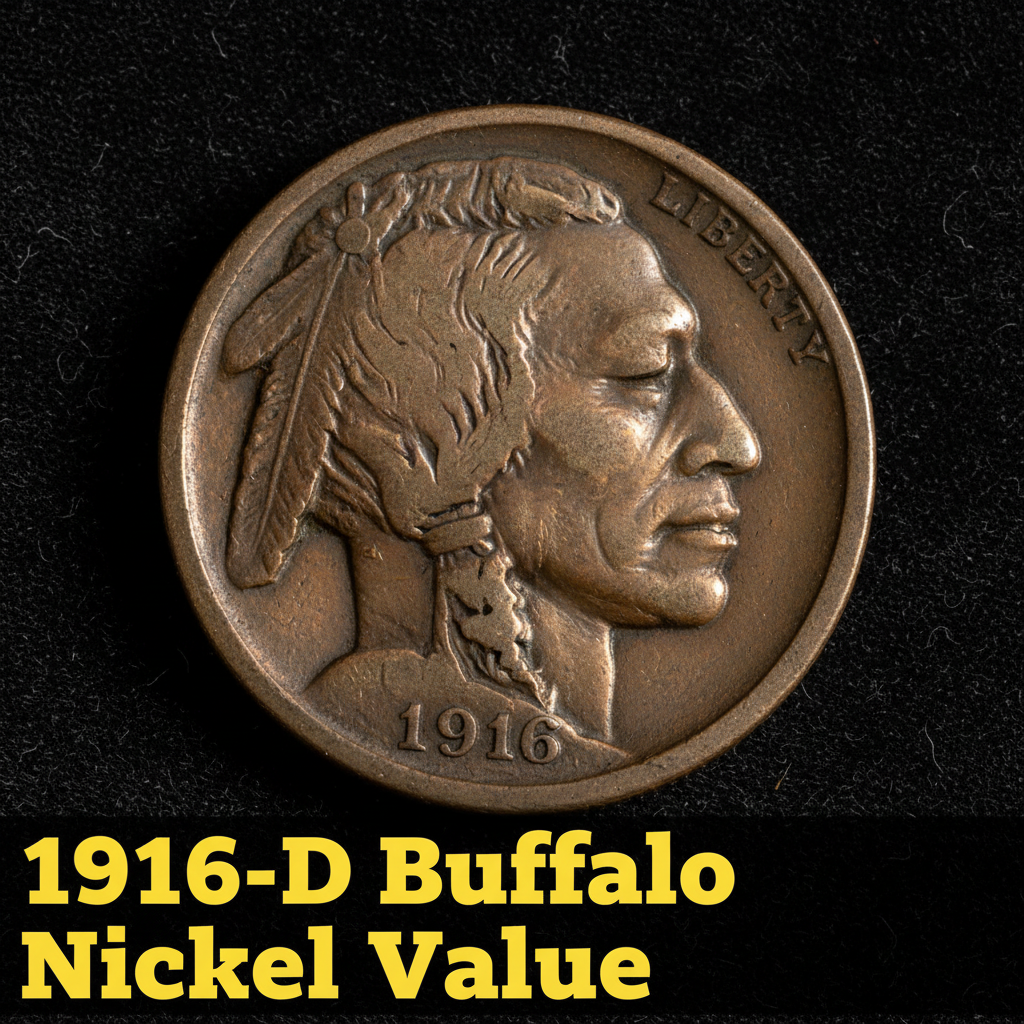
The Buffalo Nickel, also called the Indian Head Nickel, was designed by sculptor James Earle Fraser and minted from 1913 to 1938. The “D” in 1916-D tells you this coin was struck at the Denver Mint. That small mint mark makes a big difference in value. Denver produced a limited number of these coins in 1916, and over a century of circulation has made surviving examples in good condition increasingly rare.
If you just found an old nickel and aren’t sure where to start, a free coin identifier app can help you quickly confirm what you’re holding before you dive deeper into valuation. Getting an accurate identification is always the first step.
The obverse features a bold profile of a Native American, while the reverse shows the iconic American bison standing on a mound. Fraser’s design remains one of the most beloved in all of American coinage, which is one reason collectors continue to chase high-quality examples today.
How Much Is the 1916-D Buffalo Nickel Worth by Grade?
The condition of your coin — referred to as its “grade” — is the single biggest factor in determining its value. Coins are graded on a scale from 1 (barely identifiable) to 70 (perfect mint state). Even a slight difference in grade can mean hundreds of dollars.
Here’s a general value chart for the 1916-D Buffalo Nickel:
| Grade | Description | Estimated Value |
|---|---|---|
| G-4 (Good) | Heavy wear, outline visible | $30 – $50 |
| VG-8 (Very Good) | Moderate wear, some detail remains | $55 – $90 |
| F-12 (Fine) | Light to moderate wear | $100 – $160 |
| VF-20 (Very Fine) | Light wear on high points | $175 – $280 |
| EF-40 (Extremely Fine) | Slight wear, sharp detail | $300 – $500 |
| MS-63 (Mint State) | Uncirculated, minor blemishes | $1,200 – $2,000 |
| MS-65 (Gem) | Uncirculated, strong luster | $3,000+ |
For the most up-to-date figures, you can check current 1916-D Buffalo Nickel prices across mint state grades to see how the market is moving right now.
Where to Find the Mint Mark and Why It Matters
To confirm you have a 1916-D Buffalo Nickel, flip the coin over and look at the reverse, just below the words “FIVE CENTS.” You should see a small “D” — that’s the Denver Mint mark. No mint mark means it was made in Philadelphia. An “S” indicates San Francisco.
The Denver issue from 1916 had a much lower mintage compared to Philadelphia, which makes it considerably more valuable than its Philadelphia counterpart. Many people find old nickels in coin rolls, estate collections, or inherited jars and don’t realize the mint mark changes everything. Always check before assuming your coin is a common one.
CoinKnow is a great tool to help you identify mint marks and quickly look up values on your phone. Just scan the coin and the app gives you a breakdown of what you’re looking at — no coin expertise required.
Key Factors That Affect 1916-D Buffalo Nickel Value
Beyond grade and mint mark, a few other factors can push your coin’s value up or down:
Strike quality — Some 1916-D nickels are known for weak strikes, particularly on the bison’s horn and the Native American’s cheekbone. A coin with a sharp, full strike is worth a premium.
Original surfaces — Coins that have been cleaned, polished, or harshly wiped are worth significantly less. Collectors call these “details coins,” and they trade at steep discounts compared to original, untouched examples.
Eye appeal — Attractive toning, solid luster, and good centering all contribute to a coin’s desirability. Two coins with the same technical grade can differ in price based purely on how they look.
For a comprehensive breakdown of how the 1916 Buffalo Nickel’s value is determined across different mint marks and grades, it’s worth reviewing detailed guides that account for all these variables.
CoinKnow also factors in strike quality and surface issues when you scan your coin, making it especially useful for Buffalo Nickels where those details can dramatically change what your coin is worth.
Should You Get Your 1916-D Buffalo Nickel Graded?
If your coin appears to be in Very Fine condition or better, professional grading through services like PCGS or NGC could be a smart move. A certified grade adds credibility and often increases the selling price significantly. Buyers at auction or on marketplaces like eBay are willing to pay more for a coin that’s been independently verified.
For coins in lower grades, the cost of grading (typically $30–$50 per coin) may not be worth it unless you suspect it has special characteristics. When in doubt, consult a local coin dealer or use CoinKnow to get a quick baseline estimate before committing to a formal submission.
—
FAQ
Q: How do I know if my Buffalo Nickel is the 1916-D version?
A: Check the reverse side of the coin below “FIVE CENTS” for a small “D” mint mark. Also confirm the date reads 1916 on the obverse. Both must be present to have a genuine 1916-D Buffalo Nickel.
Q: My 1916-D Buffalo Nickel looks cleaned. Is it still worth anything?
A: Yes, but significantly less than an original coin. Cleaned coins are considered “details” pieces by grading standards and typically sell for 30%–60% less than an untouched coin of the same grade. Avoid cleaning any old coin you find.
Q: Where is the best place to sell a 1916-D Buffalo Nickel?
A: Options include eBay, Heritage Auctions, local coin dealers, and coin shows. For high-grade examples, major auction houses often yield the best results. For circulated coins, a reputable local dealer is a quick and fair option.