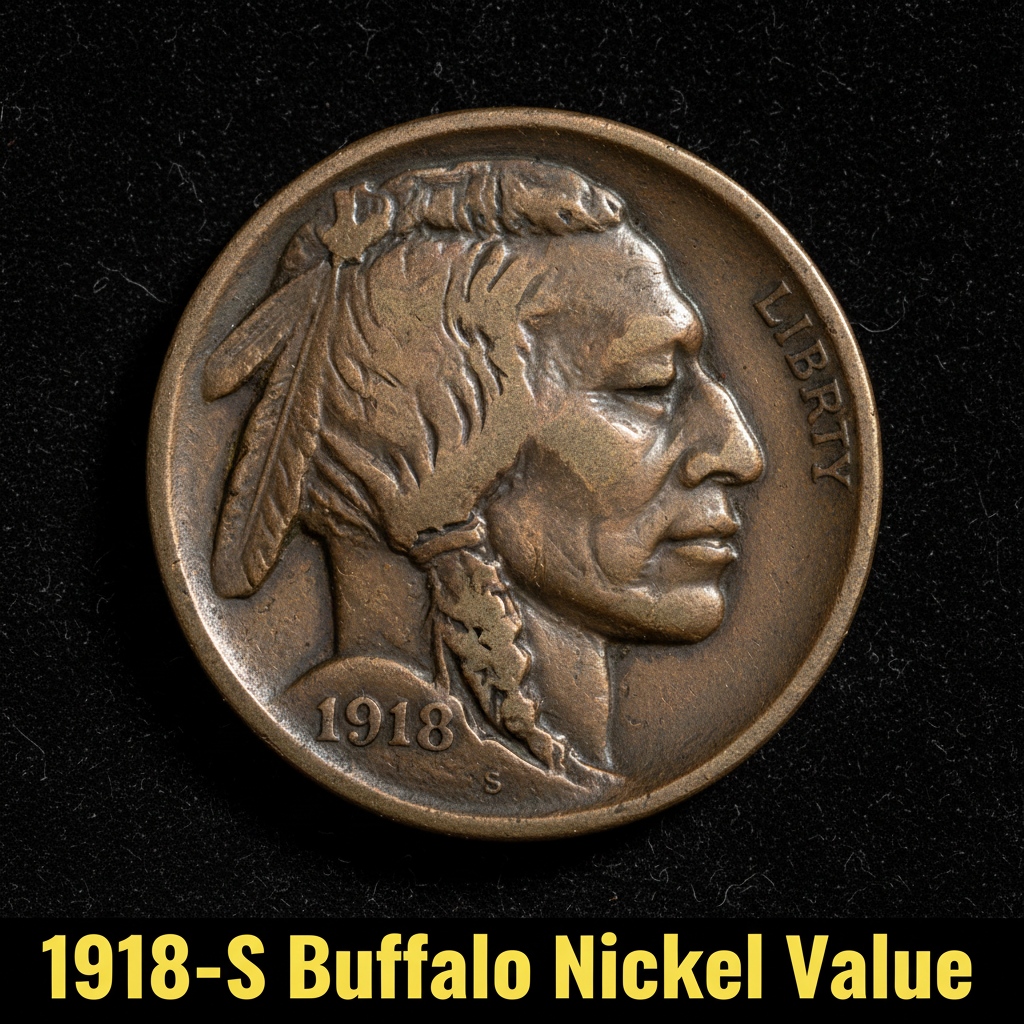
1918-S Buffalo Nickel Value Guide What This San Francisco Coin Is Really Worth
The 1918-S Buffalo Nickel is worth anywhere from $10 in heavily worn condition to well over $2,000 in high mint state grades — and rare examples have sold for far more at major auctions. If you’ve found one of these old nickels in a collection or coin jar, you may be holding something genuinely valuable.
What Makes the 1918-S Buffalo Nickel Special
The “S” mintmark on this coin tells you it was struck at the San Francisco Mint in 1918. During that era, the Buffalo Nickel — officially called the Indian Head Nickel — was one of America’s most beloved designs. Sculpted by artist James Earle Fraser, it features a bold Native American portrait on the obverse and an American bison on the reverse.
The 1918-S had a mintage of 4,882,000 coins, which sounds like a lot, but most of those coins circulated heavily and wore down quickly. Finding a well-preserved example today is genuinely uncommon. If you’re not sure exactly what you have, using a free coin identifier app is a great first step — it can help you confirm the mint mark, date, and basic grade before you dig deeper into value research.
The combination of a lower mintage, heavy circulation losses, and growing collector demand makes the 1918-S a coin worth taking seriously. Even a worn example has real numismatic value, and a sharp, uncirculated coin could be a significant find.
How Condition Affects the 1918-S Buffalo Nickel Value
Coin grading is the single biggest factor in determining what your 1918-S is worth. The difference between a well-worn coin and a crisp uncirculated one can be hundreds — or even thousands — of dollars.
Here’s a general value breakdown based on condition:
| Grade | Description | Estimated Value |
|---|---|---|
| Good (G-4) | Heavy wear, date readable | $10 – $15 |
| Very Good (VG-8) | Major details visible | $18 – $28 |
| Fine (F-12) | Moderate wear, clear design | $35 – $55 |
| Very Fine (VF-20) | Light wear on high points | $70 – $110 |
| Extremely Fine (EF-40) | Slight wear, sharp details | $150 – $250 |
| About Uncirculated (AU-50) | Trace wear only | $300 – $500 |
| Mint State (MS-63) | Uncirculated, minor marks | $800 – $1,400 |
| Mint State (MS-65) | Gem uncirculated | $2,000+ |
For the most up-to-date auction data and certified sale prices, you can review 1918-S Buffalo Nickel price records across mint state grades to see what collectors are actually paying right now.
How to Identify Your 1918-S Buffalo Nickel
First, look at the reverse of the coin — the side with the buffalo. Just below the words “FIVE CENTS,” you’ll find the mintmark. A small “S” confirms your coin came from San Francisco. No letter means it’s a Philadelphia issue; a “D” means Denver.
Next, check the date on the obverse (the side with the portrait). The date on Buffalo Nickels was struck on a raised area that wore down fast, so many coins have partially visible or faded dates. A coin with a fully legible date is worth more than one where you have to squint.
Also inspect the horn of the buffalo. On well-worn coins, it blends into the head entirely. The more detail you can see on the horn, the better the grade — and the higher the value.
CoinKnow is a popular tool that helps collectors photograph and evaluate coins like this one with precision. It’s especially useful for Buffalo Nickels, where small details make a big difference in grading.
Where to Sell Your 1918-S Buffalo Nickel
If you’ve determined your coin is in decent shape, you’ll want to sell it in the right place. Here are your main options:
Coin dealers offer convenience and quick cash, but they typically pay 60–70% of retail value since they need room to resell. For lower-grade coins, this is often the easiest route.
Online platforms like eBay give you access to a wide collector market. Coins in Very Fine or better condition often do very well in online auctions. Make sure to photograph both sides clearly and mention the mintmark and any notable details.
Professional grading services like PCGS or NGC are worth considering if your coin appears to be in AU or Mint State condition. A certified, slabbed coin typically sells for a premium over a raw one. The cost of grading (usually $30–$50 per coin) can easily be recovered on a high-grade 1918-S.
For a full breakdown of 1918 Buffalo Nickel values across all three mint locations, including Philadelphia and Denver issues for comparison, you’ll find detailed pricing data that can help you position your coin correctly before selling.
CoinKnow also has a marketplace feature that connects sellers with verified coin buyers — worth exploring if you want a fair offer without the hassle of listing fees.
Tips for Protecting and Handling Your Coin
Before you sell or get your coin appraised, handle it carefully. Never clean a Buffalo Nickel — even a gentle rinse can reduce its value significantly by removing the natural patina that collectors prize. Hold it by the edges only, and store it in a non-PVC coin flip or a protective holder.
If you’re unsure about the grade or authenticity, CoinKnow can help you get a preliminary assessment before committing to a professional grading service. It’s a smart first step that could save you both time and money.
—
FAQ
Q: How do I know if my 1918 nickel is from San Francisco?
A: Look at the reverse of the coin just below “FIVE CENTS.” A small “S” mintmark indicates it was struck at the San Francisco Mint. If there’s no letter, it’s from Philadelphia; “D” means Denver.
Q: Is a worn 1918-S Buffalo Nickel still worth keeping?
A: Yes. Even in Good condition, a 1918-S is worth $10 to $15 or more — well above face value. If the date and mintmark are both clearly visible, it has solid collector appeal.
Q: Should I clean my 1918-S Buffalo Nickel before selling it?
A: Absolutely not. Cleaning a coin removes its original surface and destroys numismatic value. Collectors and dealers strongly prefer original, uncleaned coins — even if they look dark or dirty. Leave it exactly as you found it.