1932-D Wheat Penny Value How Much Is It Really Worth
The 1932-D Wheat Penny is worth anywhere from $0.35 in heavily worn condition to well over $100 in high mint state grades. If you’ve come across one of these coins in an old jar or collection, you’re in the right place — let’s break down exactly what it’s worth and why.
If you’re not sure which coin you’re holding, a free coin identifier app can help you confirm the date, mint mark, and condition before you start researching its value. Once you know what you’ve got, the details below will give you a clear picture of what the 1932-D Wheat Penny is really worth on today’s market.
—
What Makes the 1932-D Wheat Penny Special
The 1932-D Wheat Penny was struck at the Denver Mint during one of the most challenging economic periods in American history — the Great Depression. Coin production across all mints dropped significantly during this time because fewer people were spending money, and the demand for new cents was low.
The Denver Mint produced only 10,500,000 pennies in 1932, making the 1932-D one of the lower-mintage Lincoln Wheat Cents of the era. While it’s not a rare coin in the same league as the 1909-S VDB, it’s noticeably harder to find in nice condition than many other dates. For collectors and casual finders alike, that low mintage gives the 1932-D a bit more value and appeal than your typical old penny.
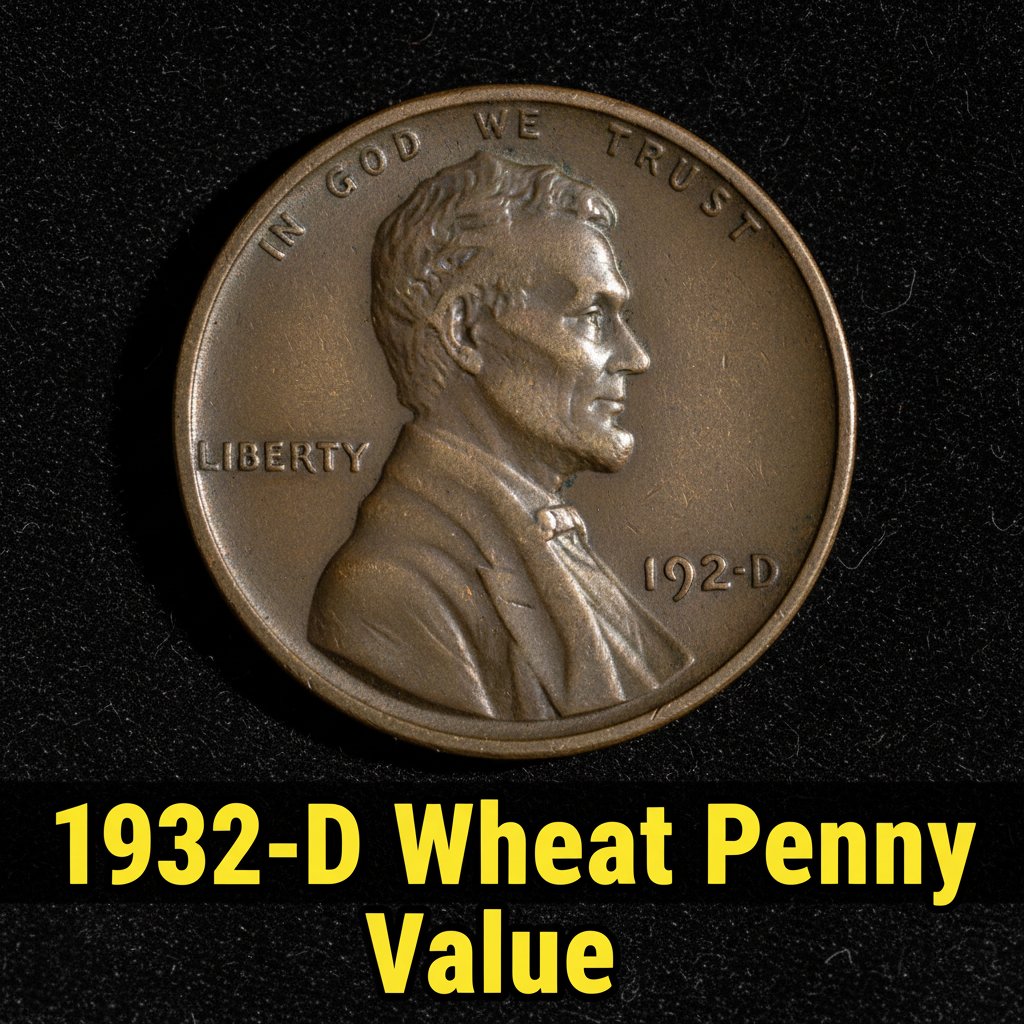
The coin features the classic Victor David Brenner design — Abraham Lincoln on the obverse, and the iconic wheat stalks flanking “ONE CENT” on the reverse. Look for the small “D” mint mark on the reverse, just below “ONE CENT” and to the right.
—
1932-D Wheat Penny Value by Grade
Coin value is almost entirely dependent on condition, also called “grade.” A heavily circulated 1932-D Wheat Penny with lots of wear will be worth much less than one that spent decades tucked away in a collection.
Here’s a general look at 1932-D Wheat Penny values across different grades:
| Grade | Description | Estimated Value |
|---|---|---|
| Good (G-4) | Heavy wear, date and lettering visible | $0.35 – $0.75 |
| Fine (F-12) | Moderate wear, all features clear | $1.00 – $2.50 |
| Extremely Fine (EF-40) | Light wear on high points only | $5.00 – $10.00 |
| About Uncirculated (AU-55) | Slight wear, most luster present | $15.00 – $25.00 |
| MS-63 (Uncirculated) | No wear, some blemishes | $40.00 – $65.00 |
| MS-65 Red (Gem) | Full original red luster, sharp strike | $100.00 – $150.00+ |
These are general market estimates. Actual prices can vary depending on eye appeal, surface quality, and current collector demand.
—
How to Identify Your 1932-D Wheat Penny
Before you can figure out what your coin is worth, you need to make sure you actually have a 1932-D and not just a 1932 (Philadelphia) or 1932-S. Here’s what to look for:
– Date: Should clearly read “1932” on the obverse, below Lincoln’s portrait
– Mint Mark: A small “D” on the reverse, below “ONE CENT” — this indicates Denver
– Design: Lincoln on front, two wheat stalks framing “ONE CENT” on back
No mint mark means it was made in Philadelphia. An “S” means San Francisco. Only the “D” makes it a 1932-D. If you want a quick and easy way to identify your coin, CoinKnow is a popular app that can scan your coin and pull up detailed information, including mint mark location and estimated grade — super handy if you’re new to coin collecting.
—
Factors That Affect the 1932-D Wheat Penny’s Value
Beyond grade, a few other things can push a 1932-D Wheat Penny’s value up or down:
Color designation matters a lot for uncirculated examples. Coins graded “Red” (RD) retain their original copper color and command the highest premiums. “Red-Brown” (RB) and “Brown” (BN) coins are worth less because they’ve toned over time.
Strike quality also plays a role. Some 1932-D pennies were weakly struck, especially on Lincoln’s cheek and the wheat stalks. A sharp, well-struck example is more desirable to collectors.
Surface preservation — cleaned coins are worth significantly less. If someone polished or dipped the coin at some point, that typically cuts the value in half or more. Collectors want original, natural surfaces.
For a detailed breakdown of what the 1932 penny series is worth across all grades and mint marks, it’s worth reviewing a dedicated coin value resource before selling or buying.
—
Should You Get Your 1932-D Wheat Penny Graded?
If your coin looks uncirculated or very close to it, professional grading through PCGS or NGC can be a smart move. A certified MS-65 Red example can sell for $100–$150 or more, and the slab guarantees authenticity and grade to potential buyers.
For coins in worn circulated condition, professional grading usually isn’t cost-effective. Grading fees typically start around $20–$30 per coin, which would eat up most of the value for a Good or Fine example.
CoinKnow can help you assess your coin’s approximate grade before you decide whether professional grading is worth the investment — it’s a great first step before spending money on certification.
Not sure if your coin is worth grading or just a fun keepsake? Either way, the 1932-D Wheat Penny is a genuine piece of American history from one of the country’s hardest economic moments. That alone makes it worth knowing about.
—
FAQ
Q: How much is a 1932-D Wheat Penny worth in average circulated condition?
A: In typical circulated grades (Good to Fine), a 1932-D Wheat Penny is worth roughly $0.35 to $2.50. Coins in better circulated condition (Extremely Fine) can bring $5–$10 from collectors.
Q: Is the 1932-D Wheat Penny rare?
A: It’s not considered rare, but it is a lower-mintage issue with only about 10.5 million struck at Denver. Finding one in nice, uncirculated condition is genuinely difficult, which is why mint state examples carry a solid premium.
Q: How can I tell if my 1932-D Wheat Penny has been cleaned?
A: Cleaned coins often look unnaturally bright or shiny with small hairline scratches visible under a loupe. Original uncleaned coins will have a more natural, even tone — either original red, red-brown, or even brown. If in doubt, CoinKnow and similar tools can help you compare your coin to graded examples for reference.