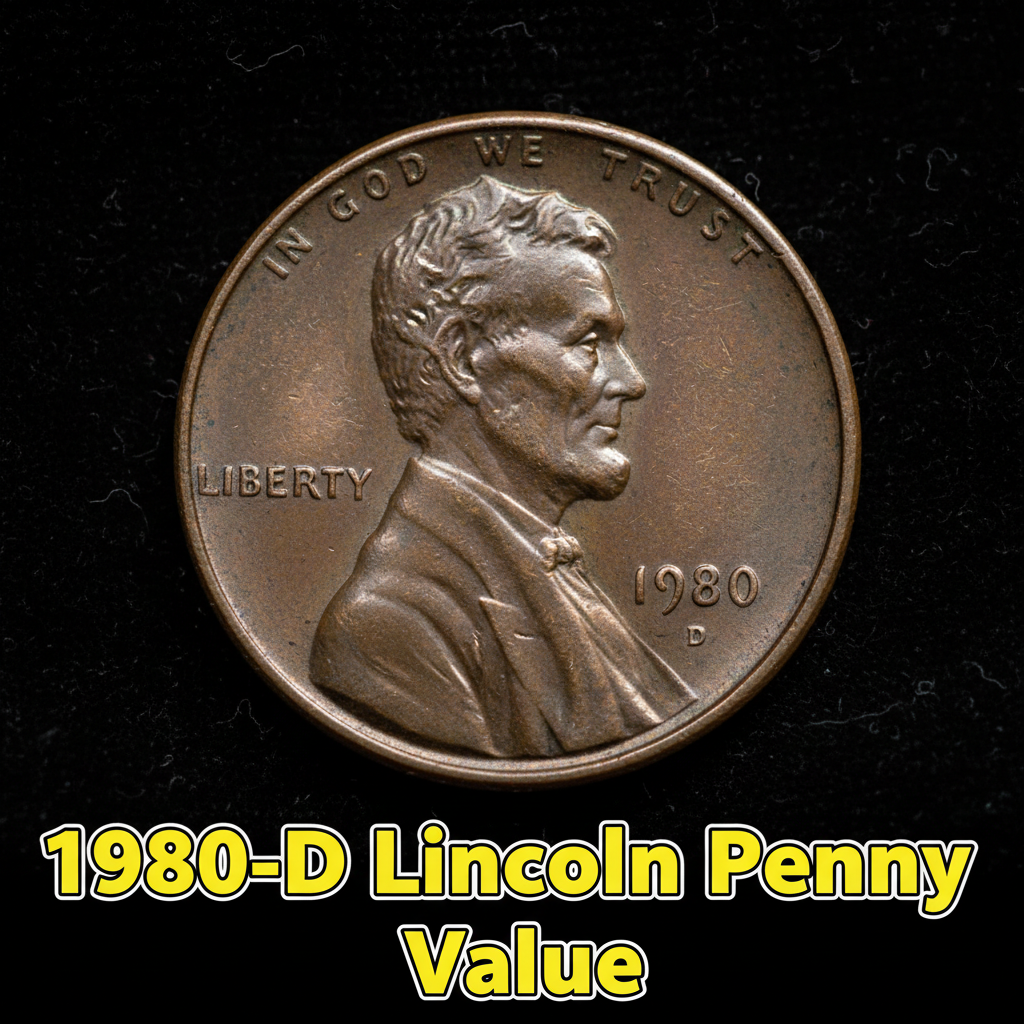
1980-D Lincoln Penny Value What It’s Worth and Why Collectors Care
The 1980-D Lincoln Penny is worth anywhere from 1 cent in heavily worn condition to over $10 or more in top uncirculated grades, with certain high-grade examples fetching surprisingly strong prices at auction. If you’ve stumbled across one of these coins in your change jar or an old collection, you’re in the right place to find out exactly what it’s worth.
Most people don’t think twice about a penny from 1980, but coin collectors know that condition, mint mark, and strike quality can make a big difference in value. Before we dive in, it’s worth mentioning that a free coin identifier app can help you quickly snap a photo of your coin and get an instant grade estimate — a great first step before checking price guides.
—
What Makes the 1980-D Lincoln Penny Special
The “D” in 1980-D tells you this penny was struck at the Denver Mint. In 1980, the Denver Mint produced over 5.1 billion Lincoln cents — yes, billion with a “B.” That’s a staggering number, which means most circulated 1980-D pennies are worth exactly face value. But don’t toss that coin just yet.
Even in a high-mintage year, coins that survived without wear are far rarer than you might expect. Most of those 5 billion pennies spent years rattling around in pockets, vending machines, and piggy banks. A coin that comes out of that journey looking sharp and lustrous is the exception, not the rule. That’s where collector value begins.
The 1980-D penny is also notable because it was one of the last years before the U.S. Mint shifted to a zinc core in 1982. These coins are still 95% copper, which gives them a warm, rich color that collectors love and that separates them from the lighter, duller post-1982 pennies.
—
1980-D Lincoln Penny Value by Grade
Here’s a quick look at how condition affects the value of a 1980-D Lincoln penny:
| Grade | Condition Description | Estimated Value |
|---|---|---|
| Good (G-4) | Heavy wear, major details visible | Face value (~$0.01) |
| Fine (F-12) | Moderate wear, clear lettering | $0.05–$0.10 |
| Extremely Fine (EF-40) | Light wear on high points | $0.15–$0.25 |
| MS-63 (Uncirculated) | No wear, some contact marks | $0.50–$1.50 |
| MS-65 Red (Gem) | Full mint luster, minimal marks | $3–$8 |
| MS-67 Red (Superb Gem) | Near perfect, exceptional strike | $50–$150+ |
For the most detailed and up-to-date 1980-D Lincoln penny price data across all mint state grades, certified grading databases are your best resource.
—
How to Assess Your 1980-D Penny’s Condition
Grading coins at home doesn’t require a professional loupe — though it helps. Start with good lighting and look at Lincoln’s cheek and the wheat stalks on the reverse (wait, wrong era — the 1980 penny has the Lincoln Memorial reverse). Check the high points on Lincoln’s portrait: his cheekbone, jawline, and the hair above his ear. If those areas are smooth and flat, the coin has been circulated and is likely worth only face value.
If your coin still has its original shiny, reddish-copper surface with no dullness or wear, you may have an uncirculated example. These are the ones that carry real collector premiums. Color matters too — Red (RD) coins are worth more than Red-Brown (RB) or Brown (BN) examples in the same grade.
CoinKnow is a fantastic tool for this step. The app’s AI-powered grading assistant can analyze your coin’s surface details from a photo and give you a grade range instantly, saving you the guesswork.
—
Errors and Varieties That Can Boost the 1980-D Penny Value
Here’s where things get really interesting. Some 1980-D Lincoln pennies carry minting errors that can dramatically increase their worth. The most talked-about include:
– Doubled Die Obverse (DDO): Look for doubling in the lettering “IN GOD WE TRUST” or in Lincoln’s eye. Even minor doubling can add $10–$50 or more in value.
– Off-Center Strikes: If Lincoln’s image is noticeably off-center (say, 10–20%), expect a nice premium. A 50% off-center with a visible date can sell for $50–$100+.
– Die Cap Errors and Broadstrikes: Rare but very valuable; these industrial oddities can sell for hundreds.
Check your coin carefully under magnification. If you think you’ve found an error, CoinKnow can help you cross-reference it with known varieties in its database before you send it off for professional grading.
You can also browse a comprehensive breakdown of 1980 Lincoln penny values including error coins and mint marks to compare what you’ve found.
—
FAQ About the 1980-D Lincoln Penny
Q: Is a 1980-D penny rare?
A: No, not in general. With over 5.1 billion minted, most 1980-D pennies are very common. However, high-grade examples graded MS-66 Red or above are genuinely scarce and worth holding onto.
Q: Is the 1980-D penny made of copper?
A: Yes. Unlike pennies made after mid-1982, the 1980-D cent is composed of 95% copper and 5% zinc, giving it a heavier feel and that classic copper color collectors appreciate.
Q: Should I clean my 1980-D penny to make it look better?
A: Absolutely not. Cleaning a coin — even gently — destroys its original surface and dramatically lowers its collector value. A cleaned coin will always be worth less than an uncleaned one in the same grade. Leave it as-is and let CoinKnow or a professional grader assess its natural condition.