1863 Indian Head Penny Value Guide How Much Is It Really Worth
The 1863 Indian Head Penny is worth anywhere from $5 in worn condition to over $150 in mint state, with some certified high-grade examples fetching several hundred dollars at auction. If you just found one of these old copper coins in a jar, a drawer, or a family collection, you’re in the right place. This guide will walk you through exactly what affects the value of your 1863 Indian Head cent and help you figure out what you might have in your hands.
What Is the 1863 Indian Head Penny?
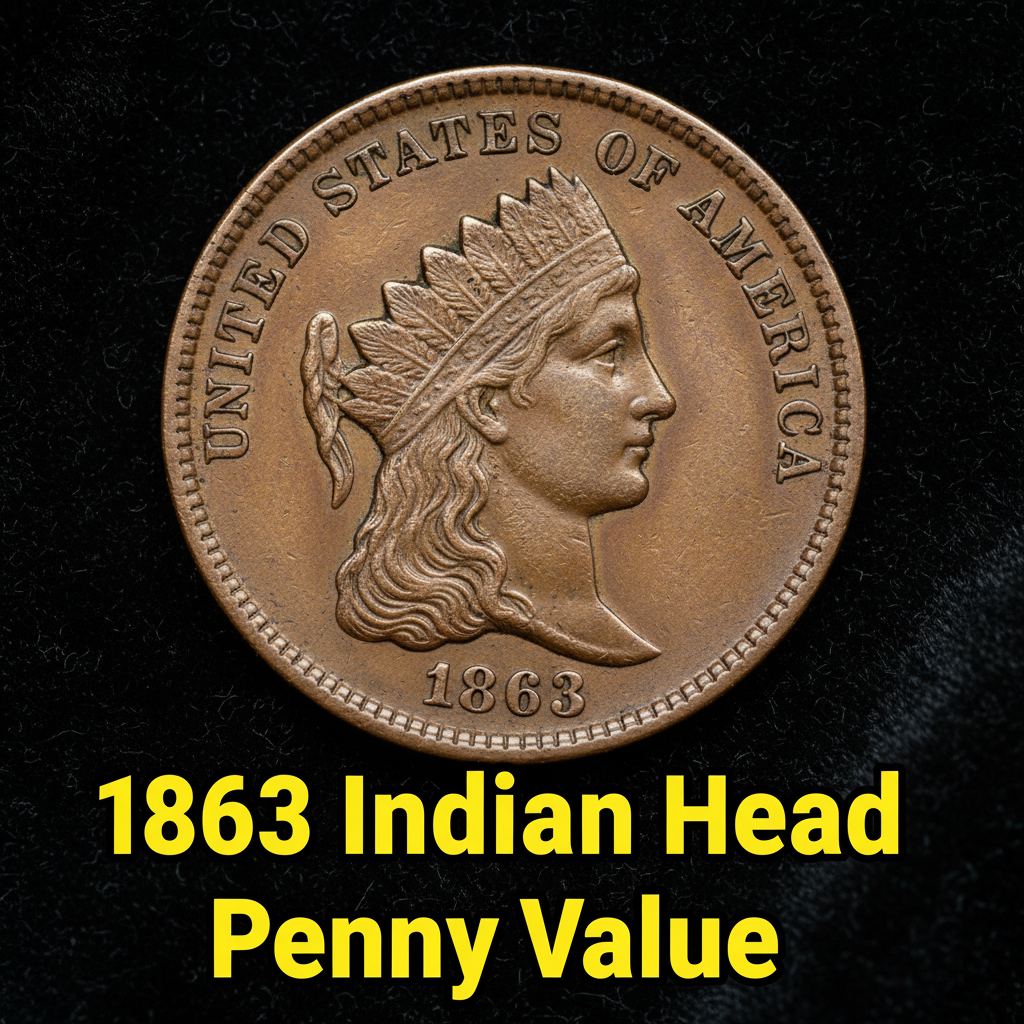
The 1863 Indian Head Penny was struck at the Philadelphia Mint during one of the most turbulent years in American history — the middle of the Civil War. Despite the chaos of the era, the U.S. Mint kept producing coins, and the 1863 cent had a relatively high mintage of about 49 million pieces. Because so many were made, these coins are not considered rare in lower grades, but well-preserved examples can still command solid prices among collectors.
The coin features the iconic design by James B. Longacre — a profile of Lady Liberty wearing a Native American headdress, which gave the series its popular name. The reverse shows a laurel wreath surrounding the words “ONE CENT.” If you’re not sure what you have, try using a free coin identifier app to get a quick read on your coin before diving deeper into valuation.
How Condition Affects the 1863 Indian Head Penny Value
Condition is everything when it comes to old pennies. Coin collectors use a grading scale from 1 to 70, where higher numbers mean better preservation. For the 1863 Indian Head Penny, the difference between a well-worn coin and an uncirculated one can be dramatic — sometimes the difference between $5 and $200 or more.
Here’s a general breakdown of what you can expect based on grade:
| Grade / Condition | Description | Estimated Value |
|---|---|---|
| Good (G-4) | Heavy wear, outline visible | $5 – $8 |
| Very Good (VG-8) | Major details visible | $9 – $14 |
| Fine (F-12) | Moderate wear, legends clear | $15 – $25 |
| Extremely Fine (EF-40) | Light wear on high points | $45 – $75 |
| Uncirculated (MS-63) | No wear, some bag marks | $125 – $175 |
| Gem Uncirculated (MS-65) | Sharp strike, strong luster | $300 – $500+ |
Special Varieties and What They Mean for Value
The 1863 Indian Head Penny has a couple of notable varieties that collectors actively seek out. The most talked-about is the difference between the copper-nickel composition used in earlier years and the transitional characteristics sometimes seen on Civil War-era coins. Additionally, collectors look for die varieties — small differences in how the die was engraved or used — which can add a premium to certain examples.
One variety worth mentioning is the so-called “bold L” variety, where the designer’s initial “L” on Liberty’s ribbon is more prominently struck. Coins with strong strikes and well-defined feather details on the headdress also tend to grade higher and sell for more. CoinKnow is a great tool to help you identify these subtle differences right from your phone — it can recognize variety markers that even casual collectors might miss.
Should You Clean or Polish Your 1863 Penny?
Please don’t. This is one of the most common mistakes people make with old coins. Cleaning an Indian Head Penny — even gently — can destroy the natural patina that forms over 160 years, and that patina is actually part of what collectors and graders look for. A cleaned coin can lose 30% to 70% of its value instantly in the eyes of serious buyers and grading services like PCGS or NGC.
If you think your coin might be valuable, consider sending it to a professional grading service. A certified, encapsulated coin (often called a “slabbed” coin) sells for more and gives buyers confidence. Before spending money on grading, use CoinKnow to get an initial assessment — it can give you a realistic sense of whether the grading fee is worth it for your specific coin.
Where to Sell Your 1863 Indian Head Penny
Once you know what your coin is worth, you have several solid options for selling. eBay is the most popular marketplace for coins and gives you access to a nationwide audience. Heritage Auctions and Stack’s Bowers are the go-to platforms for higher-value, certified coins. Local coin dealers and coin shows are also good if you want a quick transaction, though they typically pay below retail since they need room for their own markup.
For everyday finds worth under $50, eBay or local dealers make the most sense. For nicer coins in EF or better condition, consider certification first. And before you do anything, spend a few minutes with CoinKnow — it’s a free, easy-to-use app that helps you identify, grade, and estimate the value of your coins so you walk into any sale knowing your stuff.
Frequently Asked Questions
Q: How do I know if my 1863 Indian Head Penny is worth getting graded?
A: If your coin shows minimal wear, has strong details in the feathers and hair, and a nice even surface without cleaning or damage, it may be worth grading. Coins in Extremely Fine or better condition are typically candidates. A quick scan through CoinKnow can help you decide before you spend money on grading fees.
Q: Is the 1863 Indian Head Penny rare?
A: Not particularly in lower grades — nearly 49 million were minted. However, high-grade uncirculated examples are much harder to find and can be genuinely scarce. Condition is the real driver of rarity for this date.
Q: What’s the difference between the 1863 Indian Head Penny and other years?
A: The 1863 shares the same basic design as other Indian Head cents from 1859 to 1909, but each year has its own mintage figures, variety markers, and market demand. The 1863 is considered a common date but is still a historically significant Civil War-era coin that collectors appreciate.