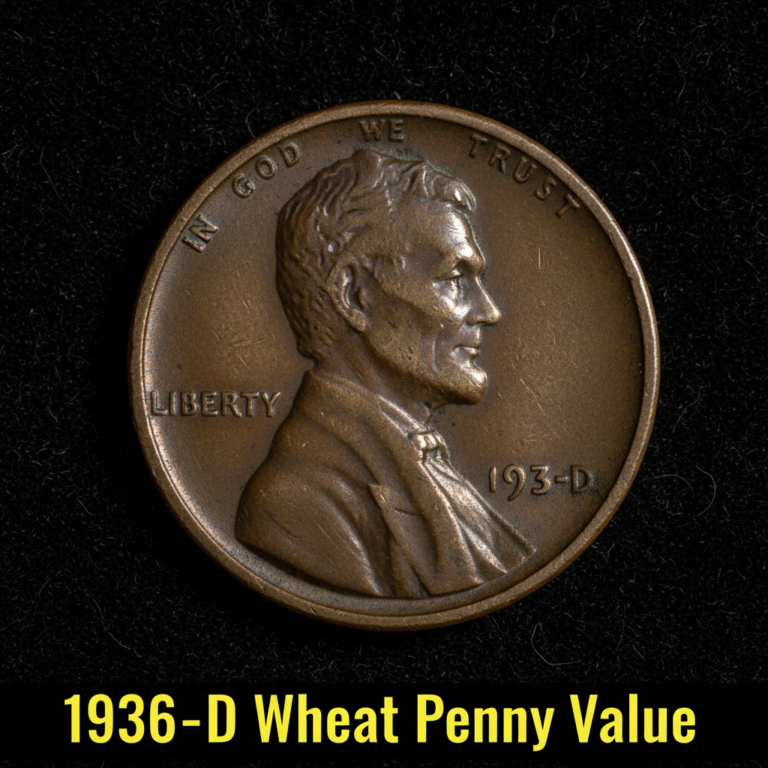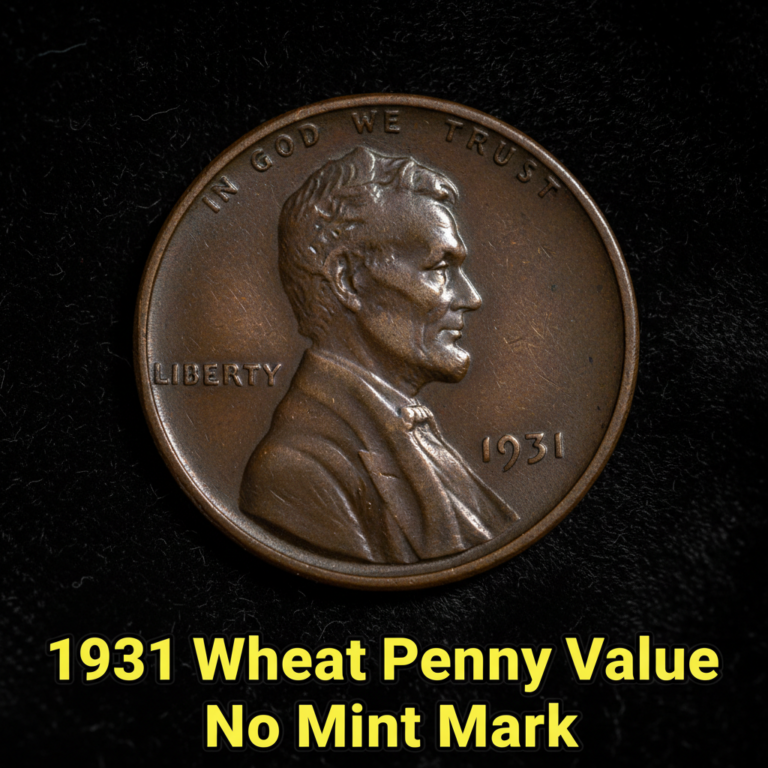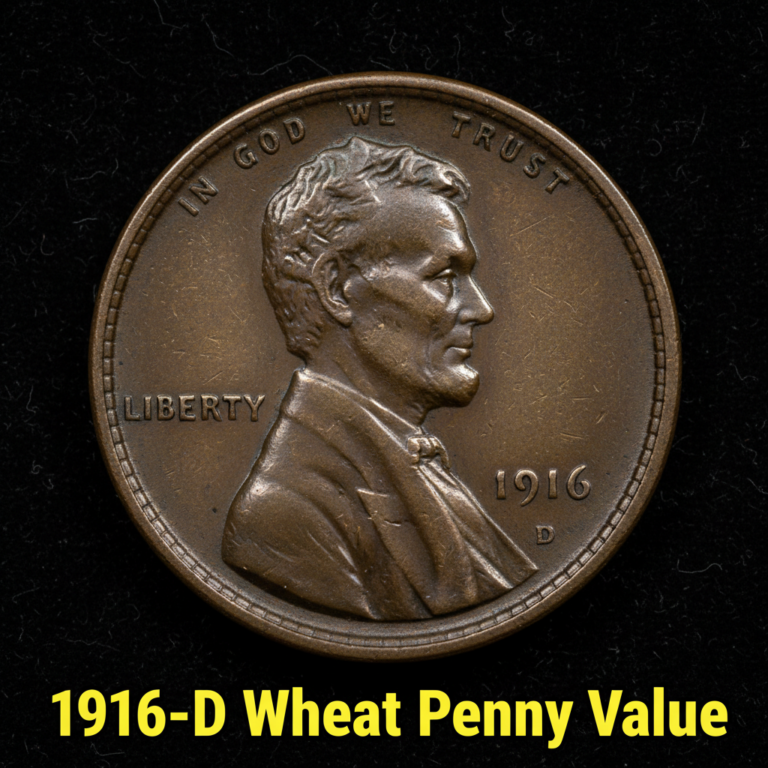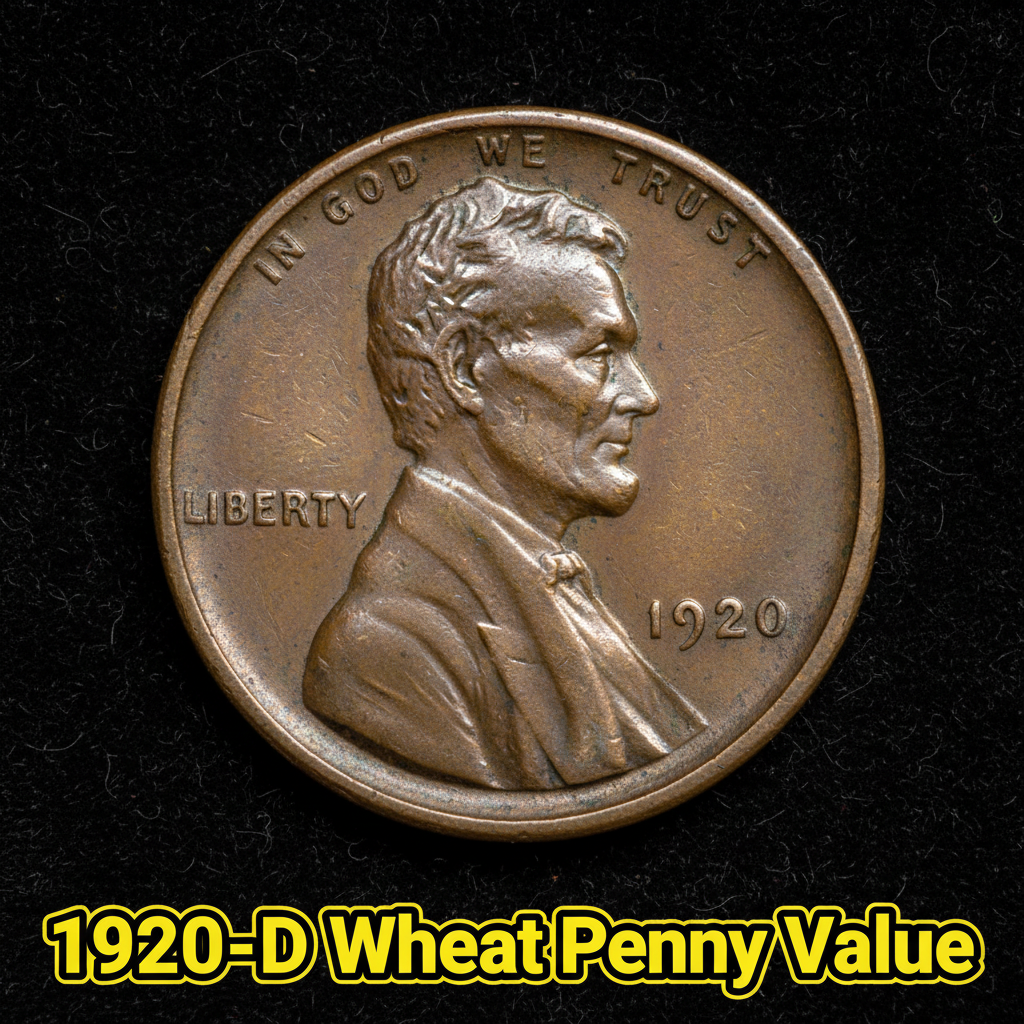
1920-D Wheat Penny Value What It’s Really Worth and Why Collectors Care
The 1920-D Wheat Penny is worth anywhere from $1 to $3 in heavily worn condition, but nice examples can fetch $15 to $50, and top-grade mint state coins have sold for $500 or more. If you found one of these old cents, you may be sitting on more than pocket change.
What Makes the 1920-D Wheat Penny Special
The “D” in 1920-D stands for Denver, meaning this penny was struck at the Denver Mint. During 1920, three mints produced Lincoln Wheat Pennies — Philadelphia, Denver, and San Francisco. The Denver issue had a mintage of about 49.3 million coins, which sounds like a lot, but a century of circulation, loss, and damage means high-quality survivors are genuinely scarce today.
If you’re not sure whether your coin has a mint mark, look on the reverse side just below the words “ONE CENT.” A small “D” there confirms it’s a Denver coin. No letter means Philadelphia; an “S” means San Francisco. Once you’ve confirmed it’s a 1920-D, the next step is figuring out its condition — and that’s where the real value difference lies. You can use a free coin identifier app on your phone to get a quick read on the coin’s grade before doing anything else. Apps like CoinKnow make it especially easy to identify mint marks and estimate condition right from a photo.
How Condition Affects the 1920-D Wheat Penny Value
Coin condition — called “grade” by collectors — is the single biggest factor in determining value. Here’s a simple breakdown of what to look for:
– Poor to Good (G-4): The design is barely visible. Date and mint mark are readable but flat. Worth about $1–$3.
– Fine (F-12): Some detail remains in Lincoln’s hair and wheat stalks. Worth roughly $5–$10.
– Extremely Fine (EF-40): Most design elements are sharp, with light wear on the high points. Worth $15–$30.
– Mint State (MS-60 to MS-65+): No wear at all, original luster present. These are the coins collectors really want.
| Grade | Description | Estimated Value |
|---|---|---|
| Good (G-4) | Heavy wear, flat design | $1 – $3 |
| Very Good (VG-8) | Moderate wear, major details visible | $3 – $6 |
| Fine (F-12) | Light to moderate wear | $5 – $10 |
| Extremely Fine (EF-40) | Slight wear on high points | $15 – $30 |
| Mint State (MS-63) | No wear, some marks | $75 – $150 |
| Mint State (MS-65 Red) | Gem quality, full original color | $400 – $600+ |
For a closer look at certified mint state 1920-D Wheat Penny price data across grade levels, professional auction records are the most reliable source.
Red vs. Brown — Why Color Matters for Value
Here’s something many new collectors don’t realize: copper pennies are graded not just by wear, but also by color. A 1920-D cent that still has its original reddish-copper glow is labeled “Red” (RD) and is worth significantly more than one that has toned to brown (BN) over the decades.
– Red (RD): 95% or more original mint luster. Highest value.
– Red-Brown (RB): Mix of original color and toning. Mid-range value.
– Brown (BN): Fully toned, no original color. Lower end of the scale.
A 1920-D in MS-65 Red can be worth four to six times more than the same grade in Brown. If your coin still looks bright and coppery, that’s a very good sign. Don’t clean it — cleaning destroys the surface and nearly eliminates collector value overnight.
What Collectors and Dealers Actually Pay
Real-world prices depend on more than just grade. Certified coins in plastic slabs from PCGS or NGC sell for premiums over raw (ungraded) coins because buyers trust the authenticity. For detailed and up-to-date 1920 Wheat Penny value information across all mint marks and grades, checking a dedicated coin value resource gives you the clearest picture.
Auction results for top-pop 1920-D examples have reached into the hundreds of dollars for MS-65 Red coins. Meanwhile, the vast majority of circulated examples trade hands for just a few dollars between dealers and collectors at coin shows.
If you want to know exactly where your coin falls, CoinKnow lets you scan your penny with your smartphone camera and instantly compare it to graded examples in its database — a huge help when you’re trying to decide whether to sell, hold, or get it professionally graded.
Should You Get Your 1920-D Penny Graded
Submitting a coin for professional grading costs money — usually $20 to $50 per coin at minimum — so it only makes sense if your penny is in genuinely nice condition. If it looks worn flat, save the fee. But if your 1920-D shows sharp detail, good luster, and that warm reddish color, grading could significantly increase what a buyer will pay.
Use CoinKnow to do a quick pre-screening at home before deciding. The app’s grade estimation feature gives everyday people the same basic tools that experienced collectors use, without needing a magnifier and a library of reference books.
—
FAQ
Q: How do I know if my penny is a 1920-D?
A: Flip the coin over and look just below the words “ONE CENT” on the reverse. If you see a small letter “D,” it was minted in Denver. Make sure the date on the front clearly reads 1920.
Q: Is a worn 1920-D Wheat Penny worth keeping?
A: Even heavily worn examples are worth $1–$3, which is still above face value. They also make a great starting point for a collection. But if it’s in nice shape, it could be worth considerably more — so don’t spend it.
Q: What’s the most valuable 1920-D Wheat Penny ever sold?
A: Top-grade examples graded MS-66 Red by PCGS or NGC have sold at auction for over $1,000. These are extremely rare survivors in pristine condition, but they do exist and occasionally come up for sale.