1910 Wheat Penny Value With No Mint Mark and What It’s Worth Today
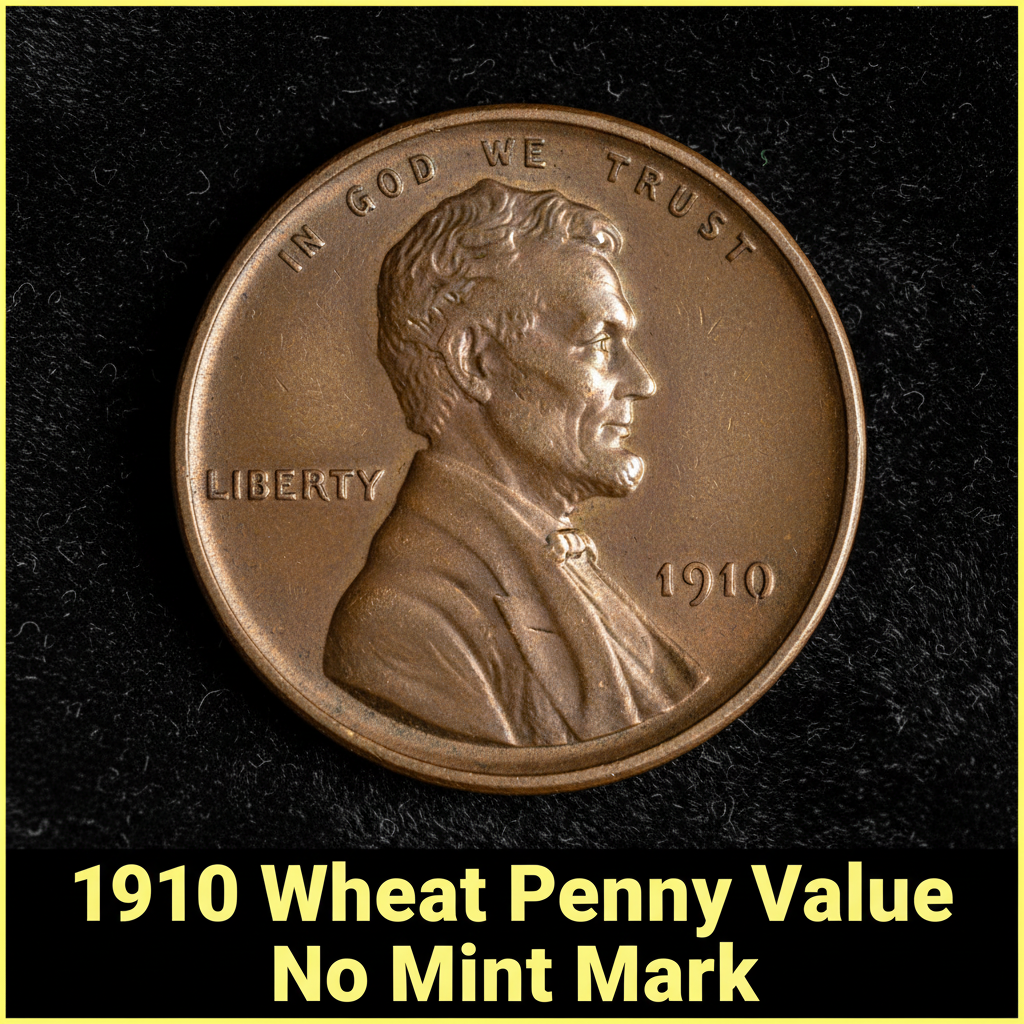
The 1910 Wheat Penny with no mint mark is worth anywhere from $2 in heavily worn condition to over $100 or more in high-grade mint state. If you found one of these old Lincoln cents in a jar, drawer, or inherited coin collection, you’re in for a pleasant surprise — this century-old coin is more valuable than it looks.
What Is the 1910 Wheat Penny and Why Does “No Mint Mark” Matter?
The 1910 Lincoln Wheat Penny was the second year of production for one of America’s most beloved coin series. Designed by Victor David Brenner, the Lincoln cent replaced the Indian Head Penny starting in 1909. By 1910, the design had settled in — and millions of these coins rolled out of the Philadelphia Mint.
When a coin has no mint mark, it means it was struck in Philadelphia, which was the main production facility. In 1910, only the Philadelphia Mint produced Lincoln cents without a mint mark. The San Francisco Mint produced the 1910-S variety, which carries a small “S” below the date. The no-mint-mark version from Philadelphia is far more common, which affects its value — but that doesn’t mean it’s worthless, especially in better condition.
If you’re not sure whether your coin has a mint mark or not, a free coin identifier app can help you examine the details quickly using your smartphone camera. Apps like CoinKnow make it easy for everyday collectors to identify and value old coins without needing expert knowledge.
How Much Is the 1910 Wheat Penny Worth? A Value Breakdown by Grade
The value of a 1910 no-mint-mark Wheat Penny depends heavily on its condition, also known as its “grade.” Coins are graded on a scale from Poor (P-1) to Mint State (MS-70). Here’s a general value table to give you a quick idea:
| Grade / Condition | Description | Estimated Value |
|---|---|---|
| Good (G-4) | Heavy wear, design visible | $2 – $4 |
| Fine (F-12) | Moderate wear, all lettering clear | $5 – $10 |
| Extremely Fine (EF-40) | Light wear on high points | $18 – $35 |
| About Uncirculated (AU-58) | Slight wear, nearly full luster | $40 – $60 |
| Mint State (MS-63) | Uncirculated, minor blemishes | $75 – $120 |
| Mint State (MS-65 RD) | Gem uncirculated, full red color | $200 – $400+ |
For the most up-to-date auction results and graded coin sales, you can check current 1910 Wheat Penny MS Red price data to see what collectors are actually paying right now.
What Makes a 1910 No Mint Mark Penny More Valuable?
Beyond basic grade, a few other factors can push the value of your 1910 Wheat Penny higher:
Color: Copper cents are graded not just on wear, but on color. A coin that has retained its original red (RD) luster is worth significantly more than one that has turned brown (BN). Look for coins that still show a warm, coppery-red tone — they command the highest premiums.
Strike Quality: Some 1910 cents were struck with sharper dies, leaving crisper details on Lincoln’s portrait and the wheat stalks on the reverse. A well-struck example is always more desirable.
Eye Appeal: Collectors pay more for coins that look attractive overall — no spots, no cleaning, no damage. Cleaned coins often sell for a fraction of their potential value because chemical cleaning destroys the natural patina.
Errors and Varieties: While the 1910 Philadelphia cent doesn’t have widely famous varieties, doubling errors or die cracks can occasionally appear. If something looks unusual about your coin, it’s worth a closer look. CoinKnow can help you compare your coin’s details against known examples to spot anything out of the ordinary.
How to Check the Condition of Your 1910 Wheat Penny at Home
You don’t need to be a professional numismatist to get a rough idea of what your coin is worth. Here’s a simple approach:
Start by examining the coin under good lighting — natural daylight or a bright lamp works well. Look at Lincoln’s cheekbone and the tops of the wheat stalks on the back. If the high points are smooth and flat, the coin has seen significant circulation. If you can still see fine hair detail on Lincoln’s portrait and clear definition in the wheat ears, you’re likely looking at a Fine or better example.
Never clean your coin with chemicals or abrasive materials. This is one of the most common mistakes new collectors make, and it permanently reduces a coin’s value. Even a gentle wipe with a cloth can leave microscopic scratches visible under magnification.
For a comprehensive breakdown and detailed 1910 penny value information across all grades and mint marks, professional coin resources can help you understand exactly where your coin falls. And if you want a fast, convenient tool in your pocket, CoinKnow offers an intuitive platform that walks you through the grading process step by step.
—
FAQ
Q: How many 1910 Wheat Pennies were made with no mint mark?
A: The Philadelphia Mint produced approximately 146,801,218 Lincoln cents in 1910. That makes it a relatively common date in worn grades, but true uncirculated examples with red color are much harder to find.
Q: Is a 1910 Wheat Penny with no mint mark worth more than the 1910-S?
A: No — the 1910-S (San Francisco) is considerably rarer, with only about 6 million struck. An 1910-S in the same grade will typically be worth several times more than the Philadelphia version. Always check below the date to confirm whether your coin has an “S” mint mark.
Q: Should I get my 1910 Wheat Penny professionally graded?
A: It depends on the coin’s condition. If your penny appears to be in Extremely Fine or better condition — especially if it has original red color — professional grading by PCGS or NGC could be worthwhile. A certified MS-65 RD example can sell for $300 or more. For lower-grade coins, the cost of grading usually isn’t justified.