1881 Indian Head Penny Value Guide What This Small Coin Could Be Worth Today
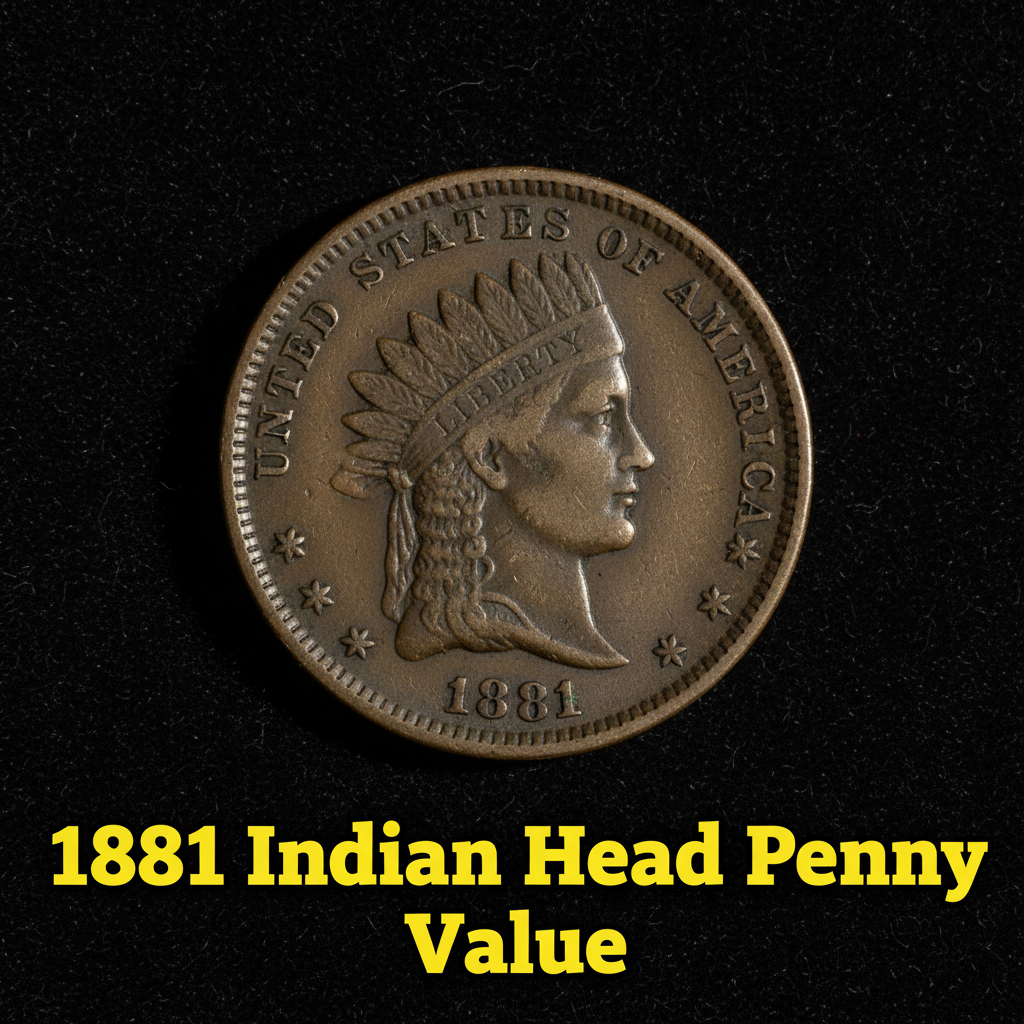
The 1881 Indian Head Penny is worth anywhere from $1.50 in heavily worn condition to over $100 or more in mint state. If you’ve got one sitting in a jar or old coin collection, you might be pleasantly surprised by what it’s worth — and this guide will walk you through everything you need to know.
What Makes the 1881 Indian Head Penny Special
Before diving into numbers, it helps to understand what you’re holding. The Indian Head Penny was minted from 1859 to 1909 and features a portrait of Lady Liberty wearing a Native American headdress — not an actual Native American, despite the name. The coin is made of 95% copper and 5% tin and zinc, measures 19mm across, and weighs 3.11 grams.
The 1881 issue was struck at the Philadelphia Mint, and approximately 39,211,575 coins were produced that year. While that sounds like a lot, most of those coins spent decades in circulation and ended up heavily worn. Finding a well-preserved example today is much rarer than the mintage numbers suggest. If you’ve recently come across an old coin and want a quick identification, using a free coin identifier app can help you confirm what you have before diving deeper into valuation.
Whether you’re a casual collector or just someone who found an old penny in grandma’s dresser, tools like CoinKnow make it incredibly easy to identify and value coins like this one right from your phone.
1881 Indian Head Penny Value by Grade
The single biggest factor in how much your 1881 Indian Head Penny is worth is its condition, or “grade” in collector terms. Coin grading runs from Poor (P-1) to Perfect Mint State (MS-70). Here’s a breakdown of typical values across the most common grades:
| Grade | Description | Estimated Value |
|---|---|---|
| Good (G-4) | Heavy wear, outlines visible | $1.50 – $3 |
| Very Good (VG-8) | Moderate wear, some detail remains | $3 – $5 |
| Fine (F-12) | Moderate to light wear, clear lettering | $5 – $10 |
| Very Fine (VF-20/30) | Light wear on high points | $10 – $20 |
| Extremely Fine (EF-40) | Slight wear, sharp details | $20 – $35 |
| About Uncirculated (AU-50/58) | Minimal wear, nearly full luster | $40 – $60 |
| Mint State (MS-63) | No wear, minor contact marks | $75 – $100 |
| Mint State (MS-65+) | Gem quality, full red luster | $150 – $300+ |
For the most current auction data, you can check out detailed mint state pricing for the 1881 Indian Head Penny in MS Red condition, which reflects what top-grade examples are actually selling for today.
How to Tell What Grade Your 1881 Penny Is
You don’t need to be an expert to get a rough sense of your coin’s condition. Start by looking at Lady Liberty’s feathers in the headdress — on a well-worn coin, those details will be flat and blurry. On a higher-grade coin, each individual feather will be sharp and distinct. The ribbon bow behind her neck is another key area; in Fine grade, it should still be clearly visible.
Color also matters. Indian Head Pennies in mint state are categorized as Red (RD), Red-Brown (RB), or Brown (BN). Red coins command a significant premium — sometimes double or triple the value of brown examples at the same grade level. If your 1881 penny still has any original reddish-orange glow, that’s a great sign.
Don’t clean your coin. This is one of the most common mistakes people make. Even light polishing can destroy a coin’s surface and dramatically reduce its value. Leave it exactly as you found it and get a professional opinion if you think it might be in high grade.
Rare Varieties and What to Look For
The 1881 Indian Head Penny doesn’t have any dramatically famous varieties like some other dates, but there are a few minor die varieties that specialist collectors pursue. These include small differences in the positioning of letters or feather details that require magnification to spot.
More importantly, condition rarities drive most of the excitement with this date. High-grade examples graded MS-65 Red by PCGS or NGC are genuinely scarce and sell for strong prices at major auctions. If your coin looks unusually sharp and lustrous, it’s worth having it professionally graded.
The Indian Head series as a whole has devoted collectors, and even comparing values across nearby dates is helpful — for example, understanding how the 1898 Indian Head Penny’s value compares across grades gives useful context for the series overall and helps you appreciate where the 1881 sits in the bigger picture.
Apps like CoinKnow are great for quickly scanning coins and getting instant value estimates based on visible condition, making it a handy first step before investing in professional grading.
Where to Sell Your 1881 Indian Head Penny
If you’ve decided to sell, you have several solid options. eBay is a popular choice for lower to mid-grade examples — buyers actively search for circulated Indian Head Pennies to fill album holes. For higher-grade or professionally graded coins, Heritage Auctions and Stack’s Bowers are the go-to platforms where serious collectors compete.
Local coin shops are a convenient option if you want a quick, hassle-free sale, though you’ll typically get 50–70% of retail value. Coin shows can connect you with dealers and collectors who might pay a bit more. Whatever route you choose, knowing the current market value going in puts you in a much stronger position to negotiate fairly.
CoinKnow also features a marketplace component where collectors buy and sell, making it worth exploring if you want a direct-to-collector experience.
FAQ About the 1881 Indian Head Penny
Q: Is the 1881 Indian Head Penny rare?
A: It’s not considered rare by date, since nearly 39 million were minted. However, well-preserved examples in Extremely Fine or better condition are genuinely hard to find and carry real collector value.
Q: What does it mean if my 1881 penny looks reddish or orange?
A: That color indicates original mint luster, and it’s a very good thing. “Red” designated coins are worth significantly more than brown, worn examples in the same numeric grade. Protect it carefully and consider professional grading.
Q: Should I clean my 1881 Indian Head Penny before selling?
A: Absolutely not. Cleaning removes the natural patina and surface texture that collectors and graders look for. Even a coin that looks dirty to you may have collector-grade surfaces underneath. Cleaning almost always lowers the coin’s value, sometimes dramatically.