1867 Indian Head Penny Value: What Your Old Cent Could Be Worth Today
The 1867 Indian Head Penny is worth anywhere from $10 in heavily worn condition to over $400 or more in mint state, making it a genuinely exciting find for anyone who stumbles across one in an old coin jar or family collection. If you’ve got one in your hands right now, keep reading — you might be sitting on more than just a penny.
How to Identify the 1867 Indian Head Penny
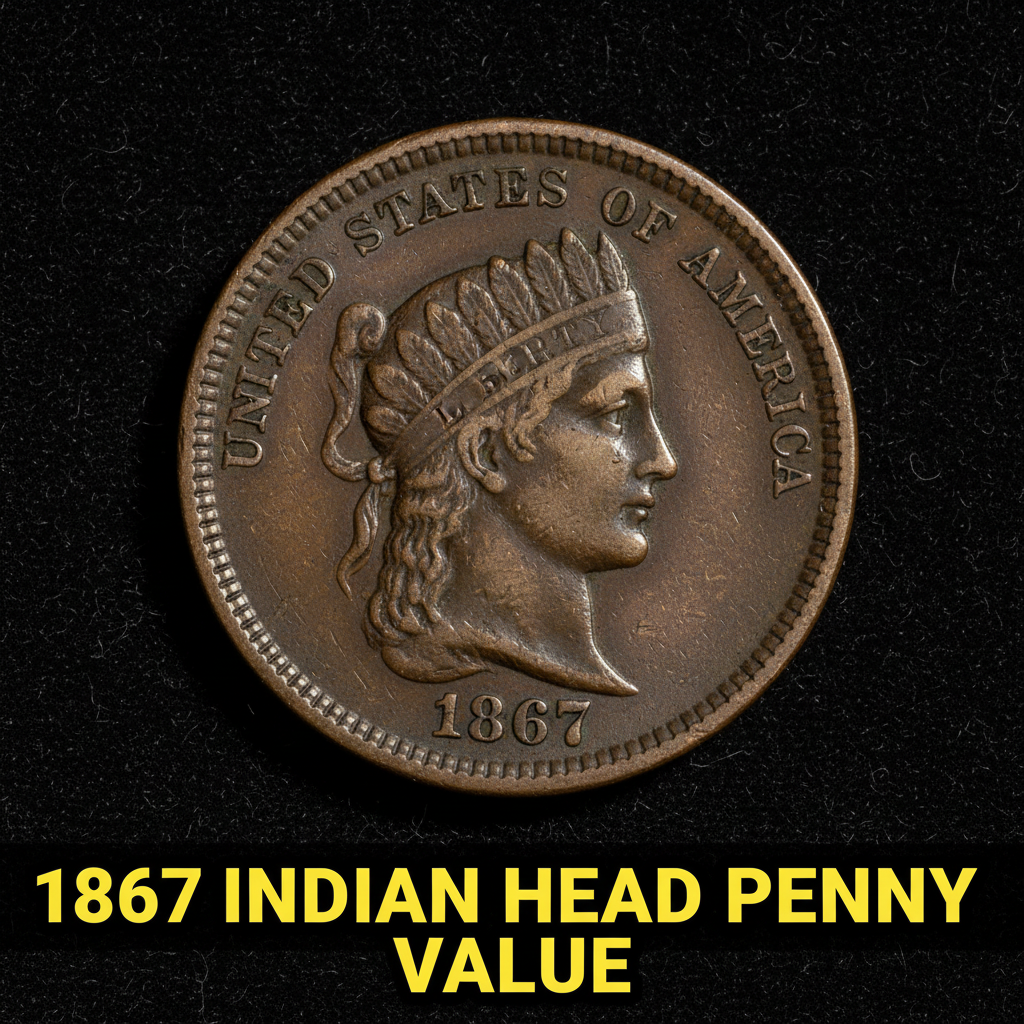
Before you can figure out what your coin is worth, you need to make sure you’re actually holding an 1867 Indian Head Penny. These coins were struck at the Philadelphia Mint, so there’s no mint mark to look for — if you see one, something’s off. The obverse features a left-facing portrait of Lady Liberty wearing a feathered Native American headdress (hence the name), with the word LIBERTY inscribed on the headband. The reverse shows a wreath of oak and laurel leaves, with a shield at the top and ONE CENT in the center.
If you’re not sure whether your coin is genuine or want help identifying it fast, using a free coin identifier app is a great starting point. Apps like CoinKnow can scan your coin using your phone’s camera and give you an instant ID along with a ballpark value — no coin expertise required.
The 1867 issue had a mintage of about 9.8 million coins, which sounds like a lot, but more than 150 years of circulation has made well-preserved examples increasingly hard to find.
1867 Indian Head Penny Value by Grade
Condition is everything when it comes to coin values. A coin that’s been rattling around in pockets for decades looks very different from one that was tucked away soon after minting. Numismatists use a 70-point scale (the Sheldon scale) to grade coins, and the grade has a massive impact on price.
Here’s a general breakdown of 1867 Indian Head Penny values across different grades:
| Grade | Description | Estimated Value |
|---|---|---|
| G-4 (Good) | Heavy wear, outline visible | $10 – $15 |
| VG-8 (Very Good) | Moderate wear, some detail | $18 – $28 |
| F-12 (Fine) | Even wear, LIBERTY readable | $35 – $55 |
| VF-20 (Very Fine) | Light wear, sharp details | $70 – $100 |
| EF-40 (Extremely Fine) | Slight wear on high points | $130 – $180 |
| MS-63 (Mint State) | Uncirculated, minor marks | $350 – $500 |
| MS-65 Red (Gem) | Near perfect, original red | $1,500+ |
Note that uncirculated examples with original red copper color (designated MS-RD) command serious premiums. Most surviving 1867 pennies are in lower grades, so if yours shows strong detail, it could be worth having it professionally graded.
What Makes Some 1867 Pennies More Valuable Than Others
Beyond grade, a few other factors can push the value of your 1867 Indian Head Penny higher or lower. Color is a big one for copper coins. Graders designate copper as Red (RD), Red-Brown (RB), or Brown (BN), with Red coins being the most desirable and most valuable. A coin graded MS-65 RD can be worth several times more than the same coin graded MS-65 BN.
Strike quality also matters. Some 1867 pennies came off the dies with weak strikes, leaving details like the feather tips and the letters in LIBERTY soft or mushy. A sharply struck example stands out and attracts more interest from collectors.
Eye appeal is another factor experienced buyers consider — things like attractive natural toning, no distracting spots, and a well-centered design can all add to a coin’s desirability. If you want a quick read on where your specific coin might fall, CoinKnow lets you snap a photo and get an instant assessment based on visible condition — handy before you decide whether to sell or get it graded.
Proof Versions of the 1867 Indian Head Penny
The Philadelphia Mint also struck a small number of Proof 1867 Indian Head Pennies — coins specially made for collectors with polished dies and planchets, resulting in a mirror-like finish. Only about 625 Proof examples are believed to have been produced, making them much rarer than the business strike coins.
A Proof-63 example can fetch $400 to $600, while a Proof-65 in red can cross $2,000 at auction. If your coin has an almost mirror-like background and very sharp, frosted design elements, it might be a Proof — though these are rare enough that most people won’t encounter one.
For those interested in how values shift across the broader Indian Head Penny series, looking at detailed price data for other Indian Head Penny dates like the 1898 gives useful context for understanding how age, mintage, and condition interact across the whole series.
Should You Clean Your 1867 Indian Head Penny?
Absolutely not — and this is worth emphasizing. Cleaning a coin, even gently, removes the natural patina that forms over decades and is actually part of what collectors and graders look for. A cleaned coin is almost always worth significantly less than an unclean one in the same condition. Professional graders can spot cleaning under magnification, and a coin labeled “Cleaned” in a grading service holder loses a big chunk of its market value. Leave it exactly as you found it.
If you’re unsure about next steps, CoinKnow can help you figure out whether your coin is worth sending to a professional grading service like PCGS or NGC — which makes a real difference once values start climbing into the hundreds of dollars.
—
Frequently Asked Questions
Q: How do I know if my 1867 Indian Head Penny is valuable?
A: Start by checking the condition. Look for sharp detail in the word LIBERTY on the headband and clear feather tips. The better the detail and the more original copper color (reddish rather than dark brown), the more valuable it’s likely to be. A coin with strong detail and no cleaning could be worth $100 or more.
Q: Is the 1867 Indian Head Penny rare?
A: It’s not among the rarest dates in the series, but it’s not common either. With a mintage of around 9.8 million, circulated examples aren’t hard to find, but well-preserved or Mint State examples are genuinely scarce and command solid premiums among collectors.
Q: Where is the best place to sell an 1867 Indian Head Penny?
A: For coins in lower grades, eBay or local coin shows are reasonable options. For higher-grade or Proof examples worth over $100, consider getting it certified by PCGS or NGC first — a graded coin in a holder typically sells for more and attracts more confident buyers at major auction houses like Heritage or Stack’s Bowers.